170 kilometers from Iran, the competition continues unabated.
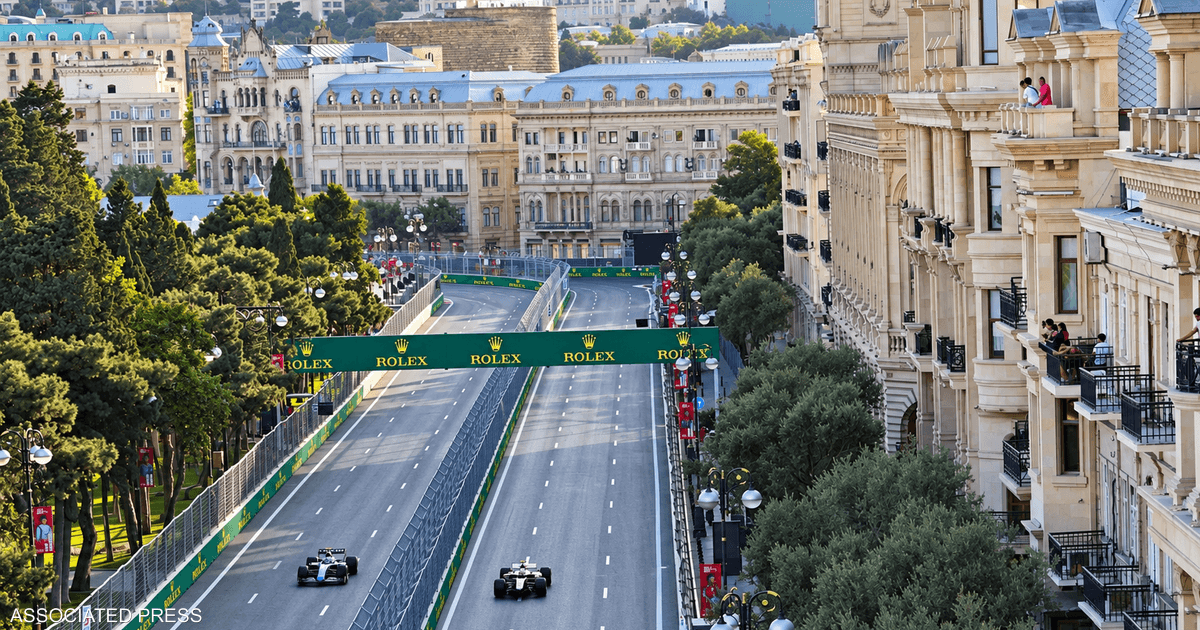
In a narrow circuit at the heart of the Azerbaijani capital, Formula 1 cars are gearing up for the Baku Grand Prix, while the Iranian border lies close to some circuits that have had their races canceled due to conflict.

The Baku circuit is located about 170 kilometers from the nearest point on Azerbaijan's southern border with Iran.
Travel Warnings Define Risk Boundaries
Formula 1 bases its security decisions on various assessments, including travel warnings and the ability of teams, individuals, and equipment to safely enter and exit the host country.
The British Foreign Office warns against travel to specific areas of Azerbaijan, particularly those near the border with Armenia and sites that have seen previous conflicts due to the risk of landmines.
However, these warnings do not include the capital Baku, although there is a possibility that regional tensions could lead to unexpected disruptions, such as airspace closures or flight delays.
The continuation of the race schedule and the absence of travel warnings against Baku indicate that the current risk level, according to assessments, has not reached a threshold that would necessitate canceling the event.
The Airspace Gives Baku an Advantage
Organizing the Formula 1 race does not only depend on the safety of the circuit; the championship requires the transportation of cars, tires, thousands of parts, and team members between countries within a short timeframe.
With airlines avoiding flights over Iran and the Russian airspace closed to many Western carriers, Azerbaijani airspace has become a vital corridor for flights between Europe and Asia.
This is increasingly important as the championship enters a busy series of races, leaving little room for delays in transporting equipment or team members.
Heydar Aliyev International Airport has announced enhanced operational procedures from September 19 to 27 in preparation for the expected increase in travelers and flights related to the Azerbaijan Grand Prix.
Why Is the Race Held on Saturday?
The race on Saturday, September 26, is not related to war or security concerns. Formula 1 and the FIA agreed in 2025 to change the date at the request of the organizers and government officials in Azerbaijan.
Sunday, September 27, is a day of remembrance in the country, linked to the outbreak of the Nagorno-Karabakh battles in 2020, so practice sessions are held on Thursday, qualifying on Friday, and the main race on Saturday.
Baku holds a contract ensuring the race remains on the Formula 1 calendar until 2030, but there is no evidence that commercial considerations were the decisive factor in this year's event continuing.
Formula 1 has not provided a single reason for not canceling the race, but Baku's relative safety, the continued operation of the airport and airspace, and the absence of travel warnings explain the decision to proceed with it.
Thus, the cars will race near one of the most tense regions in the world, in a race where Formula 1 tests not only the drivers' speed but also its ability to navigate within a very volatile security landscape.
This contradiction raises a question for the race that goes beyond competition among drivers: why is Formula 1 held in Azerbaijan despite its proximity to Iran and the ongoing unrest affecting the sports calendar in the Middle East?
The events of the Azerbaijan Grand Prix will take place from September 24 to 26, with the main race scheduled for Saturday, an unusual timing for a championship typically held on Sundays.
The Baku circuit is located about 170 kilometers from the nearest point on Azerbaijan's southern border with Iran.
Travel Warnings Define Risk Boundaries
Formula 1 bases its security decisions on various assessments, including travel warnings and the ability of teams, individuals, and equipment to safely enter and exit the host country.
The British Foreign Office warns against travel to specific areas of Azerbaijan, particularly those near the border with Armenia and sites that have seen previous conflicts due to the risk of landmines.
However, these warnings do not include the capital Baku, although there is a possibility that regional tensions could lead to unexpected disruptions, such as airspace closures or flight delays.
The continuation of the race schedule and the absence of travel warnings against Baku indicate that the current risk level, according to assessments, has not reached a threshold that would necessitate canceling the event.
The Airspace Gives Baku an Advantage
Organizing the Formula 1 race does not only depend on the safety of the circuit; the championship requires the transportation of cars, tires, thousands of parts, and team members between countries within a short timeframe.
With airlines avoiding flights over Iran and the Russian airspace closed to many Western carriers, Azerbaijani airspace has become a vital corridor for flights between Europe and Asia.
This is increasingly important as the championship enters a busy series of races, leaving little room for delays in transporting equipment or team members.
Heydar Aliyev International Airport has announced enhanced operational procedures from September 19 to 27 in preparation for the expected increase in travelers and flights related to the Azerbaijan Grand Prix.
Why Is the Race Held on Saturday?
The race on Saturday, September 26, is not related to war or security concerns. Formula 1 and the FIA agreed in 2025 to change the date at the request of the organizers and government officials in Azerbaijan.
Sunday, September 27, is a day of remembrance in the country, linked to the outbreak of the Nagorno-Karabakh battles in 2020, so practice sessions are held on Thursday, qualifying on Friday, and the main race on Saturday.
Baku holds a contract ensuring the race remains on the Formula 1 calendar until 2030, but there is no evidence that commercial considerations were the decisive factor in this year's event continuing.
Formula 1 has not provided a single reason for not canceling the race, but Baku's relative safety, the continued operation of the airport and airspace, and the absence of travel warnings explain the decision to proceed with it.
Thus, the cars will race near one of the most tense regions in the world, in a race where Formula 1 tests not only the drivers' speed but also its ability to navigate within a very volatile security landscape.
More from this section
Nuno Costa and Fabio Ferreira tour the youth sections at Zamalek SC.

OM: Himad Abdelli bounces back, Genesio approves
Egypt's futsal team defeats Algeria 8-0 to secure third place in the Africa Cup of Nations.
UEFA Champions League: Nico Paz scores the third goal for Como against Manchester United.
Mahmoud Hani scores the equalizer for Al Qanah against Al Ahly.