In a struggling Senegal, the Youth Olympic Games have yet to generate enthusiasm.
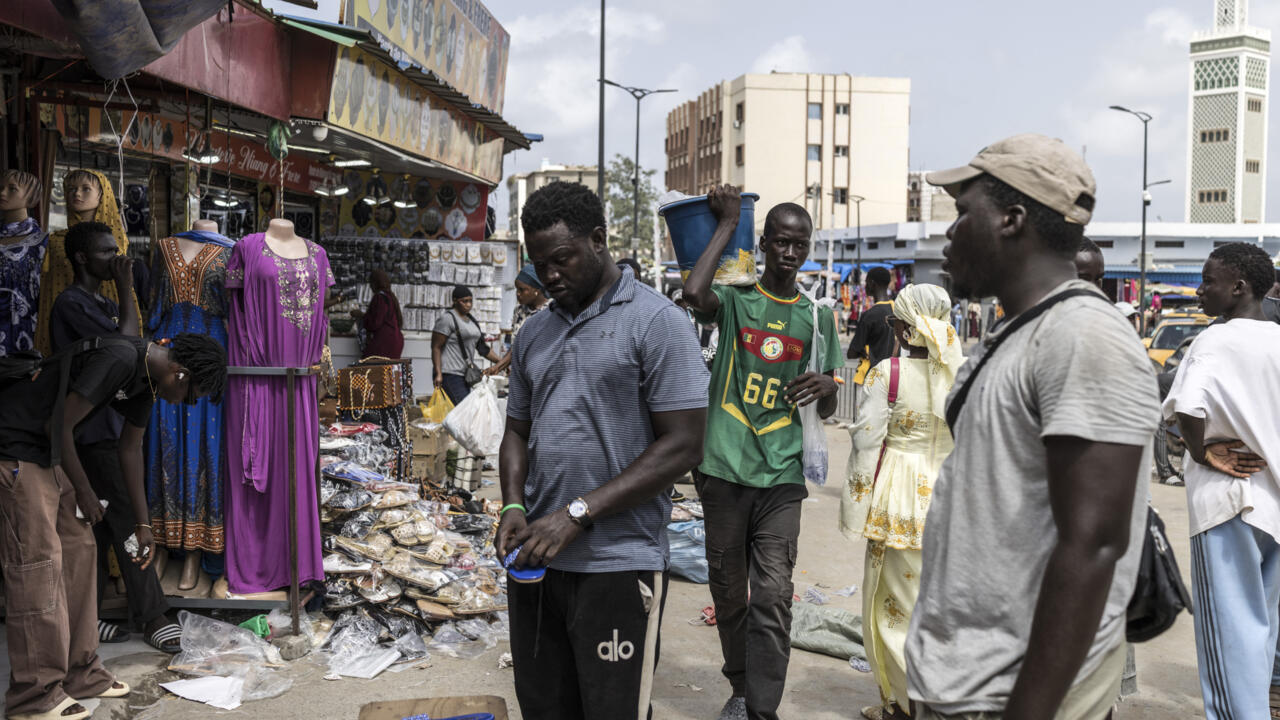
In the bustling weekly market of Grand-Yoff in Dakar, commercial activity is at its peak. However, the upcoming Youth Olympic Games (YOG), scheduled to take place in Senegal from October 31 to November 13, are struggling to dominate discussions, far from the current concerns of Senegalese citizens.
Employment, cost of living, and income: with just a month to go before this historic Olympic event in Africa, the priorities of the locals surveyed by AFP lie elsewhere.
Arame Diop, 34, who came to buy clothes for her children, has no particular expectations regarding this significant event.
“With all the difficulties the country is facing right now, I don't think this is the current priority,” she says, emphasizing that funds allocated for infrastructure could better serve other needs.
“Many young graduates are desperately looking for work without ever finding anything,” she laments.
These Games are taking place against a backdrop of economic hardship for Senegal since the 2024 revelation of a "hidden debt" left by the administration of former president Macky Sall (2012-2024).
Since then, international economic partners' confidence in Senegal has waned. The country recently reached a preliminary agreement with the International Monetary Fund (IMF) on a new $2.2 billion (1.94 billion euros) program, which still needs to be finalized.
A few kilometers from the Grand-Yoff market, at Mamadou Diop Square in Yoff, some passersby watch the Olympic flame pass by, which does not generate the anticipated enthusiasm.
Leaning on a car, 19-year-old mechanic Moussa Diop and his friend Ibrahima Samb, 26, a waiter, try to understand the reason for the gathering.
Informed about the flame's tour, Ibrahima Samb states: “We could really have done without these Games given the current situation in the country, or at least postponed them. People are suffering. They are not even working to live, but to survive .”
For several months, Dakar residents have been living with the rhythm of renovation work on infrastructure and public spaces to prepare for the Games.
Contacted by AFP, Senegalese authorities did not specify the cost of these works. However, the 2026 budget allocates approximately 139 million euros for the YOG infrastructure program.
Additionally, the French Development Agency (AFD) has granted a loan of 80 million euros to Senegal to rehabilitate sports facilities and create local amenities.
Evictions
Sitting at the table that serves as his stand, 43-year-old street vendor Mamadou Ndiaye bitterly discusses the eviction of several street vendors to clear the sidewalks of the Senegalese capital.
“We cannot sacrifice thousands of fathers who struggle to pay rent, their children's school fees, or to provide for their families for an event that lasts less than a month ,” he protests.
“What good is having all this infrastructure if people are hungry?” he questions, adding that the funds spent on these YOG should have been used to bolster employment, agriculture, and income-generating activities.
Just a few steps away, Ibrahima Baldé, sitting on his stool after a hard day's work, agrees with him.
“The priority right now is the cost of living: electricity, water, food, rent. Everything has skyrocketed..,” he declares, adding that “the country is concerned with other issues than infrastructure.”
However, as he discusses the Games, his tone shifts. He acknowledges their potential for local small businesses.
“Many countries will send delegations, who will come with their currencies. The small trader will benefit, as will the transport and accommodation sectors,” he hopes.
Hope for a resurgence of activity
At the artisanal village of Soumbédioune, along the Dakar Corniche, the imminent arrival of athletes generates a lot of hope among artisans, surrounded by statuettes and Senegalese art objects.
Aliou Sow, 70, secretary general of a sculptors' association, sees the YOG as an “economic opportunity” in these “difficult” times.
“With all the participants expected, this can be very beneficial for Senegal,” he asserts.
At the other end of the village, however, expectations remain moderate. Anna Sèye, 36, an artisan, believes the YOG “could be beneficial,” even if they are not “completely” a priority.
“We hope for foreigners who could boost trade,” she says, advocating for the opportunity to showcase her products at the Games venues.
More from this section
World Judo Championships: Clarisse Agbégnénou and the French team in search of gold medal

Nations League: Zidane returns to Stade de France as France faces off against Italy.
Manchester City case: the club files an appeal, the Federation mentions "significant repercussions"

Athletics: Pole vaulter Armand Duplantis withdraws from the 2027 indoor season.
Football: Zidane returns to the Stade de France, the scene of his successes with the national team.