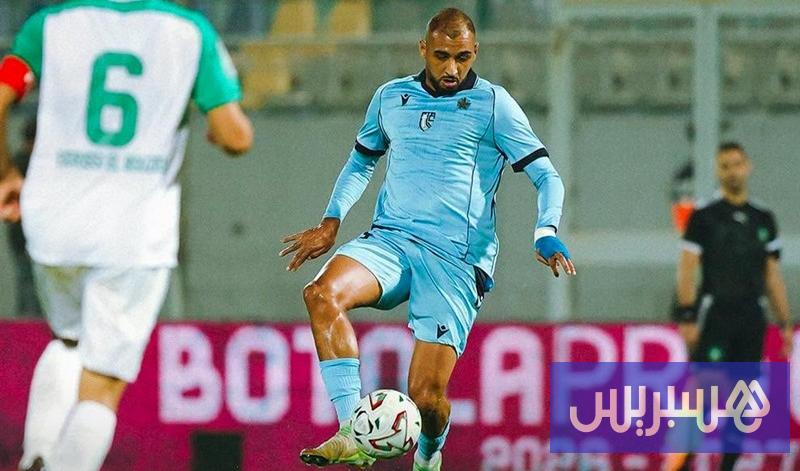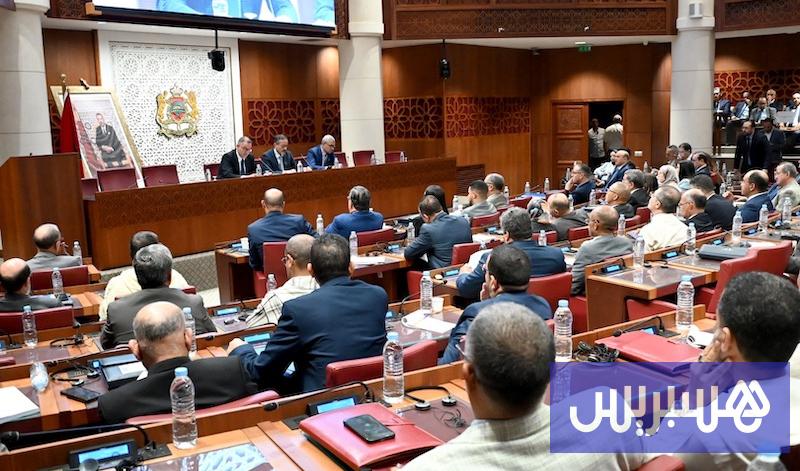
Fouzi Lekjaa, the Minister of Economy, Finance, and Public Administration, confirmed that Morocco's desire to host the World Cup is based on a long history and a developmental path that began in the late 1990s, culminating in the honor of organizing the 2030 edition. He emphasized that this achievement is led by King Mohammed VI with a comprehensive strategic vision that goes beyond narrow political calculations and personal gains.
During his presentation of the government's response regarding the 2027 budget bill, Lekjaa explained that the 2030 World Cup has a unique significance as it commemorates the centenary of the tournament across two continents and three countries, with Morocco representing the entire African continent. He called for comprehensive participation from youth and businesses in response to royal directives aimed at creating wealth and opportunities, making the tournament a "continental success."
The finance minister in Fatima Zahra Mansouri's government noted that the specifications document includes 38 sites for team accommodations, moving beyond merely designating cities for matches, thus expanding the geographical benefits. He also stressed the aim of spreading developmental gains as widely as possible and not limiting them to the six cities hosting the competitions.
The same government official revealed that hosting the World Cup is linked to major structural projects in infrastructure and railways, including the extension of the high-speed train line to Marrakech and its future development to Agadir.
He added that the plan also includes electrifying the railway line to Oujda and integrating Fez and Meknes via Kénitra to reduce travel time, explaining that organizing major international events like the World Cup aligns smoothly with a national development strategy that has been underway for decades. He committed to serving the interests of the nation and its citizens, emphasizing that government work and the tasks related to the World Cup all converge in the pursuit of sustainable development.
In another context, Lekjaa confirmed the plan to gradually increase financial support for families from 600 dirhams to 1,000 dirhams to combat inflation, while maintaining employment entry points to avoid continuous reliance on subsidies.
The Minister of Economy, Finance, and Public Administration stressed that the primary goal is to guide beneficiaries and encourage them to enter the labor market and achieve economic integration, with the possibility of reviewing the governing laws to achieve this aim.
He explained that the assumptions used in the budget law are characterized by realism and credibility compared to international institutions, with the price of a barrel of oil set at 75 dollars and the price of a ton of butane gas at 600 dollars. He anticipated that the inflation rate would stabilize around 1.5 percent over the next year, with a gradual decline to absorb previous pressures, alongside a 2.6 percent growth in external demand.
In the health sector, he highlighted that the challenge is not limited to infrastructure and financial allocations; it focuses on qualifying human resources and providing 35 health professionals for every 10,000 people, aiming to reach 45 by 2035.
In this regard, Lekjaa mentioned the hiring of more than 6,875 employees annually and the continued operation of university hospitals in Rabat, Laayoune, Dakhla, Kelaat Mgouna, and Errachidia. He stressed the need for public hospitals to regain their share of health coverage revenues and raise it to at least 50 percent compared to private clinics, to ensure the sustainability of the system and motivate medical staff through territorial health groups and the health function.
He also warned of the importance of universalizing preschool education by 2028 as a fundamental pillar in combating school dropouts.
Fouzi Lekjaa concluded by outlining the plan to reform the portfolio of public enterprises, which includes 58 institutions, by transitioning to a model of conglomerates and holding companies to enhance their investment capabilities and contributions to the general budget.