World Cup 2030: National school football competition aims to target one million students.
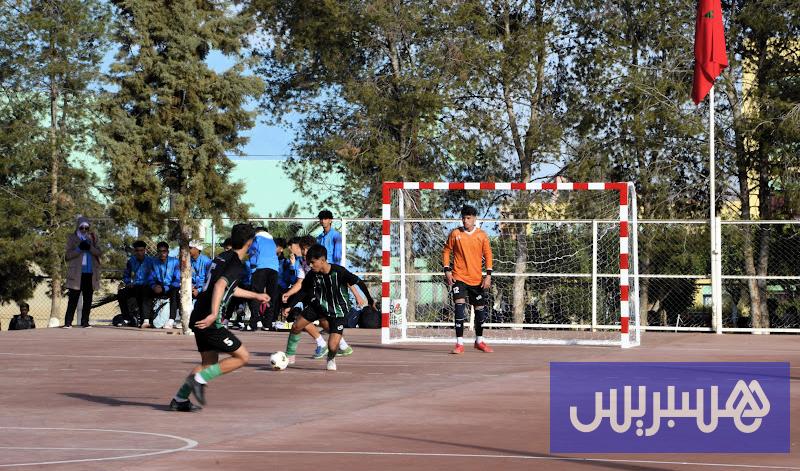
Mohamed Saad Barada, the Minister of National Education, Preschool Education and Sports, announced that the first trial edition of the national school football championship is expected to start during the 2026/2027 school year, with the participation of one million students by 2030. This initiative aims to enhance the social legacy of the 2030 World Cup and is described as "a sports and educational initiative aimed at primary school students to promote sports practice and strengthen the values of citizenship and equality."
In a detailed memorandum regarding the organization and management of school sports activities for the same academic year, which was obtained by Hespress, Barada outlined the organizational directions and general procedures for sports competitions. He explained that a participatory approach will be adopted in managing sports activities and championships for the new school year, focusing on the design and classification of sports championships.
Sports Movements
In the context of what the memorandum described as "continuing to activate the directions followed during the previous school year," particularly regarding providing equal opportunities for students not involved in clubs, sports associations, and royal universities to develop their sports and technical skills, and to enhance the principle of fair competition and equal opportunities, a set of new organizational measures has been adopted aimed at improving school sports and supporting strategic projects, led by the "Sports and Study" pathways.
Based on "the results of evaluating sports participation during previous seasons," it was decided, according to the document, to adopt national school championships dedicated to students not affiliated with sports clubs, associations, and universities, as well as to students enrolled in the hope classes who are not members of sports clubs, associations, and universities.
The memorandum confirms that these championships "aim to provide an opportunity for promising talents who have not benefited from regular sports training in clubs and associations to represent their educational institutions in a competitive atmosphere characterized by sportsmanship and the principle of equal opportunities," noting the "possibility of establishing sports hope classes for this category, according to applicable regulations," so that they "compete within the category of students not affiliated with sports clubs."
National school championships have also been adopted for students enrolled in "Sports and Study" pathways, as well as for students registered in sports hope classes affiliated with clubs, associations, and universities.
The document indicates that the goal is to "develop the levels of national elite sports and elevate elite sports, and participation is also open to students from sports excellence secondary schools, in accordance with the provisions of the framework agreement concluded with the Association for the Promotion of Excellence Education (APEE)."
As for specialized activities and championships aimed at specific categories, there will be a national festival for traditional and ancient games featuring artistic, technical, and competitive performances, a national school championship for second chance institutions, in addition to a national championship specifically for higher education training centers for education and training, as well as a national championship for the staff of the Ministry of National Education, Preschool Education and Sports, and the national forum for student teachers in physical education and sports.
"Central Institutionalization"
The same memorandum addressed "institutionalizing and activating the roles of school sports through the School Sports Association (ASS)," calling for "ensuring the continued establishment of school sports associations for primary education and private institutions; with the necessity of programming their activities in the schedules of teachers, as well as within the time allocations of students, and monitoring their implementation throughout the school year."
Based on available human resources and capabilities, Barada called for "developing the sports project for each institution as an integral part of its comprehensive project, to ensure the activation of comprehensive school sports sessions for all students, including those with disabilities, allowing them to showcase their sports skills and organizational and volunteer capabilities."
In this context, the Minister of National Education emphasized "the importance of establishing school sports associations in all primary and secondary educational institutions in both public and private education," stressing that "existing sports spaces and facilities outside the institution can be utilized according to a specific program in coordination with the institution's administration and the regional directorate responsible for managing the sports space."
In the content of the memorandum, the government official discussed "the role of school sports in reducing school dropout," explaining that "the sports component in preparatory secondary institutions aims to enhance the motivation of students, especially those at risk of dropping out; to strengthen their connection to the institution and increase their academic achievement by providing educational and sports support that meets their individual needs."
Barada also pointed out the contribution of sports to developing students' physical and social skills, emphasizing the need to allocate regular and structured sessions for school sports within the schedules of students and teachers as part of school sports sessions (ASS), while ensuring a diverse and attractive sports offering supervised by physical education teachers who have received specialized training in this field.
As part of "enhancing digital transformation and improving educational and sports performance in the education and training system," physical education teachers, according to the memorandum, will collect data on physical tests, such as maximum aerobic speed (VMA), sprinting, jumping, flexibility, balance, and anthropometric measurements such as height, weight, and resting heart rate for students digitally, through the newly created "medical information" section within the "Masar" system.
This process aims, according to the document, to "create a unified database that allows for early assessment of physical qualifications and capabilities, helps in discovering talents, and monitoring health cases that require special care and avoiding sports risks."
More from this section
The draw decides the match between Wydad and KAC Meknes.

Moroccan attacking brilliance in the Belgian league
Abde Ezzalzouli plays a key role in Real Betis' victory.
Akhomash: I look forward to winning the World Cup.

Fatigue may affect Zbiri's chances of participating.