Doubt looms for Burundians in Kenya following the president's directive to shut down businesses owned by foreigners.
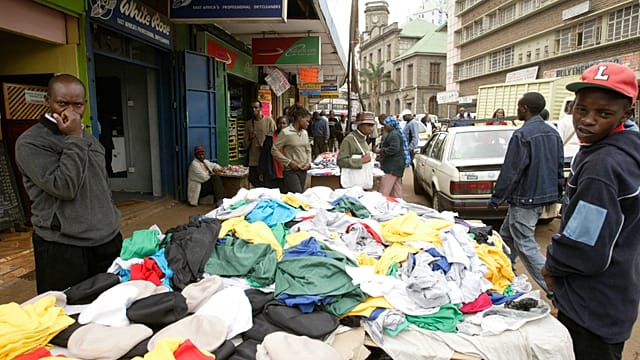
On Monday, hundreds of Burundians residing in Kenya gathered at their embassy in Nairobi to obtain travel documents after President William Ruto mandated the closure of foreign-operated small businesses.
Kenya has historically been a destination for migrants from across the East African Community (EAC), where member states benefit from unrestricted movement.
Last week, Ruto instructed foreign-owned small enterprises to cease operations by Monday, stating that the nation "has not fostered investor confidence for hawkers".
This directive instilled fear among many expatriates, especially Burundians who rely on street vending in Nairobi, leading to a rush for documents to return to their homeland.
Holding large brown envelopes, crowds waited for hours outside the Burundi embassy, with suitcases and plastic bags accumulating in the compound as many readied to depart.
"They've treated us like animals," Pastor Jean-Baptiste Ndayizeye shared with AFP.
Ndayizeye recounted that two of his neighbors had been assaulted and robbed, likening the situation to the xenophobic violence witnessed in South Africa. AFP could not independently confirm these assertions.
"What South Africans did to foreigners and what Kenyans are doing is essentially the same," he remarked, emphasizing that it was unjust they received no prior notice.
Another Burundian, Eric Bizimana, who moved to Kenya in 2022 after enduring years of unemployment back home, mentioned he had never sought a work permit due to its prohibitive expense.
"They're so heartbroken" to be leaving Kenya, said Philemon Jaika Adamba, a Kenyan motorcycle taxi driver who had transported two Burundians to the embassy. "It's just not right."
'Misunderstood'
Burundi, with a population of approximately 15 million and ranked among the world's poorest nations, is a member of the EAC alongside Kenya, the region's economic leader.
Burundi's foreign minister Edouard Bizimana denounced the "violence against foreigners, especially Burundians".
"The Kenyan government is accountable for the safety of Burundians residing in Kenya," he expressed on X.
"Allowing Kenyan civilians to take on the role of the police creates the impression of a failed state as it permits violence, looting, and xenophobia to flourish," he added.
Kenya's junior foreign minister Korir Sing'Oei visited the embassy later on Monday, expressed apologies to Burundians, and assured them that police would safeguard areas where violence had been reported.
Sing'Oei indicated that the president's comments had been "misunderstood".
"Due to this misunderstanding, many have faced attacks from their neighbors and acquaintances," he noted.
"Our primary objective is to ensure your well-being, confirm your whereabouts, verify your identification, and ensure your employment is registered," he stated.
Government spokesperson Charles Owino announced that authorities had initiated a "formal documentation and registration window" and urged Burundians to submit their documents at the embassy.
"The government acknowledges that due to historical factors and regional dynamics, numerous East African nationals, including several Burundians, live and operate in Kenya without complete documentation," Owino remarked.
More from this section

Charles Leclerc will steer clear of an engine penalty for the F1 Spanish Grand Prix, even after his crash at Monza.

“Even a minor error can lead to significant consequences” – How Madring will test F1 drivers
Five aspects to watch for during the F1 Spanish GP

Lassine Sinayoko shines with PFC

What Jacques Villeneuve truly gained from Gilles: "I am capable of this, you are not"