Why Not Every Footballer Undergoes a Shirt Change at Half-Time
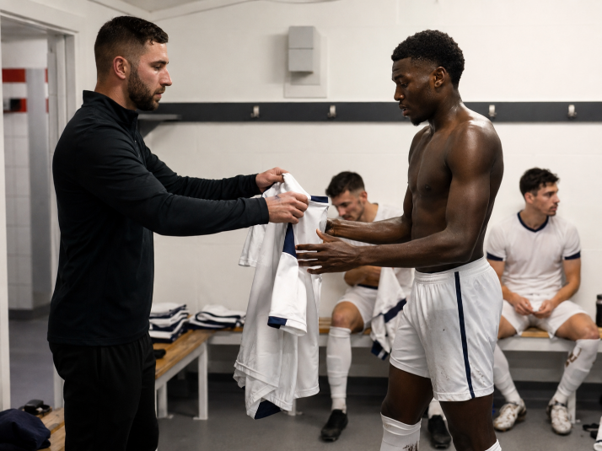
A new shirt at halftime may seem like a minor aspect of football. However, this practice is not mandated by the Laws of the Game, and there is no publicly accessible league-wide record indicating how frequently NPFL or lower-tier teams provide an additional match shirt. What can be understood is the rationale behind this decision: sweat builds up in clothing during intense physical activity, a dry replacement eliminates the moisture retained in the initial shirt, and clubs with more extensive kit operations possess greater adaptability in preparing matchwear.
This article examines what the half-time shirt change reveals about comfort, kit-room logistics, and the unequal resources present in football. The focus is to differentiate between what the rulebook states, what research on sportswear supports, and what remains unknown about shirt availability among Nigerian clubs.
Reasons Behind the Half-Time Shirt Change
How a Wet Shirt Affects Performance by Minute 45
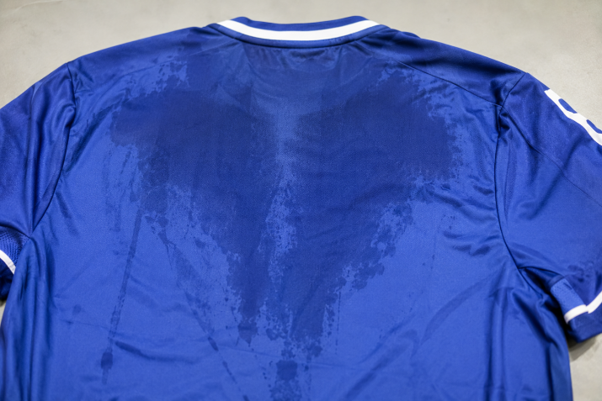
During rigorous physical activity, sweat does not distribute uniformly across a shirt. Research tracking sweat absorption during running indicates significant variances among different areas of the garment, with certain zones holding considerably more moisture than others. This helps clarify why a shirt may feel damp, heavier, or clingy in specific spots by halftime.
Describing the moisture itself is simpler than outlining any automatic performance implications. Studies do not indicate that a wet shirt invariably hinders all athletes, but a dry replacement instantly eliminates the moisture retained in the first shirt. The most noticeable difference is in comfort and sensation; establishing a confirmed advantage in sprinting or physiological performance is much more challenging.
The Rulebook Does Not Mandate a Fresh Shirt
IFAB Law 4 does not stipulate that an outfield player must don a fresh shirt at halftime. The law outlines mandatory equipment and addresses safety, colors, slogans, and other equipment-related issues, while individual competitions may impose their own requirements.
This distinction is significant. A halftime shirt change is a practice adopted by clubs or players, not a standardized football procedure. It may occur because a dry shirt is at hand and preferred, but the rulebook itself does not render this change obligatory.
What Transpires in the Kit Room During Half-Time
Advantages of a Well-Managed Kit Room
Top-tier clubs often have dedicated personnel responsible for kit management, preparation, and match-day equipment. This does not imply that every player at every elite club has a second shirt prepared for halftime, but it highlights the level of specialized support that can exist behind matchwear at the highest level.
When spare match shirts are available, a change can be executed swiftly during the interval. This adaptability arises from operational capacity rather than a uniform shirt quota across football. Regulations mandate compliant playing equipment, but do not prescribe a specific number of identical spare shirts that each squad must possess.
Why the Second Shirt Feels Distinct as Soon as It’s Worn
Contemporary match shirts frequently employ synthetic knitted materials designed to manage liquid moisture and aid evaporation. Wicking refers to the movement of liquid through a textile structure, yet how a garment copes with sweat also relies on its design, moisture distribution, airflow, and environmental factors.
A shirt that has absorbed sweat may feel damper or heavier than a fresh replacement. Changing shirts eliminates that accumulated moisture instantly, which can enhance comfort even if a physiological performance gain is not guaranteed. Consequently, manufacturers of teamwear focus closely on sweat-wicking match kit fabrics when selecting materials for intense exercise, but it is too simplistic to assert that a shirt simply “ceases wicking” once it becomes saturated.
Read Also: The Teams That Shocked Everyone At The 2026 World Cup | Biggest Upsets So Far
Why This Choice Varies Across Nigerian Football
The Expense Is for a Spare Shirt, Not an Entire New Kit
A halftime shirt change does not entail replacing boots, base layers, and every component of a player's kit. The immediate need is for a second compliant match shirt for the same player, along with the stock, printing, numbering, transport, laundry, and kit-room processes necessary to keep matchwear accessible.
Challenges related to sponsorship, player welfare, and inadequate training facilities have all been topics of discussion in Nigerian domestic football. In light of this broader financial context, the depth of kit resources becomes a pertinent issue, even though public data does not reveal how many shirts each NPFL club prepares for its players.
Unknowns About NPFL Half-Time Shirts
There is no public league-wide record indicating how many NPFL or lower-division clubs provide a second match shirt for each player at halftime. This lack of publicly available information is significant because it prevents standardized treatment of one-shirt-per-player policies, wringing out shirts, or towel-based alternatives across the league.
What can be concluded is that clubs with larger equipment teams and more extensive match-day supplies have greater flexibility to facilitate a shirt change, while tighter budgets can influence different kit decisions. A fresh shirt may indicate available resources and operations, but the prevalence of this practice across Nigerian football has not been publicly documented.
| Dimension | What We Know |
| IFAB rule | No halftime fresh-shirt requirement in Law 4 |
| Match-day shirt availability | Dependent on club kit policy and prepared stock |
| Elite operations | Dedicated kit personnel can provide more match-day equipment options |
| NPFL / lower divisions | No public league-wide data confirms spare-shirt availability |
| Budget pressure | A broader resource issue, not evidence of one-shirt-per-player policies |
The overarching resource disparity remains apparent; however, the specific details regarding shirt counts are less documented. This makes the halftime change a useful insight into football operations, rather than a comprehensive overview of African kit rooms.
Insights from the Half-Time Shirt Change Regarding Football’s Financial Disparity
Origins of the Kits
At the elite level, global kit partnerships and specialized equipment operations can transform matchwear into a highly structured component of club logistics. Conversely, at the lower end of the teamwear spectrum, local suppliers and independent kit manufacturers may operate with significantly lower material quantities. These two supply chains function differently: elite clubs are part of extensive kit partnerships, while smaller teamwear producers may source and test materials in much smaller batches.
For a modest teamwear manufacturer experimenting with sweat-wicking fabrics, procuring wholesale fabric by the yard can minimize the material investment required for prototypes or limited runs. Global Fabric Wholesale offers fabric sold by the yard without any minimum order, highlighting the sourcing flexibility for the manufacturer. This adaptability is beneficial during the sampling or small-run phases, although it does not address the broader expense of creating an additional match shirt for each player.
Frequently Asked Questions
Do all professional football players switch shirts at half-time?
No. The IFAB's equipment regulations do not mandate a new shirt at half-time. The decision to have a second match shirt ready or used is influenced by club traditions, available kit, and player choices. There is no comprehensive league-wide data indicating how prevalent this practice is across professional football.
What happens to the sweat-drenched shirt after it is removed?
There isn't a universal football regulation governing this. After a player takes off a match shirt, the club’s kit personnel manage it according to team guidelines and match-day protocols. The procedures for washing, storing, and handling match-worn shirts can differ from one club to another.
None of this alters the dynamics on the pitch in real time; the outcome still relies on the players' actions with the ball. However, when a broadcast camera captures a player emerging for the second half in a clean shirt, the most accurate interpretation is not simply “wealthy club” or “less affluent club.” It indicates that a dry replacement was accessible and selected.
Behind that brief moment lies kit policy, prepared inventory, staff involvement, and player choices. In Nigerian football, broader sponsorship and welfare considerations make the resource question significant, but until clubs or leagues disclose shirt inventory data, the half-time shirt swap is better viewed as a glimpse into football operations rather than evidence that the majority of African teams lack the financial means for extra kit.
More from this section

2026 World Cup Final Preview: Spain vs Argentina and Insights from World Cup Betting Lines

NNL: Maikaba Appointed as the New Head Coach of Bayelsa United
Super Falcons Defender Inks Fresh Three-Year Deal With AS Roma
Confirmed Transfer: Ugochukwu Signs With Galatasaray On Loan
Saliba Set for Five Months on Sidelines Due to Back Injury