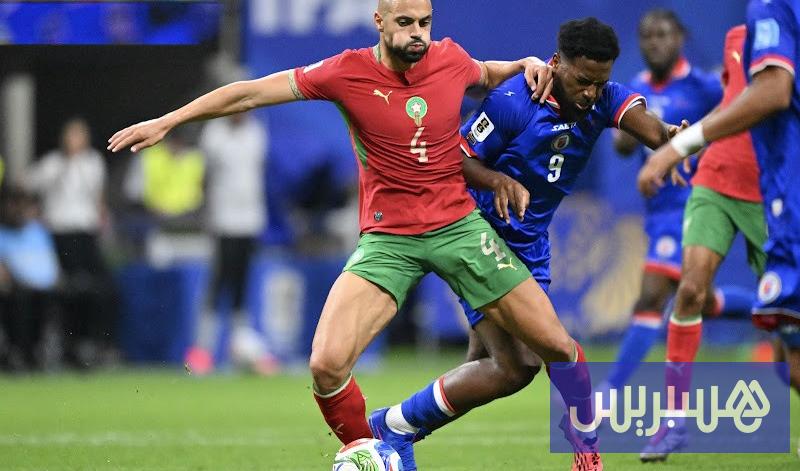
Al-Shammami: I left football without a home.. and refereeing errors cause frustration for clubs
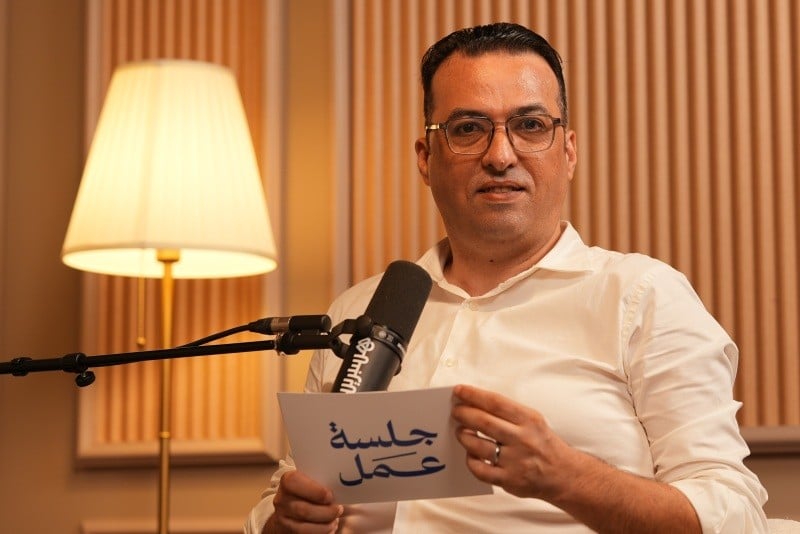
Former Moroccan international player Abdelwahed Chahmami stated that "the current generation seeks to achieve everything quickly," comparing this shift to moving from "tagine," which is left to simmer slowly over a gentle fire, to "fast food" served in just a few minutes. He predicts that future generations will be even quicker in meeting their needs.
In response to a question from Hespress about his connection to the capital, Chahmami expressed that Rabat holds a special place in his heart due to his deep ties to his family and love for the city, in addition to the strong bonds he shares with his immediate family.
During his appearance on the "Working Session" program aired by Hespress, Chahmami noted that this factor influenced his sports career to some extent, as he never considered moving to play outside Rabat, despite receiving offers from Moroccan clubs. He preferred not to accept them due to his strong ties to his family first and to Rabat second, adding that he was the only son in his family who did not think about emigrating, even though his siblings left to experience "foreignness."
The Beginning and the "86 World Cup Generation"
Chahmami said he was fortunate to start his football career at a prestigious club like FAR Rabat, which he initially followed as a fan before becoming part of the team and joining a prominent "World Cup" generation at a young age.
The "Working Session" guest explained that his journey began in the Al-Nahda neighborhood, where he and some friends were preparing to try out for AS Salé, before one of his brothers surprised him with an offer to take another test with FAR Rabat.
He added that he felt a mix of astonishment and joy upon hearing the proposal, recalling prominent names from the Moroccan national team that made history in the 1986 World Cup, such as Timoumi, Ahssain, and Khairy, emphasizing that his happiness was so great that he couldn't sleep from thinking about it.
The former FAR Rabat player also recounted the details of his first trial, noting his surprise at the dirt pitch at the Agdal center, then facing another challenge with the sports shoes he was wearing; nevertheless, he managed to pass the tests, especially after showcasing one of his strongest points at the time, which was his powerful long-range shooting.
Chahmami also spoke about the role of national coach Idriss Wadiash in his career, affirming that he benefited greatly from him and learned the rules of football during a critical phase in his development.
In this context, the former player recalled the contributions of several great and veteran players like Lghrissi, Fdili, Hida, Ahssain, Khairy, and others, who embraced him in his early days and opened the doors to learning within FAR Rabat, where they shared with him the secrets of the game and the values of discipline, commitment, and defending the club's jersey.
He confirmed that his achievements and successes are owed to these names and the support and guidance he received from them, which contributed to his formation and instilled the values he carried throughout his football career, noting that the environment within the club aligned with what he was raised with at home, and the values he found there were consistent with his upbringing.
"Joker," "Customs," and "Analysis"
Chahmami highlighted that he had the ability to play multiple positions on the field, which made him fulfill the role of a "joker" capable of adapting to the demands of matches and assisting the team in various positions.
Speaking about financial aspects, the former international explained that football during that period was significantly different from today, noting that players did not receive signing bonuses but were paid salaries and bonuses for victories. He added that only three players were outside the ranks of military personnel or gendarmes and had stable jobs, while playing football within FAR Rabat was also linked to a professional system different from the current professionalism.
The Hespress guest mentioned that he ended his sports career in 2001 without being able to buy a house, as he earned a monthly salary that did not exceed 2000 dirhams, despite his name and status in Moroccan football. He considered that the current generation lives in a different reality, as the game now generates more money, even if it requires, in his view, a lot of work and seriousness, especially with the emergence of corporate systems and the increasing presence of sponsors in the professional league.
The former international reminded that families used to view football as an uncertain path, preferring their children to pursue regular jobs that provide stability and job security; however, this perspective changed over time as football became a professional field and a source of income and job opportunities, a reality that the current generation clearly understands.
The "Working Session" guest explained that his entry into the world of sports analysis was not a well-thought-out career choice but came because it was the field closest to his interests and most suitable for his experience and professional and football career. He noted that he worked in customs management from 1988 until 2001, alongside his career at FAR Rabat, before finding himself, after 2001, forced to return to his customs work.
Chahmami stated that this situation posed a barrier to continuing his coaching career, which required greater time commitment and dedication, prompting him to shift towards sports analysis, benefiting from his personal experience on the pitch and his knowledge of the sports field. He explained that analysis aims to simplify sports information and facts for the audience in a smooth manner, without targeting players and coaches.
"Refereeing" and the Portuguese Coach
Chahmami addressed the issue of refereeing in the Moroccan league, noting that this problem will persist, not only in Morocco but worldwide, recalling some refereeing mistakes his team, FAR Rabat, faced in matches with certain referees.
The former player emphasized that the repetition of refereeing errors with the same clubs and the same referees raises many questions and accusations, considering that this matter causes players and teams to focus more on the referee rather than on the opposing team, negatively affecting player performance and distracting their focus.
Chahmami expressed hope for reform in this area, affirming that the Video Assistant Referee (VAR) technology was introduced to ensure fairness for all, although some situations still depend on the referee's judgment, which sometimes does not satisfy players, coaches, and fans. He recalled the incident of the penalty not awarded to Sofiane Boufal against France in the Qatar World Cup.
The former international confirmed that football will progress as long as refereeing is fair, or at least as long as refereeing errors decrease, because the referee is responsible for the success or failure of the world's most popular game.
The "Working Session" guest touched on the tendency of several first-division clubs to hire Portuguese coaches, a phenomenon that has notably emerged in the Moroccan league recently. He explained that the presence of several Portuguese coaches in the professional league is not unusual, noting that Portuguese coaches have always been present in the Moroccan league since the 1990s, and the Portuguese school has proven itself strongly in the global coaching market.
He added that the real debate is not about the nationality of the coach but rather about whether Morocco has national talents capable of leading Moroccan clubs, emphasizing that competence is what matters most, and the competent individual is the most deserving. He then noted that if the competence of the Moroccan and foreign coaches is equal, the choice should favor the Moroccan coach.
Chahmami linked this stance to the development that Moroccan football has witnessed and the identity it has begun to carry, recalling the successes of national coaches in recent years, such as Walid Regragui, Hussein Ammouta, and Jamal Sellami, considering that the achievements of these coaches confirm the ability of Moroccan talents to exist and compete at the highest levels.
More from this section
Ziyech: I want to experience football in Brazil.

Haaland praises Bouaddi: "We have a treasure."
Mourinho praises the impressive performance of Moroccan Ibrahim Diaz.
Sibari is close to achieving glory on the European stage.
Between Rekraki's history and Wahbi's aspirations, El Shammami feels optimistic about the performance of the Moroccan national team.