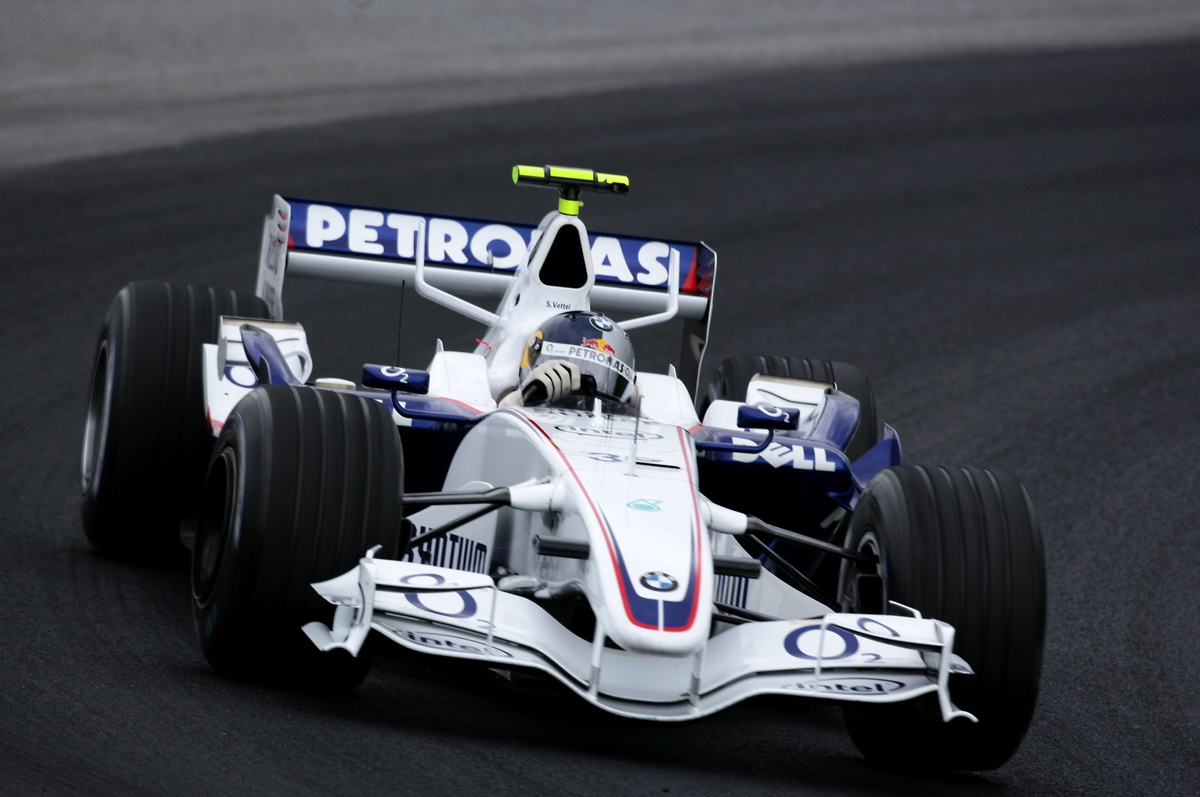
1980 Formula 1 world champion Alan Jones has passed away at the age of 80.
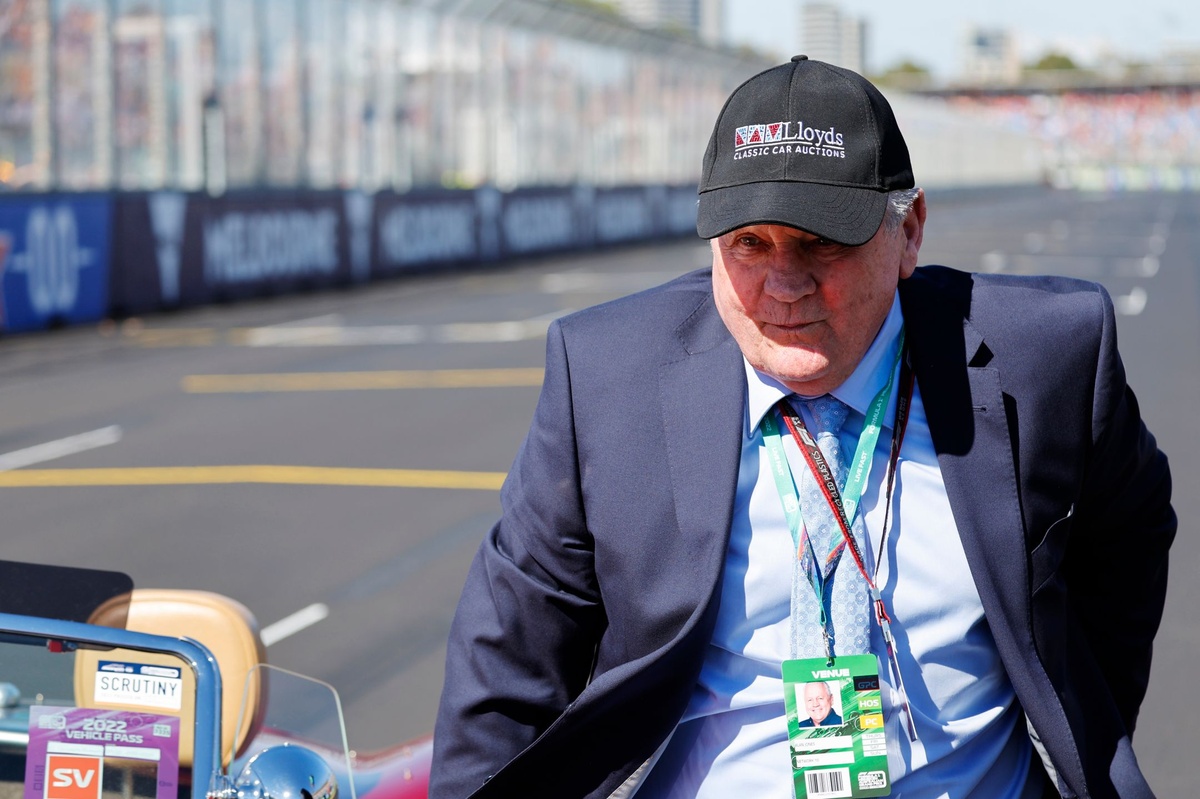
The 1980 World Drivers’ Champion, Australia's Alan Jones, passed away on the Gold Coast this past Thursday.
A statement issued on behalf of Jones's family revealed that his wife, Amanda Butler-Davis, announced he died following a brief illness. He was 80 years old.
“It is with great sadness that we share the news of our dear Alan's passing on 5 November after a short illness,” Butler-Davis stated.
“He will be profoundly missed and cherished by those closest to him, as well as the numerous fans whose support he always appreciated.
“Alan devoted his life to motorsport, creating a legacy that will endure through the many individuals he impacted throughout his journey.
“Through his accomplishments, enthusiasm, and distinctive personality, both on and off the track, Alan made a lasting impression on the sport, both nationally and internationally.
“As a family, we wish to express our gratitude to everyone who was part of Alan's journey for their years of friendship, love, and support. He was incredibly fortunate to have so many remarkable people in his life.”
Born in Melbourne in 1946 to businessman and racer Stan Jones, Alan watched from the sidelines as his father triumphed in the 1959 Australian Grand Prix at Longford. The younger Jones replicated this success at Calder Park in 1980 and remains the last Australian driver to win this race, regarded as the second-oldest Grand Prix globally.
Jones ventured into racing in the UK during the 1960s before returning to Australia, eventually moving to London in 1970. It took him three years to make his mark, clinching his first Formula 3 race at Silverstone in 1973, the same year he finished second in the British F3 championship with a GRD.
Frank Dernie, Frank Williams and Alan Jones
In 1975, he made his debut in Formula 1 at the Spanish Grand Prix in a Hesketh, and after that team shut down at the end of the season, he joined Graham Hill’s team, then moved to Surtees.
That team also faced closure, and Jones’s career seemed to falter – until Shadow reached out, following the tragic loss of lead driver Tom Pryce in South Africa. In a remarkable turn of events, Jones won in Austria, showcasing an exceptional performance on a wet track, overtaking local hero Niki Lauda to secure the first win for an Australian since Sir Jack Brabham’s retirement.
Ferrari showed interest in Jones for 1978, and he believed he had a deal – until Enzo Ferrari changed his mind and signed Gilles Villeneuve instead. Left with an offer from the struggling Williams team, Jones decided to join, as owners Frank Williams and Patrick Head had ambitious plans.
Jones nearly clinched victory with the Williams FW06 at Long Beach, but a broken wing thwarted him, and again at Brands Hatch, where a gearbox failure occurred. At the US Grand Prix, he finished second behind Carlos Reutemann’s Ferrari while a new car, the FW07, was being completed back at Grove.
Once Jones and his new teammate Clay Regazzoni got their hands on the FW07, they quickly appeared to be front runners. Jones led significantly at Silverstone until a water pump failure allowed the Swiss driver to secure the team's first victory. Jones then dominated, winning four of the last six Grands Prix, finishing third in the championship, behind Jody Scheckter and Gilles Villeneuve.
In 1980, Jones won five Grands Prix — Argentina, France, Britain, Canada, and the USA — to capture the world championship, capping off the year with a non-championship victory at Calder.
In 1981, he continued to perform well, guiding Williams to the Constructors’ title and competing fiercely with Nelson Piquet for the Drivers’ championship. Jones won twice, at Long Beach and Las Vegas, but a series of retirements and the pressures of travel led him to announce his retirement at the season's end.
He raced at home in GT cars and open-wheelers, but the desire to return was too strong. He drove an Arrows at Long Beach in 1983, took the next year off, and returned a year later with the Beatrice-Haas team, initially for three Grands Prix and then a full season in 1986. No additional wins were added to his record, and he retired at the season's conclusion.
Back in Australia, he raced in what would become V8 Supercars, achieving a best result of second in 1995, and even competed in sports cars (including Le Mans) with Porsche and Toyota as well as CART with Newman-Haas. His final appearance in professional motor racing was in 2002, serving as a co-driver in the Bathurst 1000 with Dick Johnson Racing.
Alongside his ongoing motorsport endeavors, Jones enjoyed a successful media career, providing commentary for Australia's Formula 1 television coverage for many years. Just as he was in the driver's seat, he was candid and addressed matters as he perceived them.
He received an MBE for his contributions to motor racing in 1980 and was inducted into the Sport Australia Hall of Fame in 1985.
He is survived by his wife and his six children: Christian, Amber, Zara, Jack, Camilla, and Emma.
More from this section
What is the minimum age at which someone can become a Formula 1 world champion?
Reasons Behind Daniel Ricciardo's Absence from the F1 Paddock
Esteban Ocon's journey in Formula 1 could be reaching its conclusion, yet his narrative is one of triumph.
Reasons Daniel Ricciardo Might Contemplate a Return at Le Mans
Is Daniel Ricciardo having second thoughts about his decision to depart Red Bull for Renault?