Did Haas make the right choice in bringing Rafael Camara on board for F1 2027?
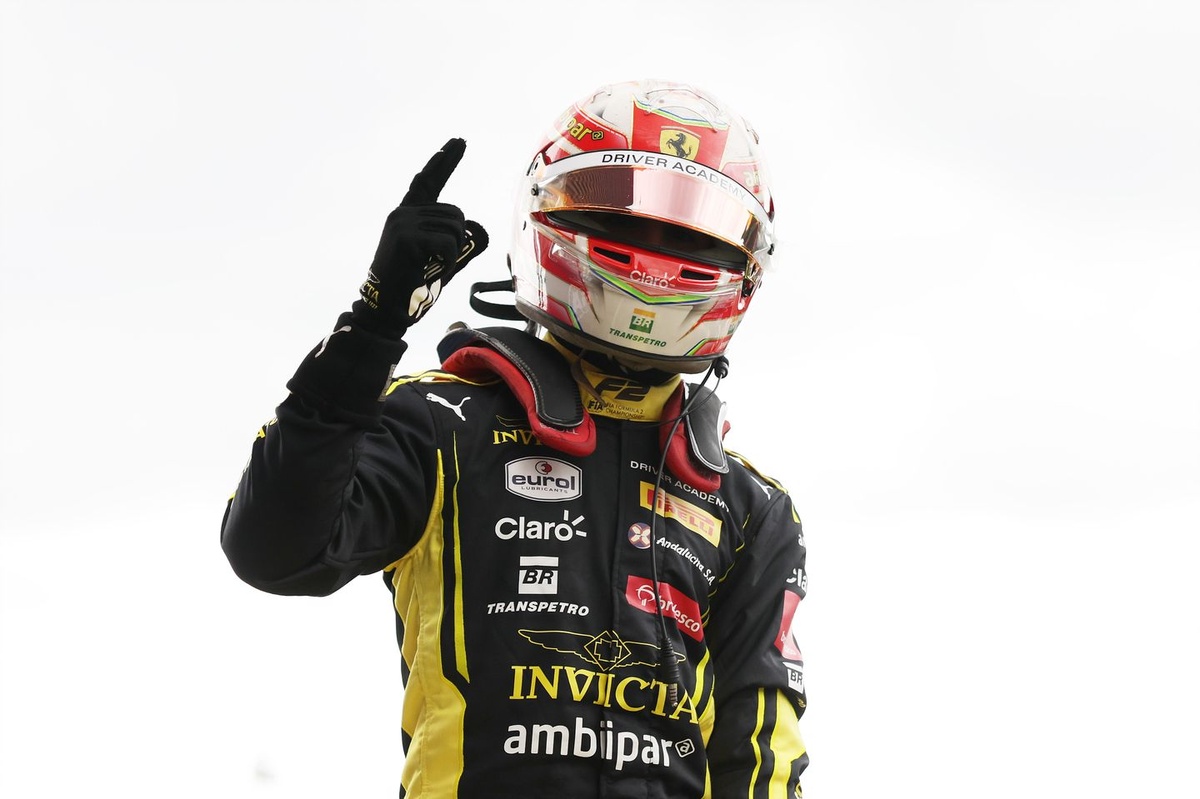
Rafael Camara has been officially named a Formula 1 driver for the 2027 season, stepping in as Esteban Ocon’s replacement at Haas.
This will mark the 21-year-old Brazilian’s entry into F1 after a swift ascent through the junior categories.
Camara clinched the 2024 Formula Regional European Championship and the 2025 Formula 3 title, and he currently leads the Formula 2 standings by a margin of seven points.
However, he is still an unrefined talent, especially when compared to the seasoned race-winning expertise of Ocon, who has faced challenges since joining Haas at the beginning of 2025.
So, has the American team made the correct decision? Our analysts weigh in.
Raw speed makes Camara a compelling choice
Rafael Camara, Invicta Racing
As the saying goes, you can make a fast driver dependable, but you can’t make a dependable driver fast.
Camara ranks among the quickest drivers of the last decade in the junior categories; his qualifying stats are impressive. He achieved seven poles, more than any other driver, en route to the 2024 Formula Regional European Championship title; his 2025 F3 record included five poles out of nine, an unprecedented achievement in the current era. The last comparable performance was Luca Ghiotto’s identical feat during the 2015 GP3 season. However, Ghiotto narrowly lost the title to Ocon in what was arguably the most competitive championship battle at that level.
Fast-forward 11 years, and Ocon is losing his Haas seat to Camara. Are the Frenchman’s results this season reflective of his true capabilities? Likely not, considering the VF-26’s notorious inconsistency issues have plagued him for an extended period. This situation may have affected team dynamics, leading to growing frustration, which could justify the need for a change—especially with an option like Camara available.
The Brazilian possesses all the essentials: support from Haas supplier Ferrari—similar to expected future Haas teammate Oliver Bearman—clear pace, and the potential for consecutive titles in FREC, F3, and F2. The Invicta racer currently leads the F1 feeder series standings, boasting five pole positions out of 13, while no other driver has secured more than two.
Of course, there have been errors, like his premature retirement while contending for victory against title rival Nikola Tsolov in Monaco, but Camara has consistently achieved points finishes and impressive feature race victories.
While Haas will miss Ocon’s experience, Bearman has the potential to evolve into the team leader role, making this a sensible decision for future growth.
- Ben Vinel
Why replace a grand prix winner with a rookie?
Ocon after winning the 2021 Hungarian GP
Ocon was quite candid about his situation: he expressed he doesn’t deserve this treatment, to be precise. I see no reason to disagree with him.
Indeed, statistics usually reflect the truth. And while Ocon, being the more seasoned driver, has every right to consider himself a team leader, he has accumulated fewer points so far than Bearman.
But is this genuinely indicative of him underperforming?
Ayao Komatsu has acknowledged the car's inconsistency issues, and if Ocon is to be believed, he has only had a few races where he could truly compete. Recent rounds suggest that, while he may not outperform Bearman, he is at least on equal footing with him.
Historically, Haas has greatly benefited from drivers with extensive experience. Figures like Romain Grosjean and Kevin Magnussen played pivotal roles in establishing the team’s credibility—yet it has also faced significant challenges with rookies in the past. The decision to select Mick Schumacher and Nikita Mazepin was primarily driven by the financial support they provided. But does Haas truly need to opt for another rookie at this juncture? There's little reason to think so.
It seems the Brazilian has been selected by Haas based on sporting rationale, but I struggle to see how he can currently surpass a proven race winner. Unless there is overwhelming pressure from Ferrari to recruit another junior from its Academy, I find it hard to believe Camara will score more points for the team immediately compared to Ocon, given his experience.
Ocon remains quick and dependable when the car is functioning optimally. So why implement the change? Especially for another driver who can be recalled at any moment by Ferrari.
How can you build a future centered around drivers who are essentially on loan from a larger team? I believed the Ocon and Bearman pairing made perfect sense in that regard, as the Frenchman was the team's own driver. Now, Haas seems to be leaning towards becoming a Ferrari junior team rather than maintaining independence.
All of this may become moot if Komatsu has observed something truly exceptional in Camara during these TPC tests—and considering Bearman’s development, one could argue Ayao knows what he’s doing.
Yet, there remains a sense that Ocon has been unfairly treated by the team—one that has seemingly exploited its underperforming car as a rationale for his dismissal.
- Oleg Karpov
This is Haas’ opportunity to secure a potential generational talent
Rafael Camara, Invicta Racing
In recent rounds, it has been hard not to feel sympathy for Ocon as we witness him make such extravagant statements in what appears to be a desperate effort to remain on the grid. Would he be making such remarks if he weren’t under pressure? No. He was clearly trying to remind everyone of his past achievements, knowing he was under scrutiny.
But whether one likes it or not, much of what he stated holds merit. Ocon concluded a commendable junior career by winning GP3—defeating Max Verstappen in European F3 along the way—and has more than held his own for a decade in F1.
His impressive first full season in 2017 shouldn’t be overlooked, scoring points in every race except two for Force India, nor should we forget his near career-defining move to Mercedes during its dominant phase. Additionally, his victory at Hungary in 2021 and the fact that he is one of only two drivers—alongside Jenson Button—to outscore Fernando Alonso in a season as teammates—92 to 81 in 2022—should also be noted.
It is hoped that these accomplishments will define Ocon’s legacy, rather than his two seasons at Haas. In a similar vein, Daniel Ricciardo should be remembered for everything but his decline at the end.
Nevertheless, there is another reality that must not be ignored: it is time for Ocon to move on. Although his results have shown improvement recently, how much of that is influenced by the 30-year-old being aware of the stakes? Haas isn’t likely to see significant improvement with the Frenchman at the helm, but it just might with an exciting talent like Camara.
Oleg discusses age and experience, but the soon-to-be 2026 champion—Kimi Antonelli—started the season as a teenager. So, is that truly as vital in today's context? Camara is also the same age as Bearman, and his junior achievements speak volumes.
Should he win the F2 championship, he will join the ranks of Charles Leclerc, George Russell, Oscar Piastri, and fellow Brazilian Gabriel Bortoleto as a rookie capturing both that and F3 titles. Camara would also be the sole driver to secure those two and FREC in consecutive seasons.
These statistics depict a future frontrunner, and considering the 21-year-old’s speed as highlighted by Ben, he is already at F1 caliber. There’s every reason to believe he’ll be contending for victories and championships a decade from now. An opportunity to sign such a driver may not come again, so Haas must seize this chance, and credit to them for doing so.
- Ed Hardy
More from this section
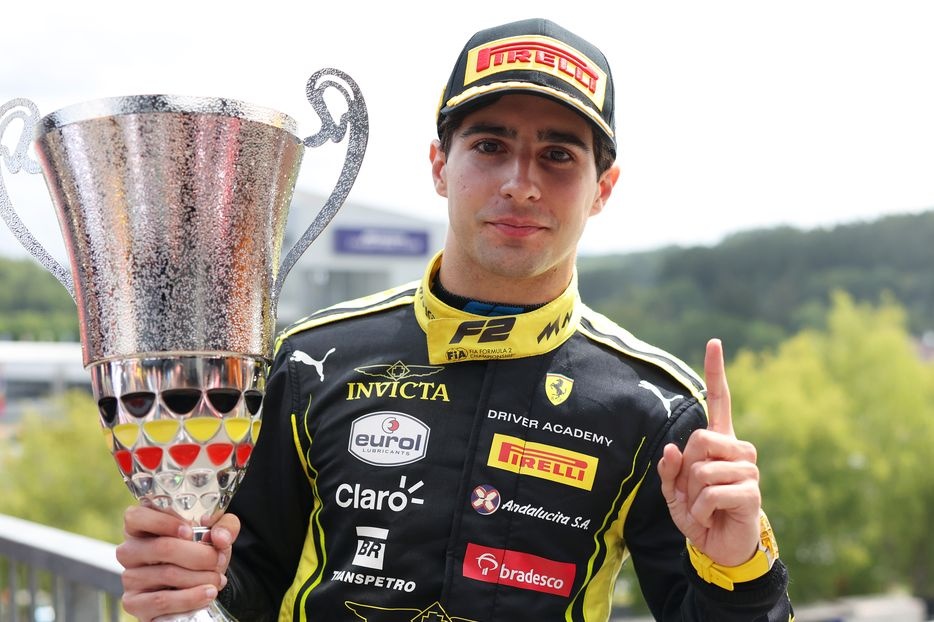
Rafael Camara is set to take over Esteban Ocon's position at Haas for the 2027 Formula 1 season.
Lando Norris criticized by Guenther Steiner for "not displaying a world champion's mentality"
Max Verstappen shares his thoughts on the "incredibly special" moment during the Singapore GP with Gianpiero Lambiase.
Christian Horner playfully pokes fun at Guenther Steiner: 'He has yet to secure an F1 podium finish'
Every milestone Kimi Antonelli could surpass if he clinches the F1 championship in Austin