Honda discreetly unveiled its second F1 ADUO enhancement in Madrid.
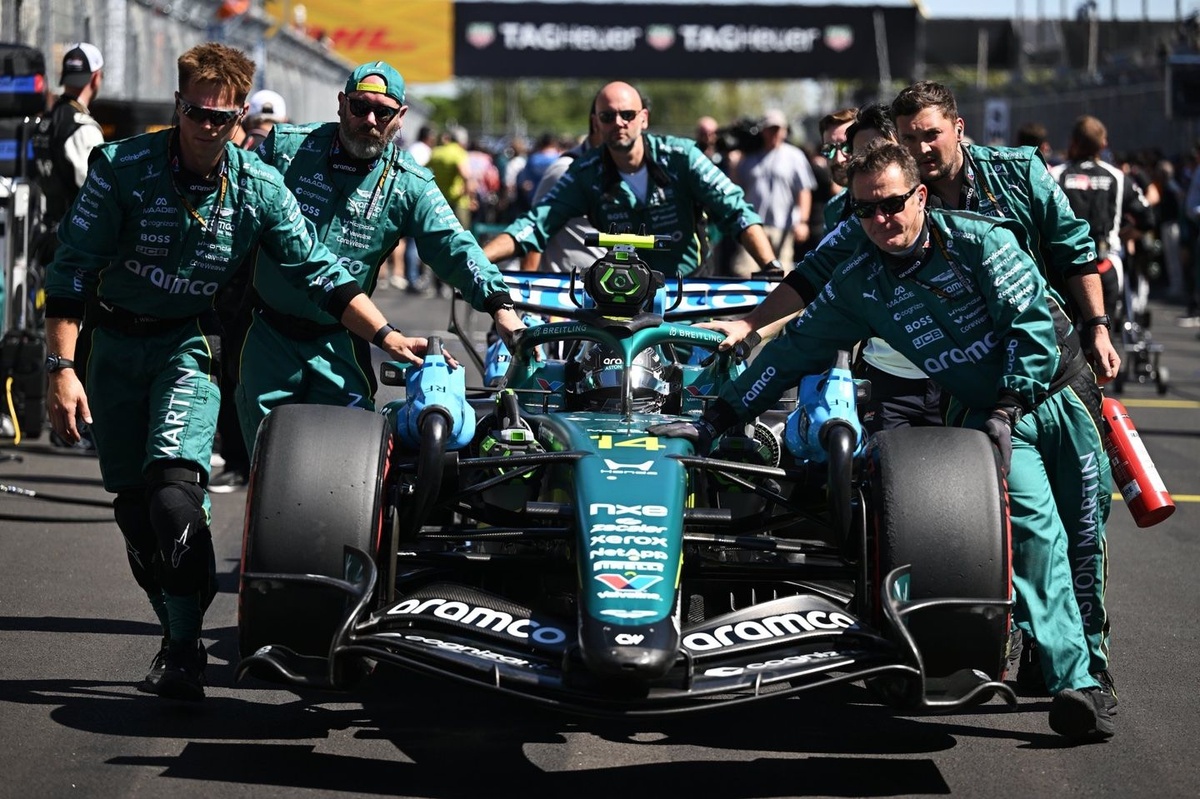
Koji Watanabe, president of Honda Racing Corporation, has disclosed that Honda actually rolled out its second ADUO (Additional Development and Upgrade Opportunities) enhancement as early as the Formula 1 Spanish Grand Prix, concentrating on the power unit's turbocharger.
Aston Martin and Honda faced challenges at the season's outset, but their performance saw a modest uptick following a significant chassis upgrade implemented at the Hungaroring. At Zandvoort, the team also debuted a power unit equipped with the first ADUO upgrade.
Honda's internal combustion engine was found to be over 4% behind the Red Bull Ford Powertrains engine, which was rated as having the highest output, prompting Honda to be permitted to utilize two ADUO tokens throughout the season.
Honda and HRC had earlier communicated their intention to use just one of those ADUO opportunities. “We used both of them,” Watanabe told Motorsport.com when queried about why Honda opted to implement only one ADUO upgrade.
“We introduced the first ADUO upgrade in the Netherlands, and then we equipped Lance Stroll's car with a power unit featuring the second update at the Spanish Grand Prix.
“The Spec 2 power unit we launched in the Netherlands encountered some drivability issues, so we rolled out an enhanced turbo at the Spanish Grand Prix.”
Indeed, the FIA's record of power unit component usage indicates that Stroll's vehicle was fitted with its fifth turbocharger of the season at the Spanish GP. Fernando Alonso's car was also outfitted with his fifth turbo, which seems to be the upgraded variant, at the Azerbaijan GP.
Fernando Alonso, Aston Martin Racing
When asked if the goal was to tackle turbo lag, Watanabe responded: “Yes.” He further elaborated on the rationale behind the phased introduction of the upgrades.
“It would have been ideal to roll out everything simultaneously, but it was crucial to launch Spec 2 in the Netherlands first. We were also working on solutions to mitigate turbo lag concurrently, which we implemented in Spain.
“Thus, the application ended up being divided between the two.”
Watanabe also mentioned, however, that Honda has yet to fully harness the potential of its power unit.
During Honda's previous partnership with Red Bull, they were restricted from introducing performance enhancements but continued to utilize simulations to ascertain the operating limits of the power unit and gradually elevate those limits year after year. This approach was what Honda termed “reliability development.”
For instance, Red Bull adopted notably compact sidepods in 2024, while also minimizing the size of the openings used for airflow intake for cooling. This was facilitated by raising the operating limits of the power unit.
“Regarding ADUO, we have utilized our opportunities for this season. Moving forward, we will focus on developments that do not involve hardware, as well as advancements that will contribute to the future,” Watanabe stated.
“I believe we are still far from realizing the full performance of the power unit. There is still potential for enhancing its competitiveness.
“There were still areas where we felt power was lacking, so we developed Spec 2 with specific target figures in mind. We have met those targets, so for the remainder of the season, our priority will be on maximizing what we currently have, rather than pursuing further hardware development.
“Nevertheless, we want to ensure we can compete effectively.”
More from this section
Isack Hadjar discusses the experience of competing against the "best of the best," Max Verstappen.
Apple TV reveals significant enhancements to F1 coverage for the United States Grand Prix.
Max Verstappen discussing life post-Christian Horner: “It feels less stressful”
Five aspects to watch closely at the F1 Singapore Grand Prix
Mercedes stands by its choice to turn down an essential FIA driver assistance feature.