Max Verstappen versus Valentino Rossi: A Comparison of Their GT3 Vehicles
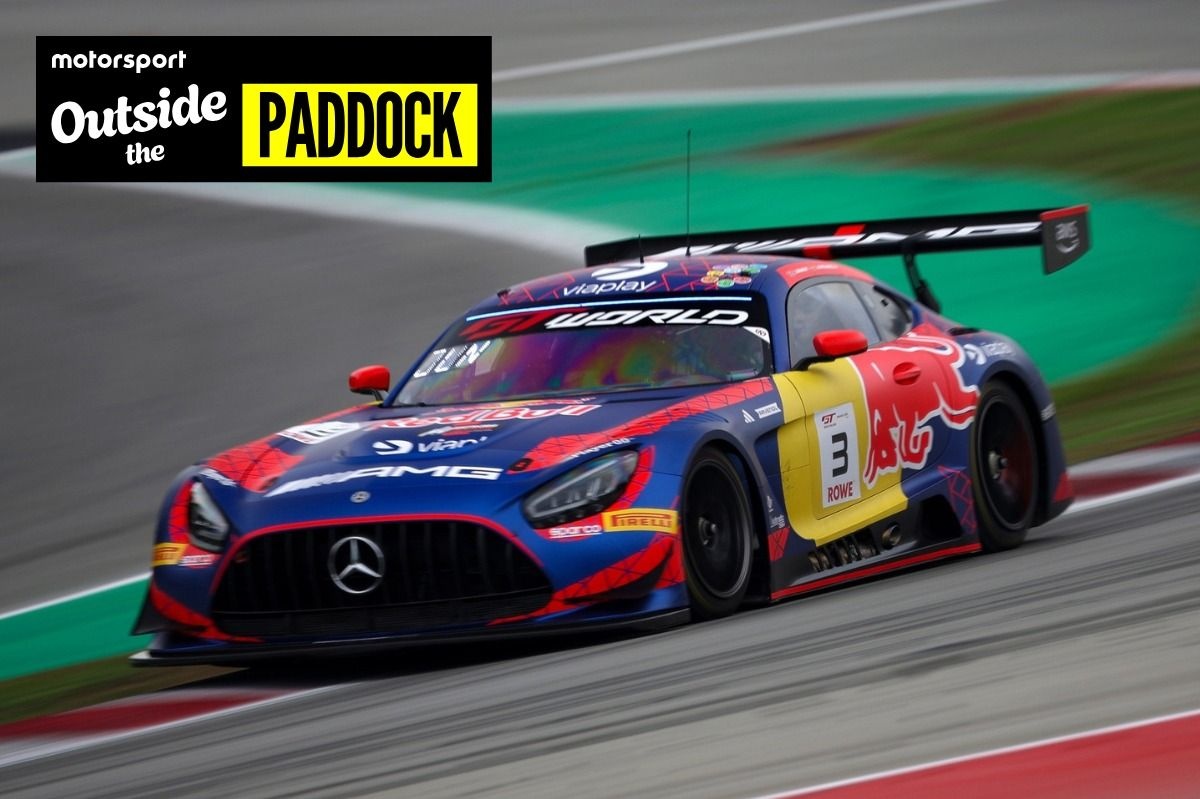
The Mercedes-AMG driven by Max Verstappen and Valentino Rossi's BMW are distinctly different vehicles, featuring varying turbo counts and entirely unique sound profiles. However, the regulations are structured to ensure they have equivalent pace. This Saturday in Portimao, the two competitors will clash in the concluding round of the GT World Challenge Europe Endurance Cup, prompting a comparison of their respective machines.
This weekend's grid consists of 61 cars, with Verstappen stepping in due to regular drivers Jules Gounon and Daniel Juncadella participating in the World Endurance Championship round in Barcelona. This creates a compelling showdown between the Formula 1 champion and the MotoGP icon in the elite Pro category.
A powerful V8 versus a compact turbo six
The Mercedes-AMG Team Verstappen Racing entry features a Mercedes-AMG GT3 EVO, piloted by Chris Lulham and Ben Barnicoat, with on-track management provided by 2 Seas Motorsport. The team transitioned to Mercedes for 2026 after previously campaigning Aston Martins.
At the heart of the car is the M159, a naturally aspirated 6.3-liter V8 engine that produces roughly 550 horsepower, though the output is subject to adjustments based on Balance of Performance regulations designed to equalize performance throughout the GT3 class.
The car operates with a rear-wheel-drive layout, a front-mid-mounted engine, a six-speed sequential gearbox, and weighs approximately 1,285kg, all dictated by BoP.
On the other hand, Rossi's No. 46 BMW M4 GT3 EVO, managed by Team WRT, takes a contrasting approach. Its P58 engine is a 3.0-liter (2,993cc) twin-turbo straight-six derived from the road version, generating "up to 590hp" prior to BoP adjustments. It features a six-speed Xtrac gearbox, measures 5,020mm in length with its splitter and wing on a 2,917mm wheelbase, and is equipped with 390mm front discs and six-piston calipers, along with 380mm rear discs. Rossi shares driving duties with BMW factory drivers Max Hesse and Neil Verhagen.
Since its introduction in 2025, the EVO has focused on accessibility, durability, and cost efficiency rather than sheer speed. The M4 GT3 has secured over 70 wins in its racing tenure, including triumphs at the 2023 Spa 24 Hours endurance race and the 2022 DTM championship.
On paper, the BMW boasts a power advantage, yet the BoP is designed to neutralize this disparity, rendering both cars competitive. They both feature front-mounted engines with rear-wheel drive and sequential gearboxes, as well as identical 390mm front brakes. The main distinction lies in their auditory characteristics: a rumbling V8 compared to a higher-pitched turbo six.
#46 Team WRT, BMW M4 GT3 EVO: Max Hesse, Valentino Rossi
Driver comparisons
Verstappen's experience in GT3 racing may be brief, but it is noteworthy. He clinched victory in his inaugural race on September 27, 2025, at the Nurburgring NLS9 event while sharing a Ferrari 296 GT3 with Lulham, dominating the event from the start and finishing over 20 seconds ahead.
During the 2026 Nurburgring 24 Hours, he was leading in the No. 3 Mercedes until a driveshaft issue struck with around three hours remaining. The sister car No. 80 ultimately claimed victory, marking Mercedes' first win there since 2016.
The 47-year-old Rossi, a nine-time motorcycle world champion, has been racing GT3 with Team WRT since 2022. He initially drove Audis but switched to BMW machinery in 2023 and has continued with the brand since then.
His accomplishments include three straight victories at the Misano Sprint, his home race, in 2023, 2024, and 2025, all while driving the M4. Additionally, he has achieved multiple top-three finishes in the 2024 and 2025 LMGT3 seasons within the World Endurance Championship's GT3 category.
Rossi appears to understand the challenge he faces. "Max Verstappen is going to be a huge problem because the bloke is just so incredibly fast," he remarked. With the playing field leveled by BoP, his assertion holds weight.
More from this section
Christian Horner playfully pokes fun at Guenther Steiner: 'He has yet to secure an F1 podium finish'
Every milestone Kimi Antonelli could surpass if he clinches the F1 championship in Austin
Lando Norris criticized by Guenther Steiner for "not displaying a world champion's mentality"
Max Verstappen shares his thoughts on the "incredibly special" moment during the Singapore GP with Gianpiero Lambiase.
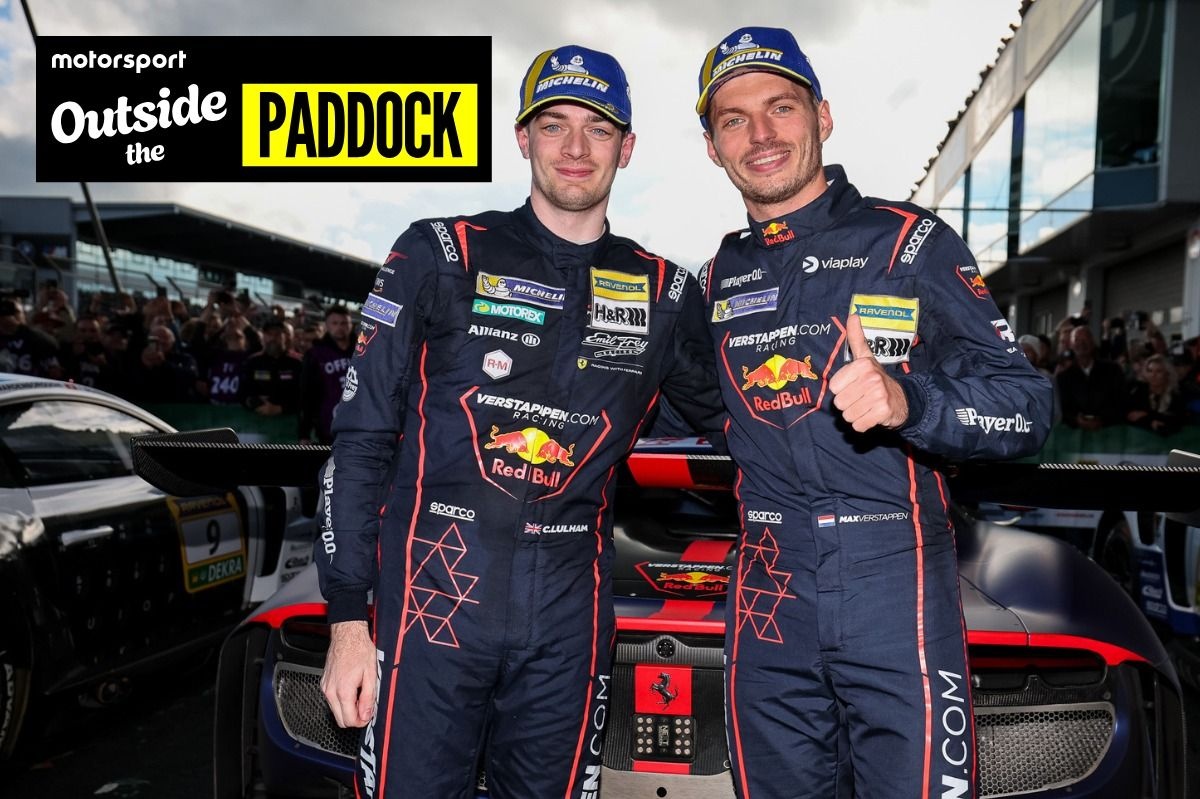
Max Verstappen’s Portimao teammates: who are Chris Lulham and Ben Barnicoat?