Mbappé–Yamal: the recent media battle over the Ballon d'Or race
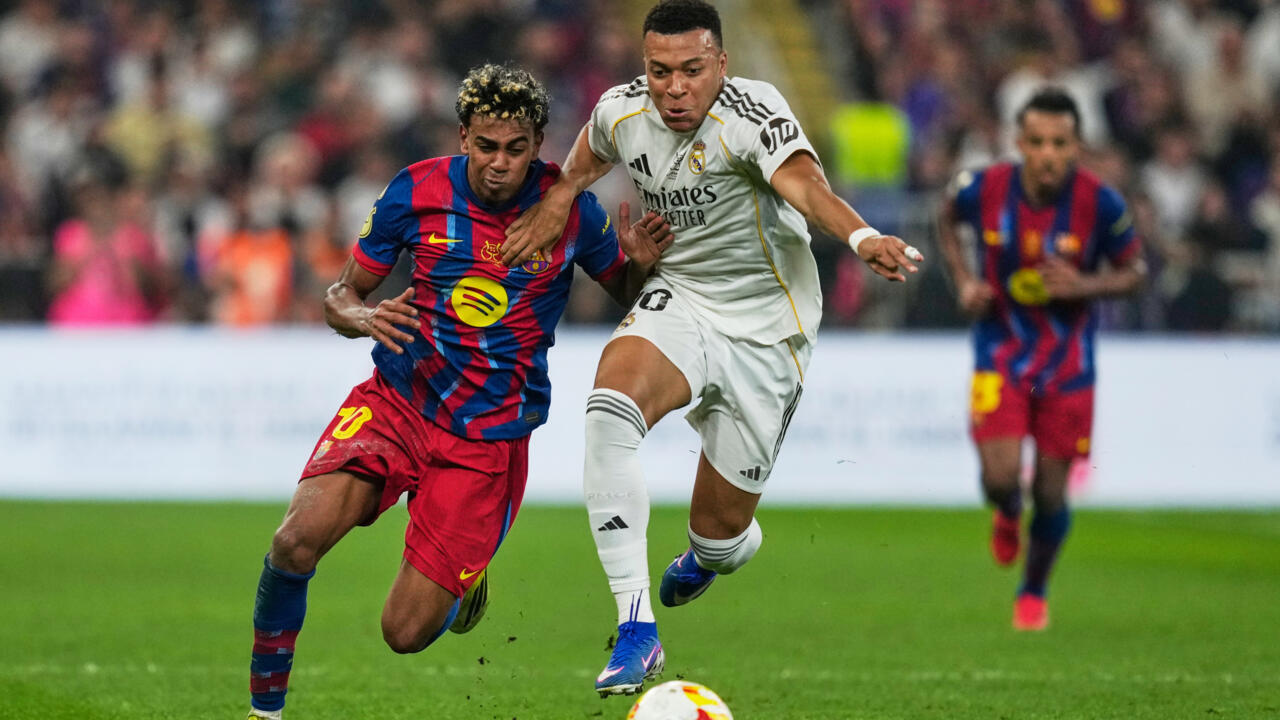
The race for the Ballon d'Or is more intense than ever, with less than a month until the results are announced. On one side is Kylian Mbappé, who claims, "there's no one better than me last season," while on the other is Lamine Yamal, the new world champion who is redefining expectations surrounding this award. Thus, the Ballon d'Or 2026 is being contested as much on the pitch as in the media.
Voting for the Ballon d'Or closed on Monday, but the arguments from the main candidates may continue until October 26, when the highest individual honor in football will be awarded in London, following a loud media campaign.
From the back-and-forth between Lionel Messi and Cristiano Ronaldo over a decade to Real Madrid's boycott in 2024, furious that Rodri was selected over their forward Vinicius Junior, controversies have been plentiful throughout the 70-year history of the Ballon d'Or.
However, this 2026 campaign "is particularly notable for its media echo," says Pascal Ferré, former editor-in-chief of France Football, the magazine that organizes the ceremony, and author of "The Hidden Face of the Ballon d'Or" (Albin Michel).
Not only are clubs, coaches, and teammates supporting their candidate, but the candidates themselves are now fighting for their cause.
Also readKylian Mbappé: "I have never severed ties with Africa"
"There’s no one better than me last season," stated Real Madrid and France forward Kylian Mbappé, adding that he has "always been considered the chosen one."
"I have never been the chosen one, but I have worked hard," retorted Ousmane Dembélé, who wishes to retain the title he won last year.
The Ballon d'Or rewards "a unique player," who "is not only defined by the number of goals scored," emphasized young Spanish prodigy Lamine Yamal.
A multitude of candidates has turned into a cacophony, far from the much quieter campaign for the women's Ballon d'Or (established in 2018), during which Spanish player Alexia Putellas told AFP that "football spoke for (her)".
"This also reflects the fact that men's and women's football do not have the same level of recognition, hence not the same degree of media tumult," believes Pascal Ferré.
"Fantasy Machine"
He adds: "If the men's Ballon d'Or generates so much interest, it's because it remains a machine for fantasies, pressure, and intrigue." This proves that it is a trophy "that does not lose credibility or legitimacy."
"The real turning point is that players are getting involved in the struggle. Previously, it was a more institutional lobbying campaign, less visible with clubs and entourages," says Bruno Bianzina, director of the communication consulting agency Sport Market. "Today, it's more dynamic, with a desire to tell the players' stories."
While Mbappé has spoken to the Madrid daily As, a traditional mouthpiece for Real, he has also given other interviews, including a notable interview with Radio France Internationale (RFI), orchestrated this time by his own entourage, according to journalist Olivier Pron, who conducted the interview.
"They (his entourage) are campaigning and want to reach Africa," he explains in a video published by RFI, adding that certain topics were avoided: French politics, the governance crisis at FIFA, or the issue of Ceuta, the Spanish enclave in Morocco.
What is the reason for such engagement? "There are no clear favorites in this race; each player believes they have a chance and strives to make their 'story' heard by steering the criteria in their favor," analyzes Bruno Bianzina.
Individual vs Collective
The official criteria for the Ballon d'Or thus differentiate between individual performances, including statistics, and collective achievements, which are relegated to the background.
Individual performances can support the candidacies of Mbappé, prolific with both Real and the national team (top scorer of the 2026 World Cup), or Englishman Harry Kane, who has been much quieter in the media despite an incredible season with Bayern Munich (61 goals in 51 matches).
However, neither has lifted the World Cup trophy, unlike Lamine Yamal and Rodri, who were crowned with the Spanish team, or Ousmane Dembélé and Khvicha Kvaratskhelia, who were European champions for the second consecutive time with Paris SG.
Despite these individual campaigns, "there is real coordination between clubs and players," believes Bruno Bianzina. "The Ballon d'Or is part of the club's mythology," he insists.
"It’s an international platform without equal," adds Pascal Ferré, mentioning the global broadcast "in 180 countries."
With 10 nominees out of 30 (like last year), PSG claims to focus its campaign on the collective aspect, without wanting to comment further on its strategy. This does not prevent them from highlighting, during joint interviews, Dembélé and Kvaratskhelia, while Fabian Ruiz has received individual attention with several interviews.
Lobbying, statistical arguments, media battles: do these strategies bear fruit?
"The Ballon d'Or is not a contest of media noise," reminds Pascal Ferré.
Also readBallon d'Or 2025: Frenchman Ousmane Dembélé and Spaniard Aitana Bonmati crowned
More from this section
World Judo Championships: Clarisse Agbégnénou and the French team in search of gold medal
Nations League: Zidane returns to Stade de France as France faces off against Italy.
Manchester City case: the club files an appeal, the Federation mentions "significant repercussions"
Athletics: Pole vaulter Armand Duplantis withdraws from the 2027 indoor season.
Football: Zidane returns to the Stade de France, the scene of his successes with the national team.