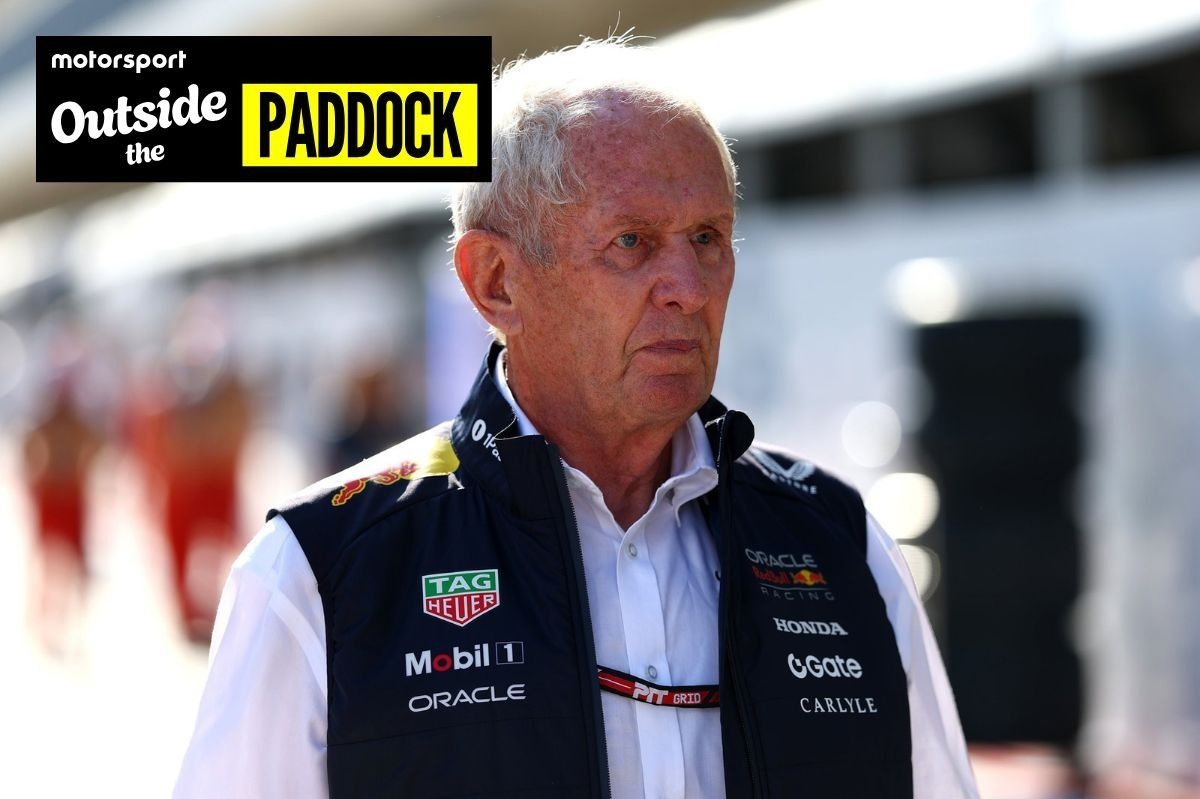
What the competitors are anticipating from Formula 1's comeback to Sepang
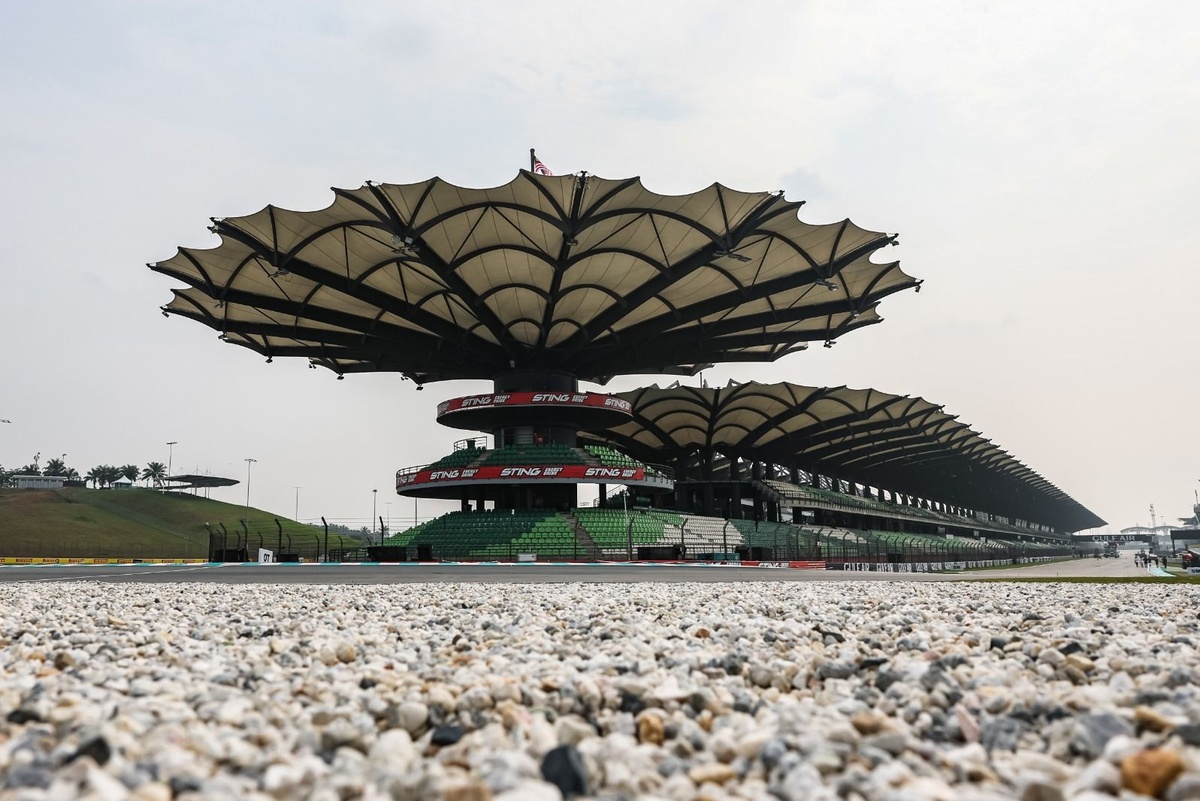
Malaysia's Sepang circuit is making a unique return to the Formula 1 schedule as a substitute venue for the Bahrain Grand Prix, presenting both familiar and novel challenges.
The hot and humid conditions, coupled with the daily late-afternoon rain showers, evoke a sense of nostalgia for those with past experiences at this track. For others – including the majority of drivers on the grid – these are conditions they have only encountered in literature.
Sepang holds a pivotal role in F1 history as it marked the aggressive push of grand prix racing into the east during the Bernie Ecclestone era. It was the first of many large-scale facilities featuring striking architecture, funded by governments eager to elevate their countries' profiles.
It also established the model for the type of track designed by the architect included in the deal: Hermann Tilke. His philosophy was that wide tracks with lengthy straights followed by sharp turns would naturally encourage overtaking by tempting drivers into making errors. Critics of Tilke argue that his designs are uninspired and fail to deliver the anticipated overtaking excitement.
The downside of government support is that political climates can shift. In Malaysia, ticket prices set beyond the financial reach of most locals – with one ticket costing the average monthly wage – resulted in largely empty stands year after year.
This was not the image the country sought. In 2017, after 18 years on the calendar, Malaysia concluded its hosting agreement a season prematurely.
This year, there are indeed more fans in attendance than in previous years at this venue.
For Sepang's brief appearance in 2026, the F1 cars will be entirely different, so numerous uncertainties lie ahead. Only the ambient heat and humidity, along with the track's abrasive surface, are well known.
At least one driver has compared the track surface to sandpaper. Designed to endure harsh weather and allow for rapid drainage, the aggregate has a notably open texture.
Tyres generate grip through a process called hysteresis. Rubber is a viscoelastic material: unlike a purely elastic substance, it doesn’t immediately revert to its original form once compression forces are lifted. As a tyre spins, the outer layer compresses against the track surface and some kinetic energy dissipates as heat while the material attempts to regain its original shape.
The rougher the surface, the higher the temperatures. Thus, tyre degradation is anticipated to be a more significant factor here than at other circuits this season. This may provide some relief following an Azerbaijan Grand Prix that was a certain one-stop race, even with the softer tyre options.
Interestingly, while Pirelli has leaned towards the harder end of its compound selection, it hasn’t brought the hardest tyre available. Instead, the selections range from hard to soft with the C2, C3, and C4 compounds – just one step harder than those used in Baku.
Sepang's design, featuring long straights and sharp corners, is likely to influence how teams approach energy harvesting and deployment – potentially in a manner similar to China, where the so-called ‘yo-yo racing' was unappealing to both fans and drivers. However, there are indications that this may not necessarily be the case.
"We arrive at an incredible circuit now," stated Fernando Alonso, who secured his first F1 pole position at Sepang in 2003.
"It's going to be tough in the middle sector because we can't utilize the battery there – otherwise, you won’t have [sufficient charge] for the three consecutive straights, you know, from Turn 14 to the last corner, then from the last corner to Turn 1, and from Turn 2 to Turn 4, you need to use the full 100% battery on those three straights, so the rest is merely charging the battery."
A much younger Fernando Alonso claimed his first pole position at Sepang in 2003 and finished on the podium alongside first-time winner Kimi Raikkonen.
Consequently, cars are expected to be relatively slow through the middle sector – but any driver using electrical boost to gain an overtake will face repercussions at the end of the lap.
When utilizing the electric motor, current cars exert significant amounts of energy through the rear tyres, raising concerns for engineers about the potential for damaging them by causing surface temperatures to rise sharply, as well as the longer-term impacts of thermal degradation. This will also shape how teams approach deployment in this scenario.
"I believe the major difference on this circuit compared to other so-called yo-yo circuits is the tyre overheating," remarked George Russell.
"On circuits like Melbourne, Silverstone, and Monza, there wasn’t much tyre overheating due to the surface. Canada was similar. So that allowed drivers to stay closer within that one second [which grants access to additional power through overtaking mode].
"Even in Baku, it was relatively cool, allowing drivers to stay close. However, here, surface overheating will be a significant issue. You’ll start overheating the tyres even on the outlap during qualifying, which may complicate following closely and reattempting an overtake after being passed. But that remains an unknown for now."
After several races with minimal or no degradation, leading teams to adopt largely similar strategies, this venue could introduce some strategic diversity. If so, it would share characteristics with the track that typically hosts the Bahrain Grand Prix, another venue with a rough surface detrimental to tyre longevity.
This may also mark the first true test of F1's wet-weather tyres. Here, there are more uncertainties, considering the long-standing concerns that the new intermediate tyre is somewhat too hard and struggles to warm up quickly enough.
"It will definitely be a good test if it rains," said Carlos Sainz. "A solid test for the regulations as well because I believe with all the issues we face regarding downshifts, harvesting, power, and variability, corner to corner, the wet conditions will present a significant challenge for sure.
"Both from a tyre perspective – from what I’ve heard from those who have tested them, this year's wet and intermediate tyres are tricky – plus the power unit factor [meaning a large delivery of torque in slippery conditions], it will surely be a good test."
In 2009, the race start was postponed to a later time of 15:00 local, as it will be this year, and heavy rain forced an early stoppage. When conditions failed to improve, the restart was called off.
In Malaysia, one can generally anticipate a torrential downpour around 4 o'clock in the afternoon. Sometimes it arrives early; other times it clears up quickly, allowing the heat to dry the track fairly rapidly.
However, there are instances where it can be raining but, because of the heat drying the track surface, it’s not wet enough for even intermediate tyres. This was evident in the 2009 Malaysian Grand Prix.
Most recall this race as one of the few in F1 history to be red-flagged and not restarted before completing the full race distance. That year, the race start was adjusted to 15:00 local to accommodate European TV viewers, making a soaking almost inevitable – a consideration that should have been on the minds of those who scheduled the race at the same hour this year.
But many forget that for at least 10 laps before the rain became torrential, those who switched to wet tyres early faced overheating issues. Given the general lack of use of Pirelli's wet-weather tyres this year, this area remains uncertain.
"The only thing I recall from Japan [where he tested the wet tyres] is that the tyres provide no grip," noted Isack Hadjar. "It would make racing very hazardous with significant water. So, I would definitely welcome any competitive session being a rain session, including qualifying. But currently, for the race, with all this energy, I think it would create quite a bit of chaos.
"I don't believe we are fully prepared for that. But definitely qualifying – why not?"
More from this section
Isack Hadjar discusses the experience of competing against the "best of the best," Max Verstappen.
Apple TV reveals significant enhancements to F1 coverage for the United States Grand Prix.
Max Verstappen discussing life post-Christian Horner: “It feels less stressful”
Five aspects to watch closely at the F1 Singapore Grand Prix
Mercedes stands by its choice to turn down an essential FIA driver assistance feature.