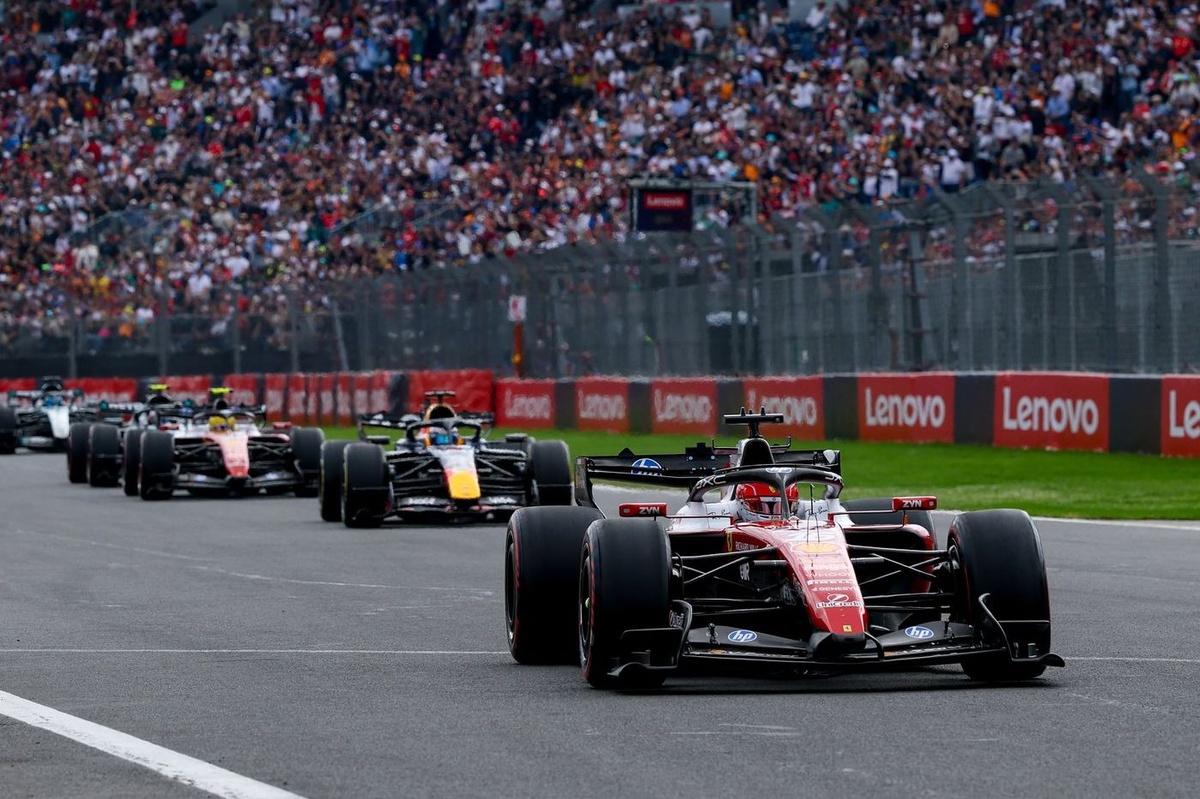
Who had the most restless night: Frederic Vasseur
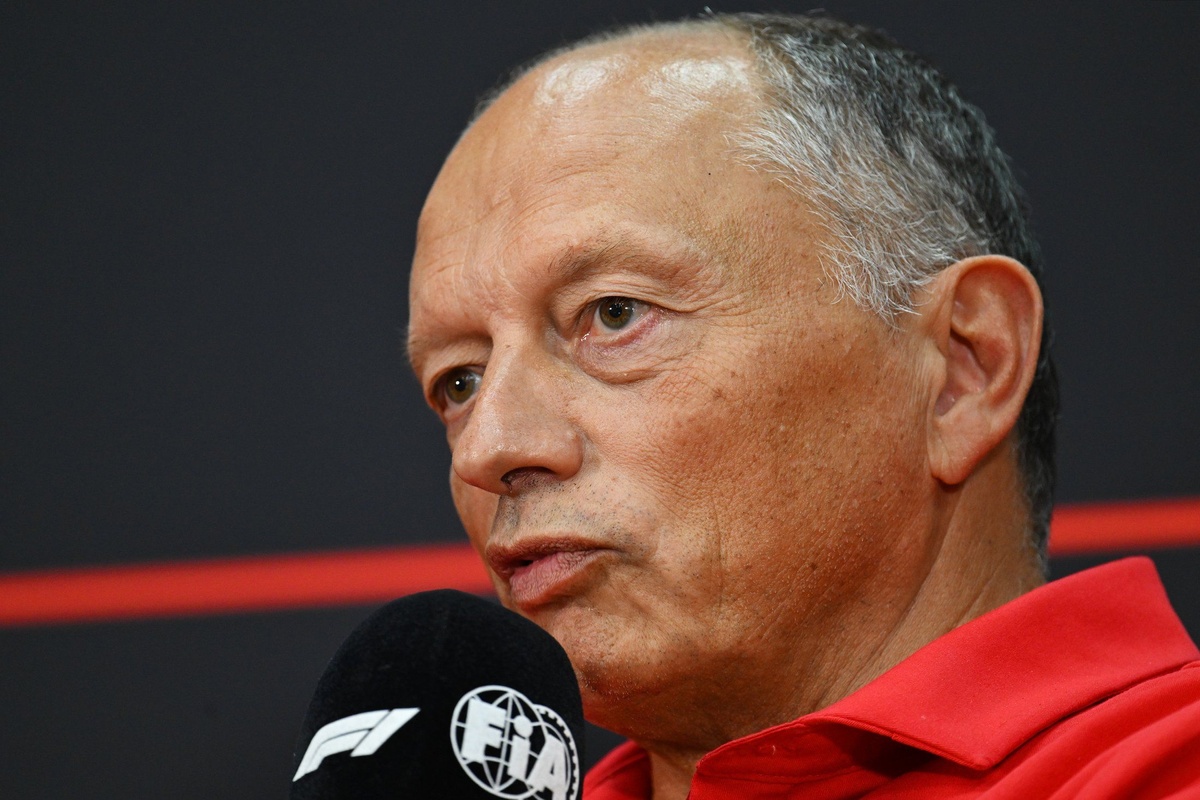
During Frederic Vasseur's media session following the Mexican Grand Prix, there was at least one instance where the Ferrari team principal couldn't contain his laughter.
Motorsport Network reporter Ronald Vording had just posed what seemed like yet another question regarding the clearly tense atmosphere after the first-lap incident involving Lewis Hamilton and Charles Leclerc.
"It appears that regardless of the discussions held prior, emotions inevitably take charge," my colleague remarked.
Vasseur, sounding slightly frustrated, tried to put the topic to rest: "I won't comment further on this matter. Let me speak with them. I've said all I need to say."
Somehow, the dialogue then shifted to Ferrari junior Rafael Camara, who might make his Formula 1 debut before the season concludes following Esteban Ocon's exit from Haas, and Ryo Hirakawa, who likely won't be driving for Haas in Brazil next weekend, as he opts to chase a World Endurance Championship title with Toyota.
The ridiculousness of the situation—transitioning from potentially significant issues to the more trivial aspects of Formula 1—unexpectedly brought out what seemed to be a genuinely spontaneous laugh from Vasseur.
"Guys, I have enough on my plate with my two drivers! Don't bring up Hirakawa, Camara, or Ocon's clash," he exclaimed.
Charles Leclerc, Ferrari, Lewis Hamilton, Ferrari
This was one of the rare light moments before a night when the 58-year-old had so much to process and manage that a truly restful sleep seemed rather improbable.
Debates erupted across global television channels about who was at fault for Ferrari squandering a potential one-two position at the start of the Mexican Grand Prix.
In my view, one of the most insightful analyses came from Karun Chandhok's commentary on the SkyPad during UK broadcasts. Chandhok believes the evidence is clear: Leclerc likely never attempted to hit the braking point for Turn 4.
Other commentators reached similar conclusions.
"At least one of them made it through the corner. The other just drove straight on," noted Ralf Schumacher on Sky Germany, adding: "Leclerc had been the faster driver up until that moment this weekend—except for qualifying—and was probably feeling a bit of frustration."
Alexander Wurz, speaking on Austria's ORF, stated that "Hamilton isn’t obliged to leave any space. I don’t see much justification for Leclerc here."
Former FIA race director Niels Wittich, appearing on Sky Germany, anticipated an even harsher penalty for the Monegasque before his five-second penalty was confirmed: "I’d suggest that’s ten seconds. There are no mitigating circumstances to consider."
Charles Leclerc, Ferrari
Regardless, Vasseur now faces another significant crisis.
When Hamilton communicated just before the race was red-flagged that there would be "big, big problems," and then stormed into the garage, visibly enraged and still wearing his helmet, it became clear that Ferrari's Mexican outing wasn't going to conclude with everyone toasting with a celebratory glass of tequila.
Hamilton was livid. What’s striking is how well he managed to keep his cool in front of the cameras afterward.
However, reading between the lines, a few comments slipped out that, with a touch of mischievous intent, could be seen as subtle jabs aimed at Ferrari’s management.
"I think it was handled well at Mercedes, and I believe Fred is doing his utmost," he remarked at one point.
Or this: "I’m not really sure what will happen next because up until now, nothing has really been done."
Ultimately, Mexico could turn out to be less a test of Hamilton's temper or Leclerc's decision-making and more a measure of Vasseur's leadership. The coming hours and days post-Mexico 2026 might become a pivotal moment for Ferrari in its current configuration.
Lewis Hamilton, Ferrari
If Vasseur can ease the rising tensions between his drivers; if Leclerc arrives in Sao Paulo on Thursday genuinely remorseful and extends an apology that helps Hamilton's wounded pride accept a tough loss; if, in the end, Ferrari finally sets clear engagement rules that Hamilton has been advocating for some time—then this clash could actually fortify the Scuderia.
However, there’s an alternative scenario.
One where Hamilton, away from the cameras and in private, struggles to control his fury. Where Leclerc refuses to admit any fault. And where Vasseur fails to mediate between his two stars.
A situation in which any effort to establish internal rules ultimately crumbles under the weight of what Ronald Vording alluded to: that, irrespective of prior agreements, emotions will invariably prevail.
And then the entire situation could explode with one massive backlash.
This isn’t merely about resolving a clear disagreement. Ferrari must also confront some uncomfortable truths regarding the specifics of what transpired.
For instance, why was Leclerc left without guidance on the team radio immediately after the incident at Turns 4 and 5?
"I mean... I got pushed off the track. What should I do now?" Leclerc asked, seeking direction on whether he should immediately relinquish his position.
But there was silence on the other end of the radio.
Charles Leclerc, Ferrari, Lewis Hamilton, Ferrari
Only after the first lap was completed did his race engineer finally respond: "Overtake enabled, Verstappen 0.8."
And then, moments later: "No action yet. Keep pushing."
Yet the FIA had specifically communicated to the teams before the race, warning them against failing to return positions immediately in such situations.
Surely that was something Ferrari’s management should have been on top of, instructing Leclerc without delay.
Lewis Hamilton and Charles Leclerc are clearly engaged in a rivalry over who will take the lead in this team moving forward.
For much of 2025, that question appeared to tilt in Leclerc's favor.
However, dismissing a champion of Hamilton's caliber is risky, even when all evidence suggests that his prime days may be behind him.
If anyone understands how quickly a rivalry between two superstar teammates can turn sour, it is Toto Wolff. He has experienced the Hamilton-Rosberg years. Vasseur may soon learn just how beneficial that experience can be.
Frederic Vasseur, Team Principal and General Manager, Scuderia Ferrari, Toto Wolff, Team Principal and CEO, Mercedes-AMG F1 Team, in the Press Conference
The Mercedes team principal and Vasseur, once the closest of allies, have not always seen eye to eye this year.
Nevertheless, on Sunday in Mexico, cameras caught an intriguing moment during the race: Wolff seizing the chance after Valtteri Bottas' crash to briefly visit Vasseur at the Ferrari pit wall.
What I wouldn’t have given to be a fly on the wall during that exchange.
Perhaps Wolff, who shares friendships with both Vasseur and Hamilton, was offering the Ferrari chief some advice on how to best manage Hamilton's ire. Unfortunately, it was a question that no one thought to pose to either of them on Sunday evening in Mexico.
There are likely two perspectives on Ferrari's dilemma.
From Vasseur’s viewpoint, with its emphasis on internal "respect," it goes like this: "They aren’t working for themselves. They’re working for a group. They’re representing many sponsors. They’re working for the 2,000 people in the company. The guys who had to push for the upgrades were working day and night. We need to keep this in mind."
From Ferrari's standpoint, the less conflict, the better.
As a journalist in Formula 1 and, ultimately, a fan of the sport, I don’t believe that a bit of conflict is necessarily detrimental.
After all, what would we have to passionately debate about for days after a Grand Prix?
More from this section
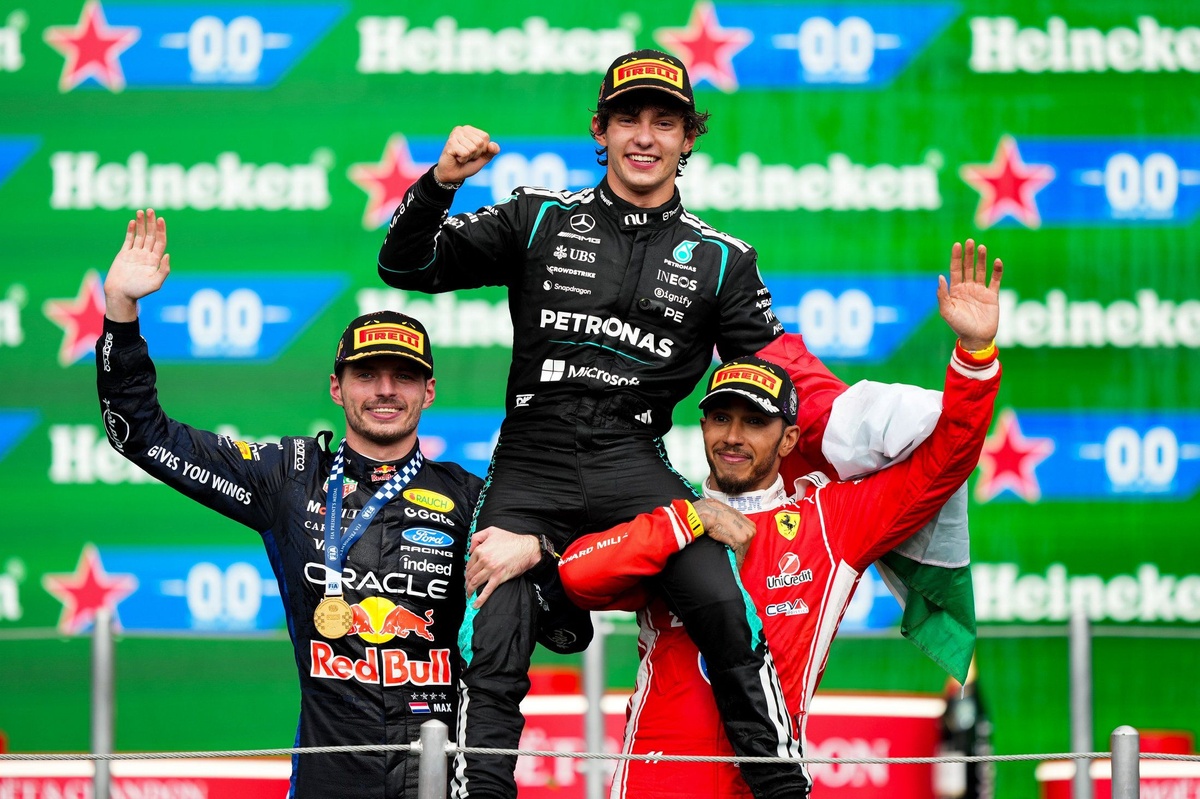
Kimi Antonelli desires a unique photograph featuring Lewis Hamilton and Max Verstappen to display on his wall following his Formula 1 championship victory.
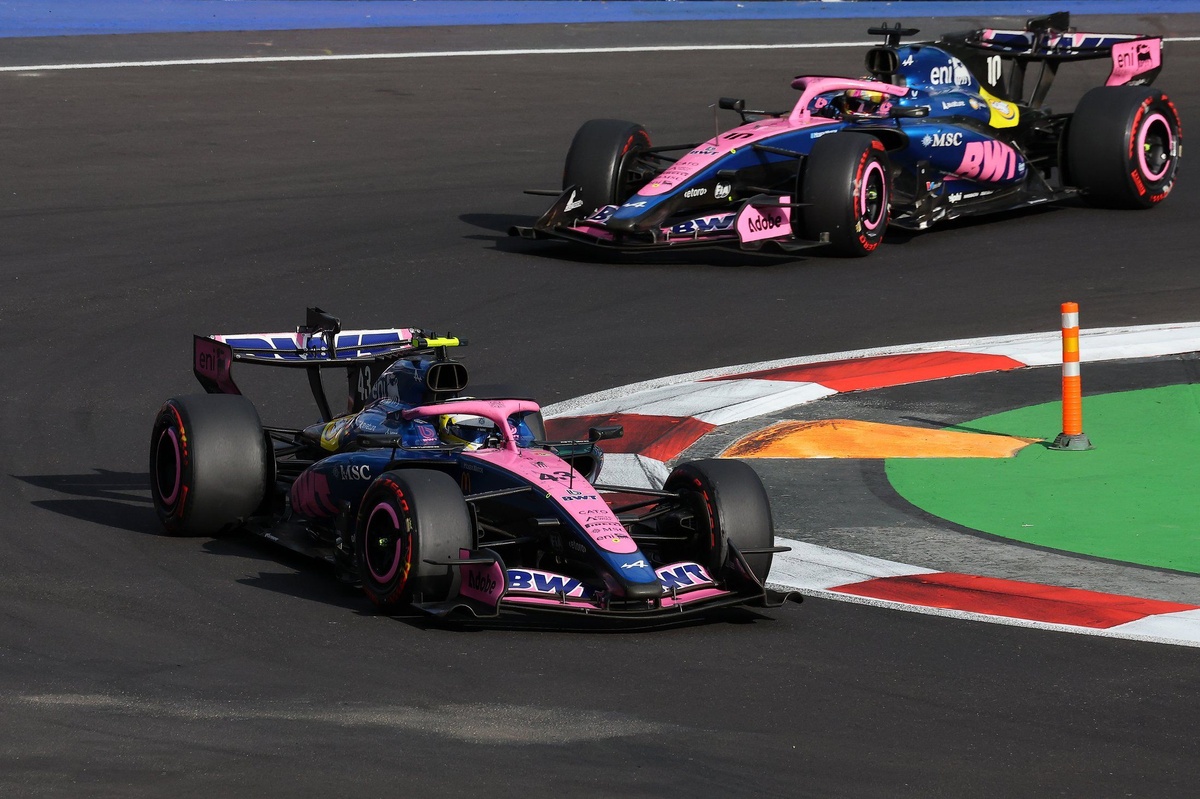
Alpine racers face penalties after the race, while Ryo Hirakawa makes an impressive mark on his Formula 1 debut at the Mexico Grand Prix.
Penalty eliminates Oscar Piastri from scoring points at the F1 Mexico Grand Prix.
Max Verstappen expresses heartfelt sentiments following Kimi Antonelli's groundbreaking F1 championship victory.
Victors and vanquished from F1's unprecedented Mexico Grand Prix