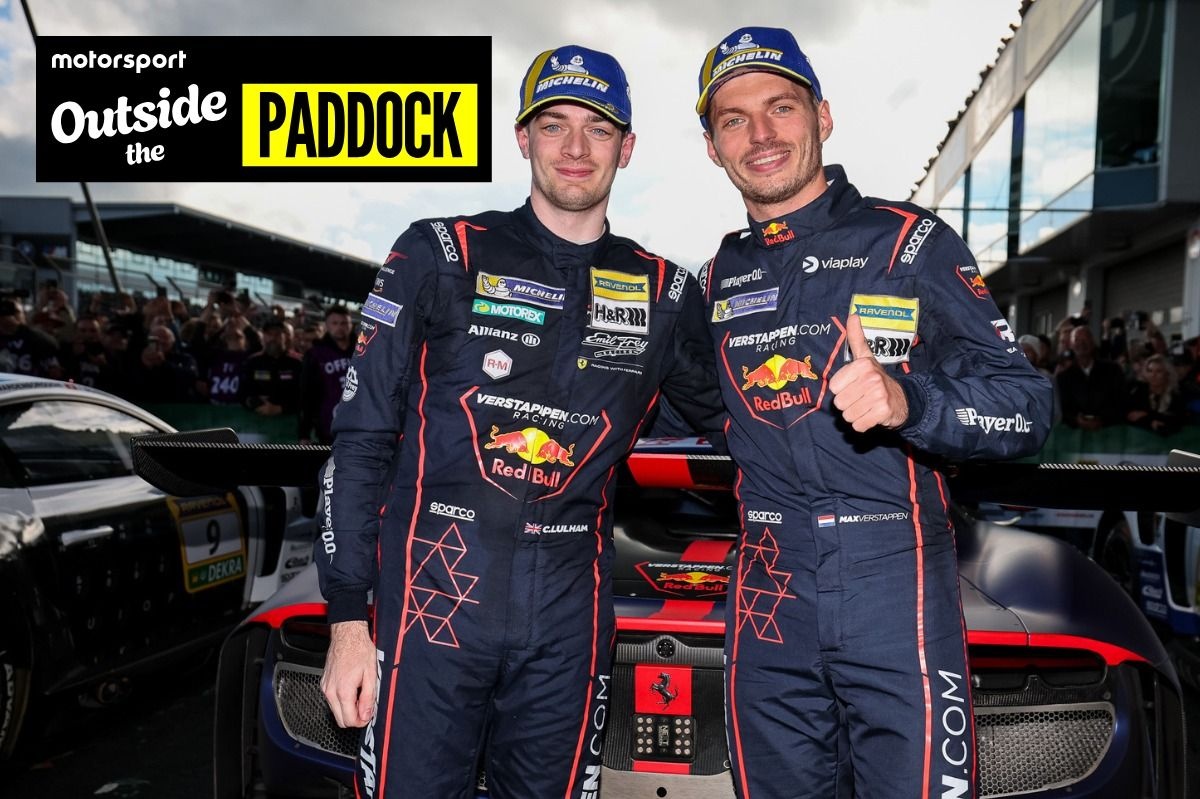
The reason Christian Horner prohibited the use of Mercedes' name as Red Bull developed its own Formula 1 engine stems from a desire to establish a distinct identity for their new power unit. By distancing themselves from the Mercedes label, Red Bull aims to create a unique brand and narrative around their engineering efforts, especially in the competitive landscape of F1. This decision reflects a strategic move to emphasize their independence and innovation in engine design, which could be critical as they seek to enhance their performance on the track.
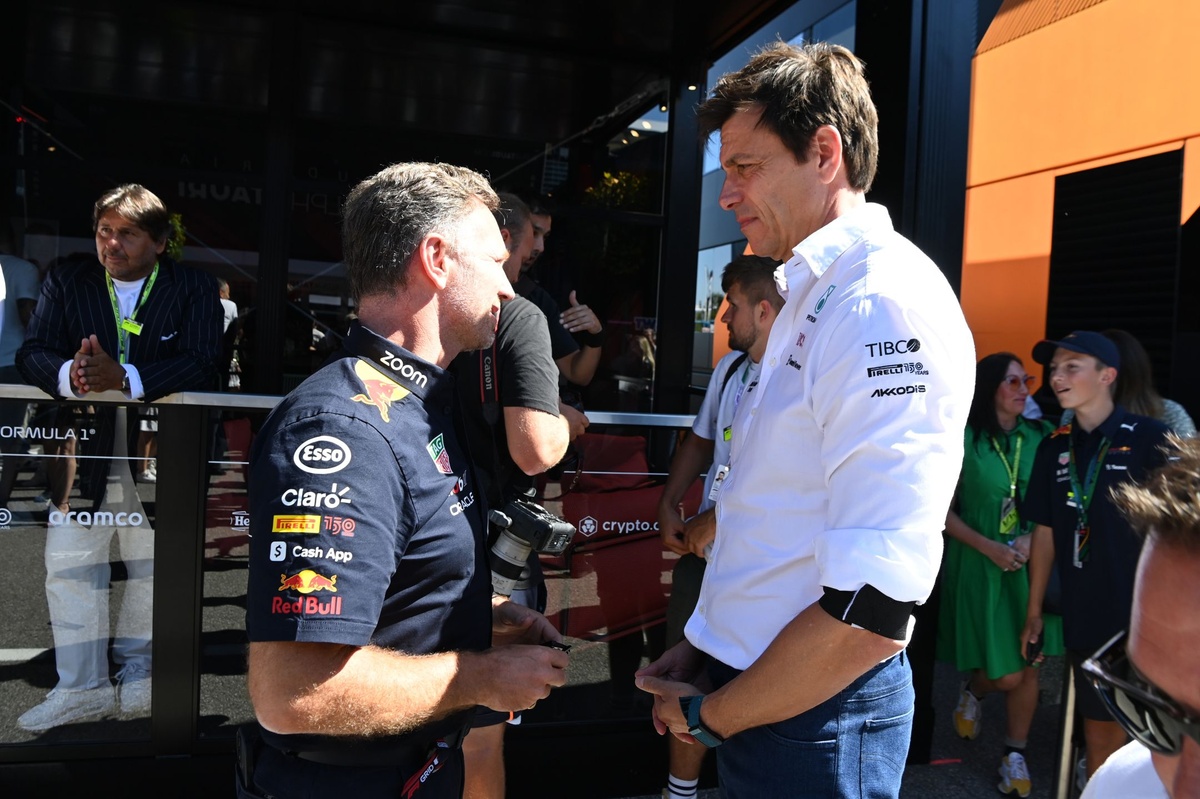
Former Red Bull CEO and team principal Christian Horner has disclosed the reason behind his decision to prohibit personnel from the team's powertrains division from mentioning their fierce Formula 1 adversaries, Mercedes.
The Milton Keynes-based squad had experienced a successful collaboration with Honda after a rocky conclusion to their partnership with Renault, re-establishing themselves as title contenders in the late 2010s and early 2020s with the Japanese manufacturer, ultimately ending Mercedes' reign that began with the introduction of the V6 turbo-hybrid era in 2014, culminating in Max Verstappen's first drivers' world championship in 2021.
However, a year prior, Honda had declared its exit from F1 as an OEM at the end of what would be the Dutch driver's championship-winning season - a decision it would reverse to join forces with Aston Martin for 2026 - leaving Red Bull in search of a new power source for 2022 and beyond.
Horner and the Red Bull leadership opted for a daring route, establishing an in-house powertrains division to become its own OEM, challenging established power suppliers like Mercedes, Ferrari, and Renault - the latter of which has since departed the grid.
While an agreement was reached with Honda to extend the partnership from 2022 to 2025 under the RBPT branding, Red Bull collaborated with Ford to develop the power unit from the ground up to meet the new-for-2026 regulations, prompting an aggressive recruitment campaign spearheaded by Horner.
In an exclusive interview with sister publication Autosport, Horner elaborated: "We made a deal with Honda, because they were withdrawing, that any of their personnel in the UK, which were all operational staff and a handful of battery-related individuals, would transition into the business.
"But we needed to build from the ground up. It was a startup."
Christian Horner
Despite the influx of personnel from both the existing organization and Honda's team, many positions still needed to be filled: "I was interviewing numerous candidates from Mercedes, trying to persuade them to join this ambitious new project by showcasing our achievements with the chassis as proof that 'look, we succeeded with the chassis, we can replicate that success with an engine with the right team.'
"And naturally, there are several companies in the UK - the most notable being [Mercedes] HPP, along with Cosworth and Ilmor - but there hadn't been any new engine ventures in the UK for the last 25 years.
"What you found at HPP was a somewhat stagnant organization where individuals were almost waiting for opportunities to arise.
"By declaring our intention to establish this in the UK - which was a crucial decision, as there was a debate over whether to partner with AVL and conduct operations in Austria or base it at the Red Bull Ring - we convinced the shareholders that we needed to remain in the UK, recognizing we had space within the campus in a building that previously housed a bubblewrap factory that we could 'minor update', as far as the planners were aware, which involved dismantling everything except one steel beam and constructing a new factory within 55 weeks while initiating the search for the right talent."
The 'right talent' included the recruitment of several pivotal figures from Mercedes, led by Toto Wolff. Horner and Wolff engaged in numerous heated exchanges while Verstappen battled Lewis Hamilton for the drivers' championship, with that rivalry extending into Red Bull's early dominance in F1's ground-effect era.
"The recruitment process was a tug of war for talent, and I was aggressively pursuing candidates - Ben Hodgkinson [RBPT technical director, previously a senior power unit engineer at Mercedes HPP] was a significant early hire, along with Pip Clode [RBPT head of mechanical design for energy recovery, formerly the F1 power unit concept team leader at Mercedes HPP] focusing on the turbo, Phil Prew [RBPT engineering director, formerly Mercedes HPP chief engineer] joining us. We attracted many skilled individuals from HPP.
"Additionally, we provided opportunities for people within the organization who wanted to transition to different parts of the business, allowing talent to explore new avenues.
Ben Hodgkinson, Red Bull Powertrains Technical Director
"You had departments that needed to adapt for both, so for instance, electronics had to expand rapidly to support both chassis and engine, having never created engine wiring looms before. It was a truly dynamic period.
"We hired some exceptional personalities, like Steve Brodie [RBPT leader of combustion engine operations] from Mercedes [where he was HPP F1 trackside and final inspection manager], who brought incredible energy and passion to the project; it was a thrilling time. There were numerous questions, even internally, because Honda had provided an engine that enabled us to compete for world championships on equal footing with Mercedes."
However, with the influx of personnel and expertise came discussions about 'how we used to operate,' something Horner was eager to eliminate.
"There was an incredible atmosphere within the organization to get this entity off the ground, and, of course, you’re welcoming individuals from the opposition, the enemy.
"Thus, there was excessive conversation about 'well, at Mercedes we did this and at Mercedes we did that,' so ultimately it was banned from meetings - we weren't going to mention Mercedes; it became 'Team B.'
You can watch 'The Autosport Interview' with Christian Horner in its entirety here.
Christian Horner book cover
More from this section
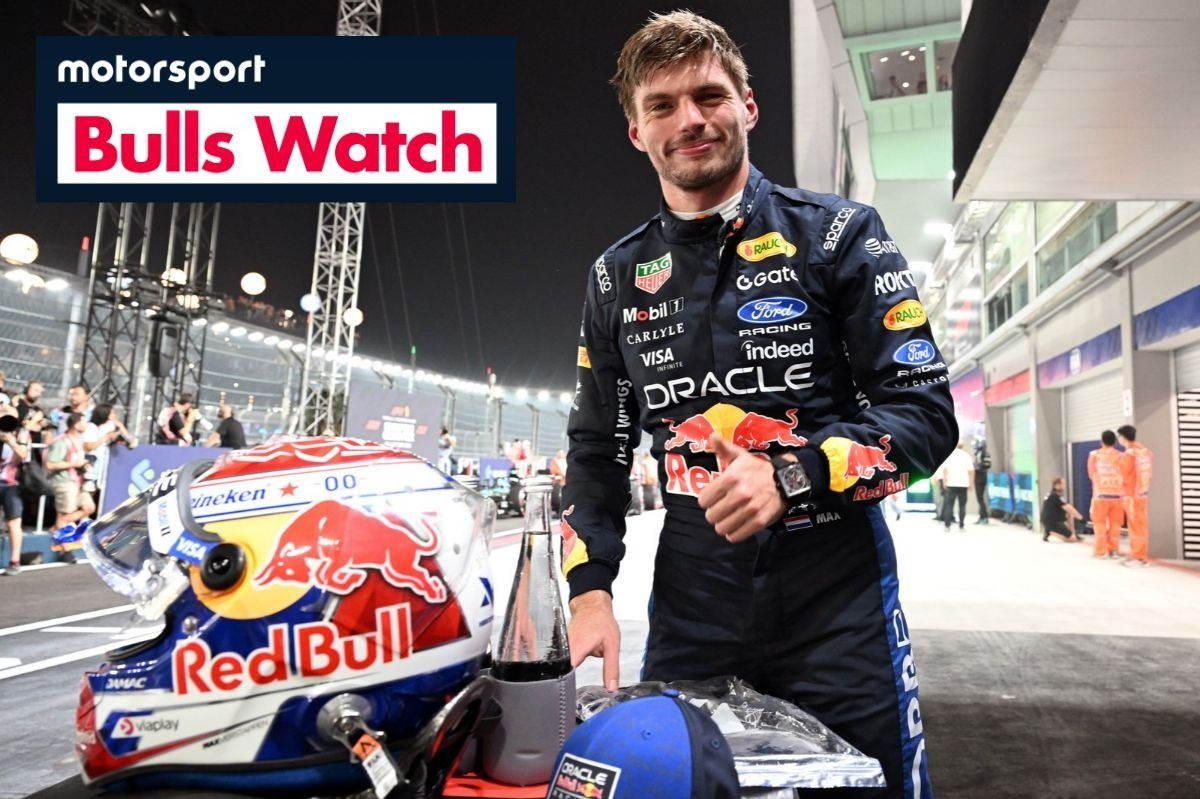
Max Verstappen shares his thoughts on the "incredibly special" moment during the Singapore GP with Gianpiero Lambiase.
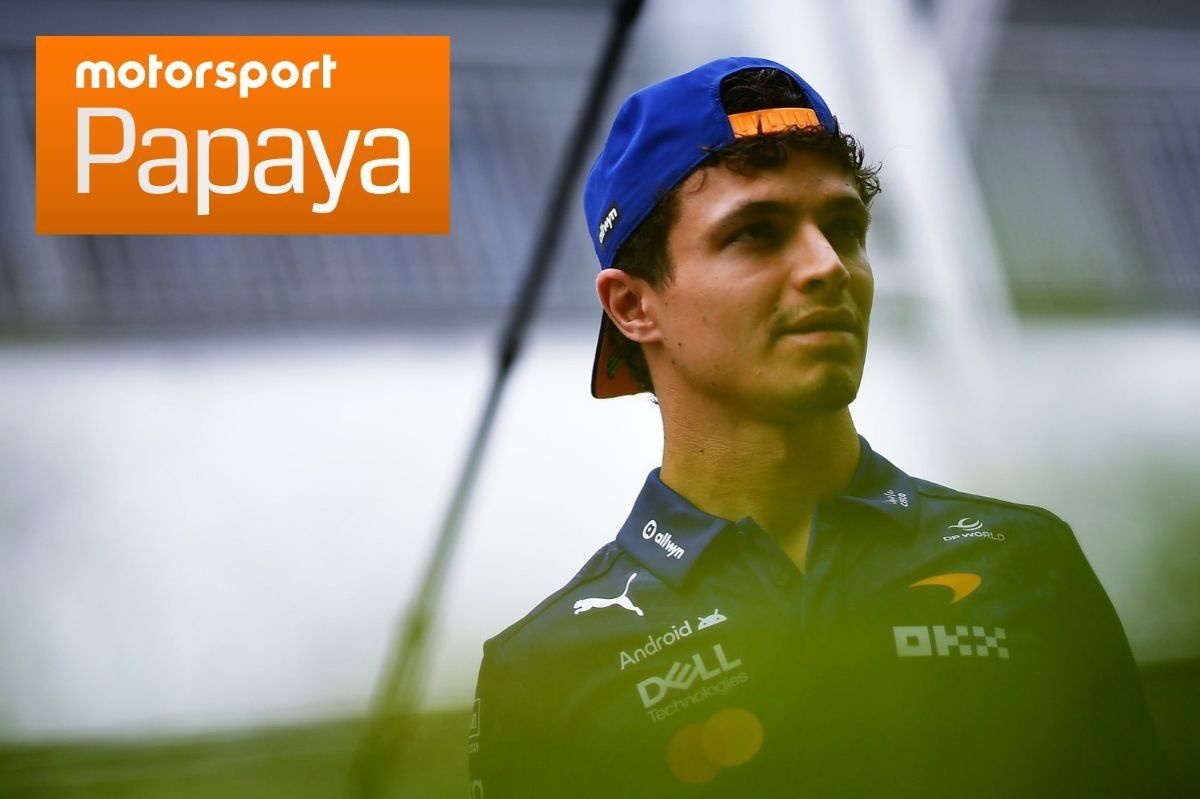
Lando Norris criticized by Guenther Steiner for "not displaying a world champion's mentality"
Christian Horner playfully pokes fun at Guenther Steiner: 'He has yet to secure an F1 podium finish'
Every milestone Kimi Antonelli could surpass if he clinches the F1 championship in Austin
Max Verstappen versus Valentino Rossi: A Comparison of Their GT3 Vehicles