Why Ferrari fell short of expectations during F1's United States GP qualifying
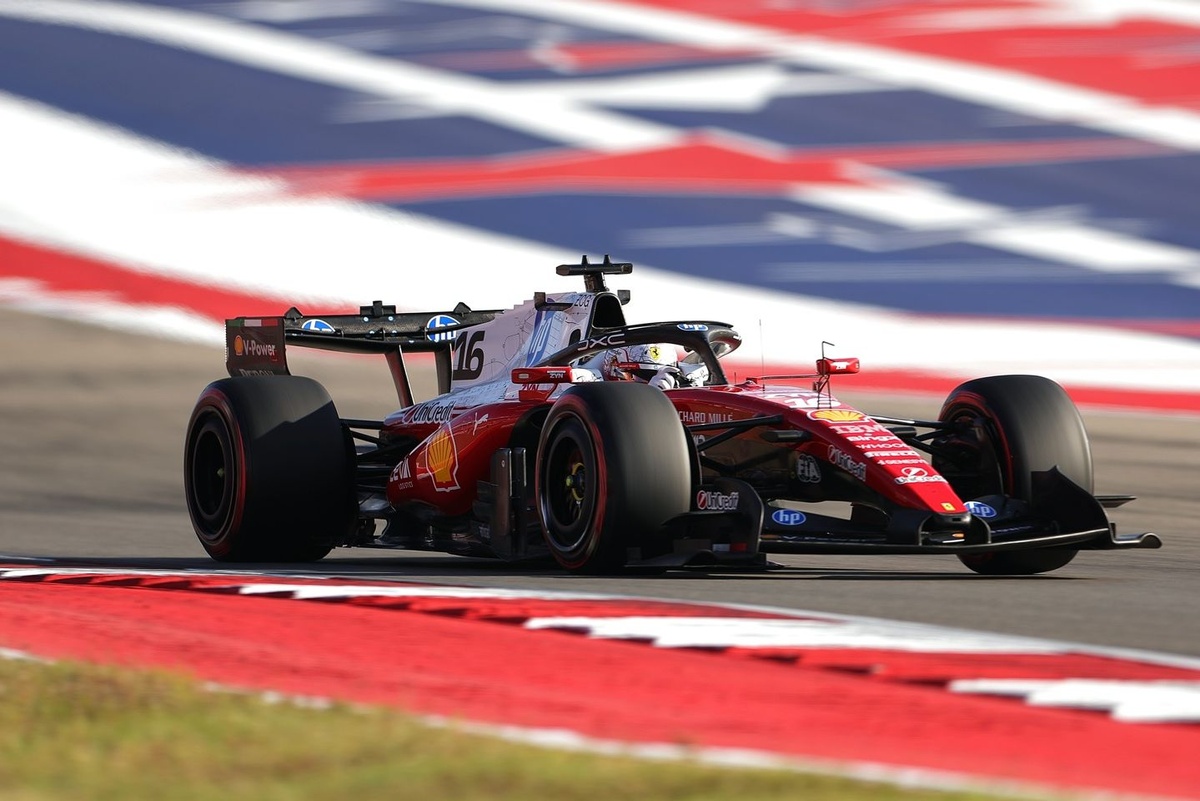
Ferrari was seen as the favorite following practice at the United States Grand Prix, yet ultimately fell short during qualifying and struggled to make significant gains in Q3.
Charles Leclerc had led both Friday practice sessions, while Lewis Hamilton secured the top spot in FP3 after Leclerc's best time was invalidated. This led many to believe that Ferrari was set to contend with Red Bull's Max Verstappen for pole position.
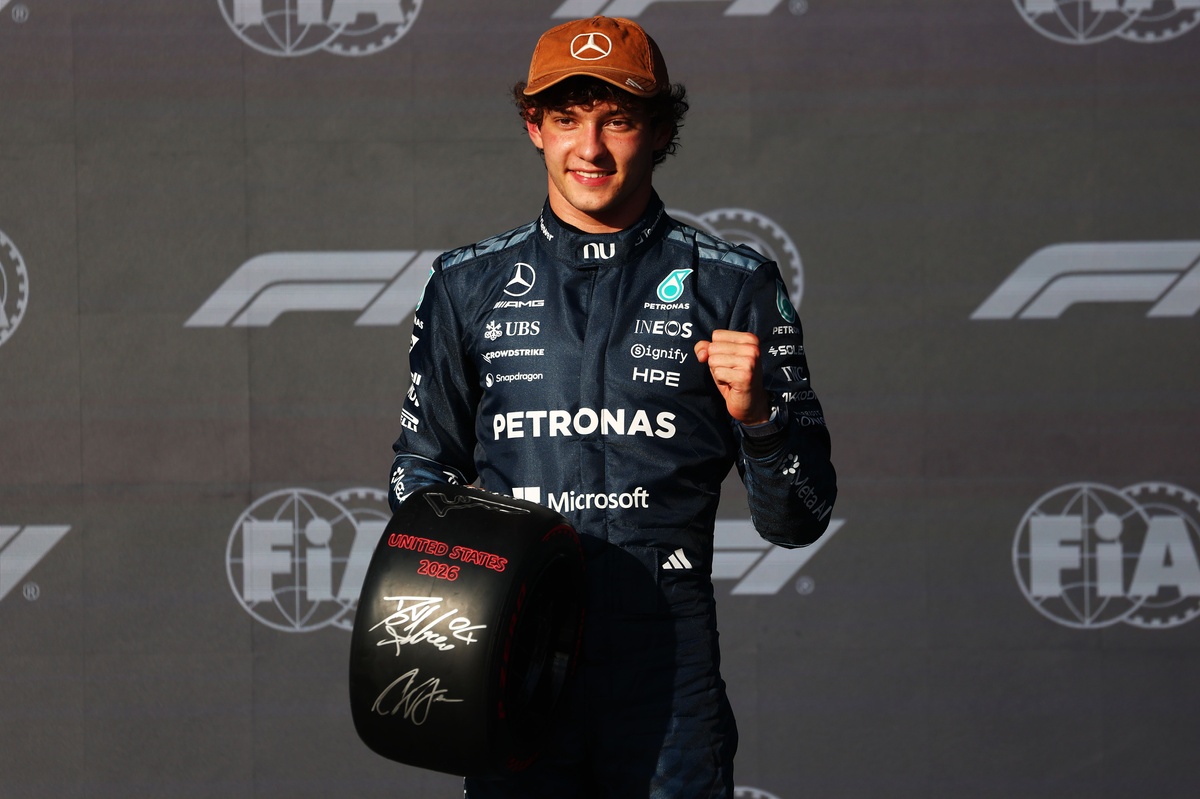
As the qualifying session progressed, Mercedes made its presence felt; Kimi Antonelli recorded a strong initial effort in Q3, securing pole position ahead of Verstappen. Leclerc could only achieve fourth, with Hamilton in fifth on the Formula 1 grid for Sunday, as Ferrari's performance seemed to stagnate at the crucial stage of qualifying.
This outcome stemmed from two factors: Ferrari's straight-line speed and its struggle to adequately prepare the tyres for the final qualifying segment.
The Ferrari showed solid capability in low-speed corners and had found extra time between Turns 6-10 at the end of the esses section, as well as through the high-speed Turns 16-19 during practice. However, as the pace intensified in the qualifying session, the Ferraris couldn't quite keep up.
Leclerc believes that the lack of speed in the latter part of Q3 was partly attributable to a change in track temperature. The Ferrari chassis tends to maintain relatively cool tyre temperatures in race conditions, but this sacrifices single-lap performance in qualifying, making it harder to generate the necessary heat. As the temperature dropped, it became more challenging to find the optimal tyre window.
"It's very disappointing because I think we've had strong weekends in free practice before, but when it comes to qualifying, it's evident that others have a significant advantage in the straights, making it tough for us to match that," the Monegasque driver explained.
Charles Leclerc, Ferrari
"I believe today was a qualifying session where we had the potential in the car, but the tyres are part of that equation, and in Q3 we weren't in the right place. It was just one or two degrees cooler in Q3, and for me, that made a significant difference; I struggled quite a bit on the out-lap, sliding a lot, which complicated things afterward.
"There are reasons for [the plateau], and we need to work harder to understand those tyres even better than we currently do. The others seem to have an easier time extracting lap time in Q3 than we do, and if we stray even slightly from the window, we pay a hefty price, so this is an area we need to focus on.
"For some reason, our car finds it very difficult to generate heat in those tyres, which works in our favor on race day, but makes qualifying challenging when track temperatures drop."
Hamilton, on the other hand, did not face the same challenges as Leclerc; rather, he felt he had a "really good" out-lap that helped warm the tyres and enjoyed a relatively untroubled final lap of the session.
He suggested that the difference might simply be how Ferrari was operating its power unit—partly due to overall power and partly due to the cut-off from the electrical systems.
"I haven't reviewed the data," Hamilton stated, "but throughout the weekend, we've noted that in the straight, just up to Turn 1 [compared to] Max, when we cut power, they just keep pulling away. This trend continues in other areas like entering Turn 11.
"I think we might be somewhat comparable in Turn 12 and throughout the rest of the lap. You can see it in the overlays. I’m not sure what happened; my car felt great. The lap was solid, so they were simply quicker."
Lewis Hamilton, Ferrari
"I believe the power unit is the only area where we lose out. I think our car is quite solid—at least on par, if not slightly better than the others—but it seems they have closed the gap on chassis performance.
"We've observed that Red Bull has improved their downforce. Mercedes has taken at least a three-tenths upgrade from a couple of races ago, and they seem to be figuring out how to leverage that.
"They are now matching us in cornering speed, while we haven’t made the same progress this season to close the speed gap on the straights."
Quantifying that powertrain deficit relative to the Red Bull-Ford unit, Hamilton estimated that practice pace indicated a difference of around three to four tenths of a second on the straights, which Ferrari couldn't compensate for solely with cornering speed.
If the issue is indeed tyre-related, Ferrari may be optimistic about managing temperatures throughout the grand prix—but gaining engine power, especially on the lengthy back straight, will prove more challenging to overcome.
More from this section
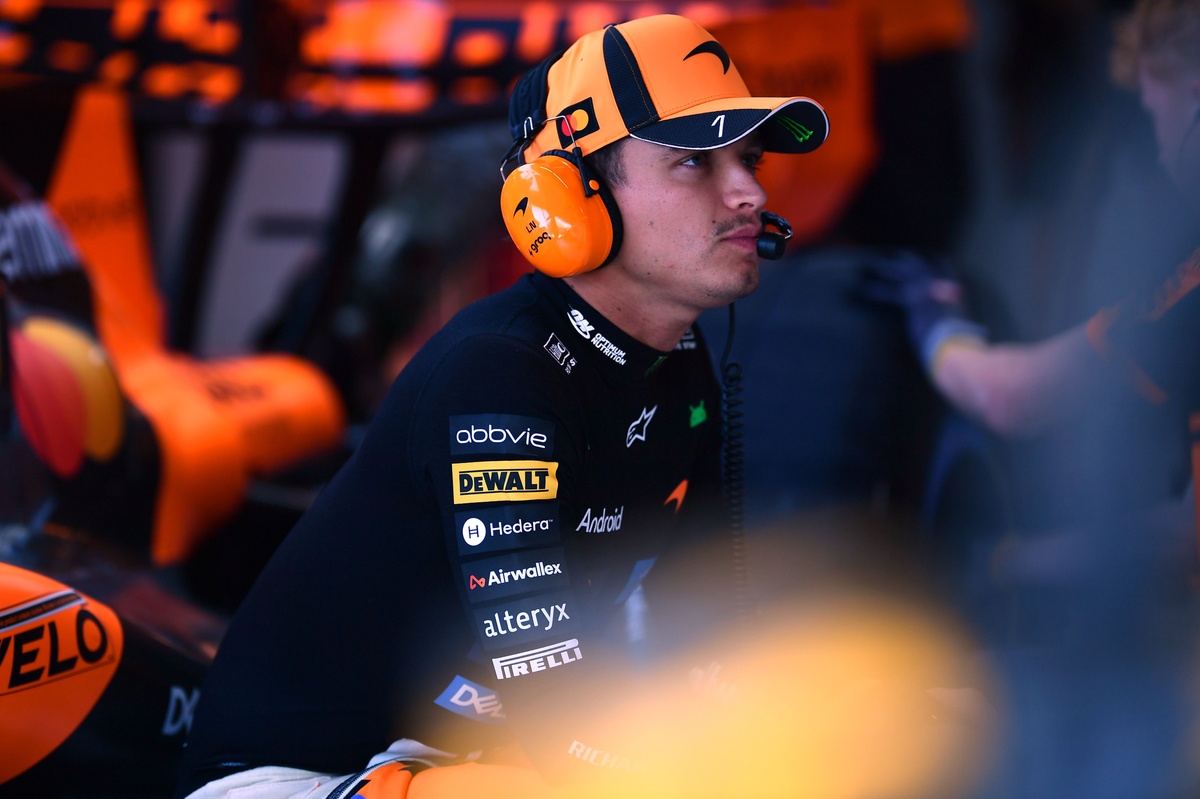
Lando Norris expresses disappointment over his "very poor performance" during the qualifying session for the F1 United States GP.
Max Verstappen declines to celebrate his qualifying performance at the US GP: 'No reason to grin'
Oscar Piastri cautions that the bumps at COTA might pose a risk for overtaking during the US Grand Prix.
Isack Hadjar laments a "catastrophic weekend" despite a turnaround in qualifying for the US Grand Prix.
Charles Leclerc establishes limits with Lewis Hamilton prior to their clash at Turn 1.