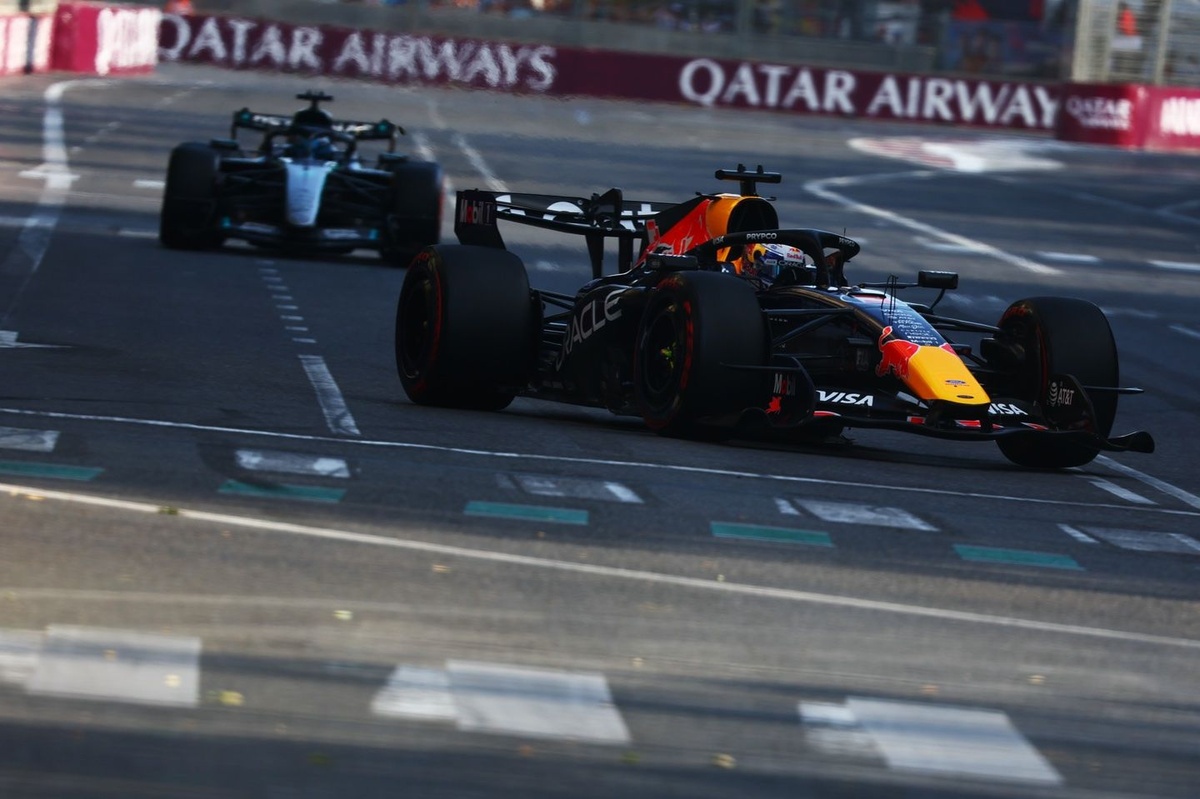
Why Mercedes believed Max Verstappen was "attached to a colossal bungee cord" during the Azerbaijan GP
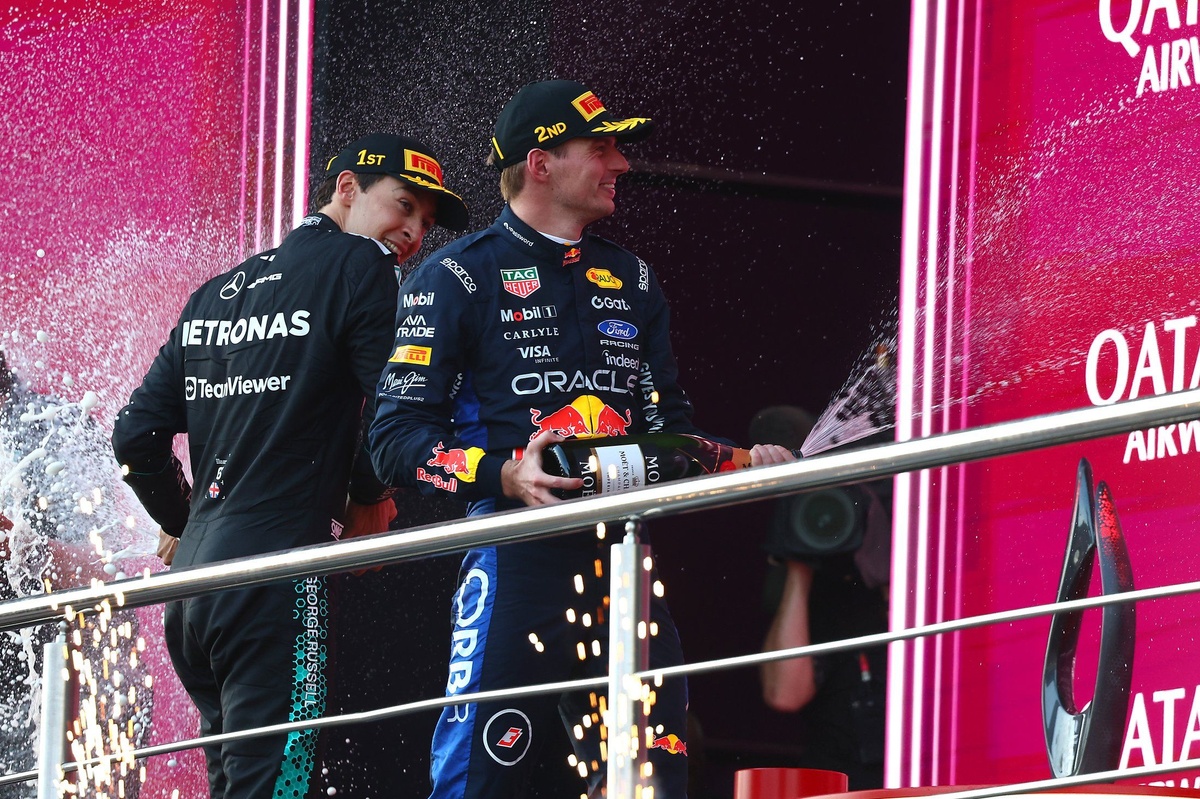
During the initial segment of the Azerbaijan Grand Prix, George Russell managed to establish a lead exceeding 10 seconds over the competitors, while the Red Bulls of Max Verstappen and Isack Hadjar faced difficulties overtaking Oscar Piastri's McLaren.
This scenario changed dramatically when the safety car was deployed following Alex Albon's Williams crashing into the wall at Turn 5 on lap 31. Russell's advantage disappeared as the safety car brought the field together, and Verstappen took advantage of the restart to overtake Piastri.
From that point on, although Russell remained slightly quicker for most of the final laps, he couldn't distance himself from Verstappen. When Valtteri Bottas went off at Turn 15 on the last lap, Russell's turbo lost its boost as he slowed down to adhere to the yellow flags at the scene, allowing Verstappen to close in once more and set up for a thrilling finish.
Interestingly, on most laps, Russell was significantly faster than Verstappen in the second sector, which runs from the Turn 5 braking zone, around the narrow section near the old city walls, to the Turn 16 braking area. However, Verstappen was able to respond on the straight, even when he hadn't been close enough on the previous lap to utilize the extra electrical harvesting and deployment provided by overtake mode.
Mercedes' deputy Formula 1 team principal, Bradley Lord, described the situation vividly, stating, "it was as if Max was on some sort of massive bungee cord."
Max Verstappen, Red Bull Racing, George Russell, Mercedes
Only 0.196 seconds separated Russell from Verstappen at the finish line, marking this as one of the closest finishes in world championship history—although that figure is somewhat misleading due to the relative rudimentary nature of timing systems in earlier decades.
"On the final lap, you can deplete the battery from top to bottom so there’s no need to keep the [battery] pack balanced for the next lap," explained Lord.
"And it was fortunate we had that in reserve because the gap had shrunk from a second and a half to half a second during that double yellow. George also dropped off the boost slightly, which can occur when the car's speed decreases too much and the engine speed follows suit.
"But no, it was as if Max was on some sort of massive bungee cord. George would effectively pull ahead by half a second through the middle sector each lap. And when you look at the GPS data, it suddenly seems to spike as the tow pulls Max back in.
"It almost appeared that he [Verstappen] was gaining more without overtake mode than with it, which was quite counterintuitive. However, even though it appeared very close on television and they did shorten things a bit, there was never a moment when he was close enough to attempt or consider an overtaking maneuver.
"So I believe George had everything well under control, though one tiny misstep could have changed the outcome significantly. It was just an absolutely fantastic performance from him. He mentioned he brushed the wall, [earlier in the race] but he actually gained time from it. Clearly, he executed even that perfectly."
After the safety car period concluded on lap 39, Verstappen was only faster than Russell on laps 42, 43, 44, and 48—the latter by a mere three milliseconds. Overall, their lap times rarely differed by more than a tenth, although Russell was 0.183 seconds quicker on the second-to-last lap.
Albon's shunt changed the direction of the race
Taking lap 48 as an example, telemetry data shows that Verstappen was actually about a tenth of a second ahead of Russell early on, having been approximately 17 km/h faster in the stretch between Turns 2 and 3—likely due to utilizing more electrical deployment. Nevertheless, Russell managed to stay off the throttle longer and leverage the Mercedes' handling superiority for faster apex speeds at Turn 3 and 4, quickly reversing the deficit.
In the second sector, Russell extended his lead to a maximum of 0.420 seconds through the more complex portions: he braked later into Turn 5, achieving a higher apex speed, then reached a greater peak speed on the run to Turn 7, even though Verstappen utilized some boost for a quicker exit from Turn 6. While Verstappen made a comeback through the area between Turns 13 and 14 with a higher top speed, the Mercedes' better handling once again made a difference at Turn 15, allowing Russell to throttle back much later and reduce the gap to 0.583 seconds.
Verstappen had a faster exit, gradually closing the gap, but once again, the Mercedes was quicker through Turn 16, reducing the gap to 0.541 seconds. From that point on, as they passed the detection point that unlocked overtake mode for the subsequent lap, Verstappen quickly closed the gap, shifting into top gear sooner than Russell—before Turn 18 rather than after Turn 19—and achieving a slightly higher top speed for the remainder of the lap.
Once on the straight, Verstappen was approximately 11 km/h faster all the way to the finish line, thus his overall time was just 0.003 seconds slower despite having lost half a second earlier in the lap. The Red Bull's internal combustion engine is the most powerful on the grid, placing it at the forefront of the FIA's Additional Development and Upgrade Opportunities (ADUO) framework; however, the Mercedes power unit is still considered superior as a package.
Still, while Verstappen and Red Bull team principal Laurent Mekies remained tight-lipped on the extent of the Ford-backed power unit's impact, Arvid Lindblad, whose VCARB utilizes the same engine, referred to it as "a rocketship."
Given the significant speed advantage Verstappen held in both straight-line zones while in Russell's tow, it's likely that the Red Bull is particularly aerodynamic when its active features are engaged—an aspect that other teams will undoubtedly scrutinize with great interest.
More from this section
Lewis Hamilton pays heartfelt homage to Roscoe with a moving tribute one year following his passing.
Colton Herta targets F1 by 2028: 'I still have an opportunity'
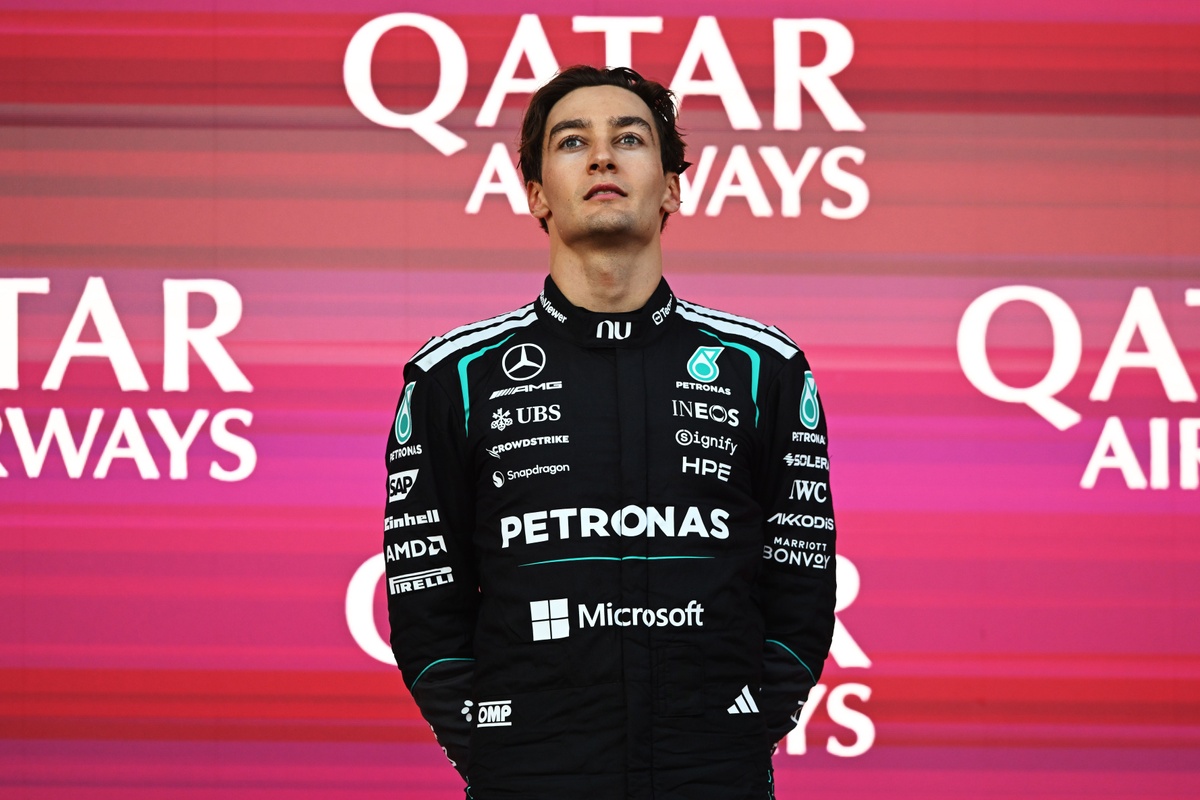
George Russell's victory in Baku has ignited speculation around the "cracked the code" theory.
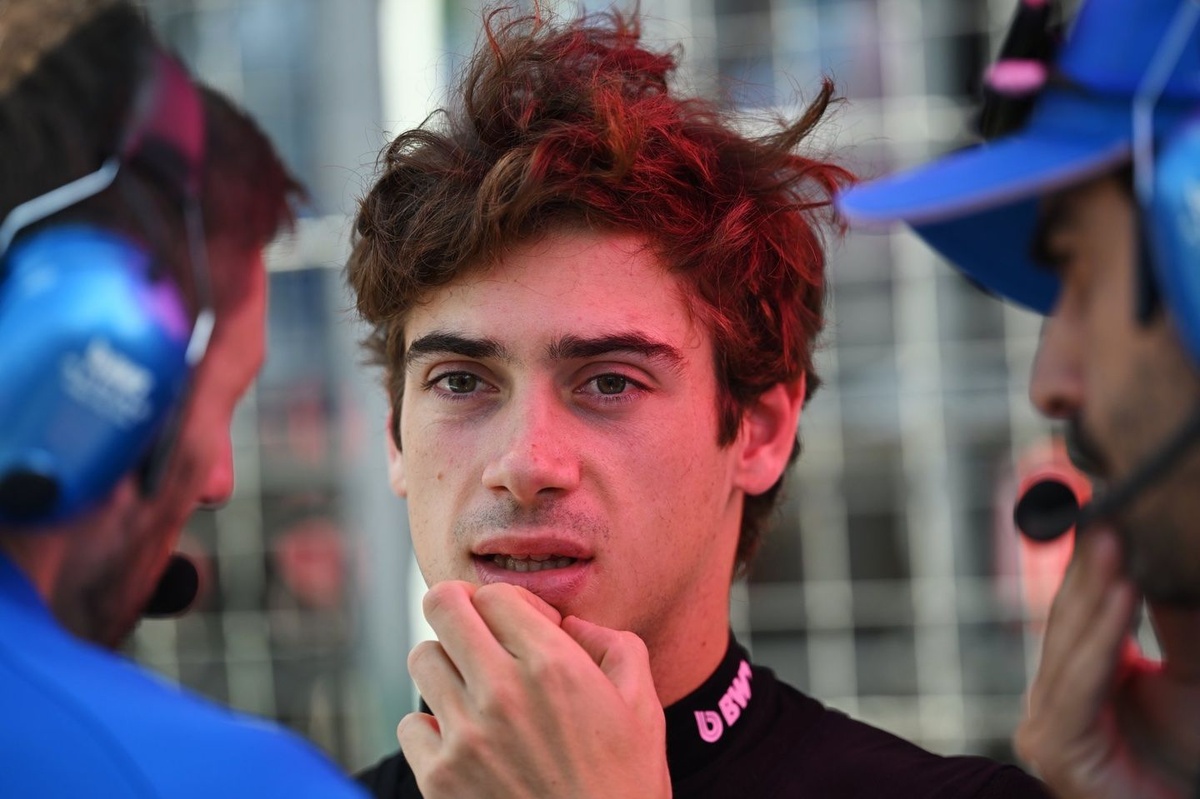
Juan Pablo Montoya appreciates Franco Colapinto's "assertive" style even after the incident in Baku.
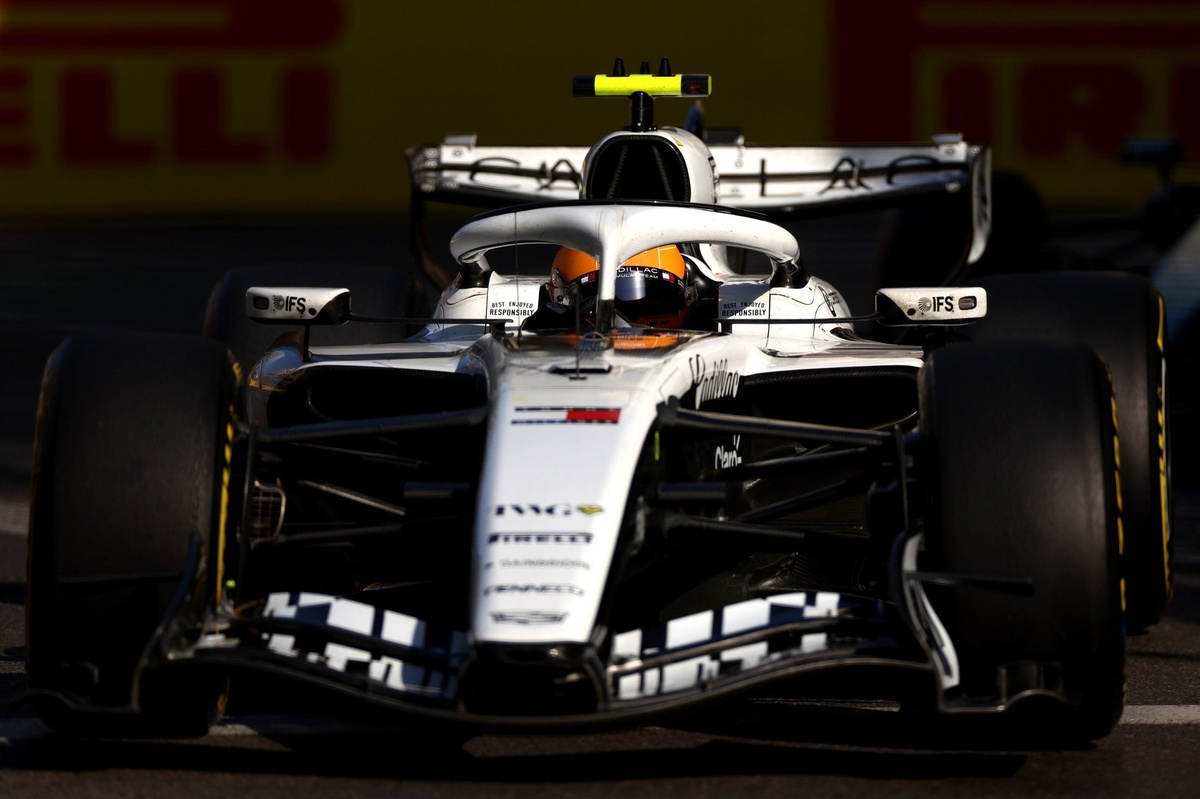
What caused Valtteri Bottas to lag significantly behind Sergio Perez during the Azerbaijan GP?