Infantino's rivals point to a "Blatter scenario"
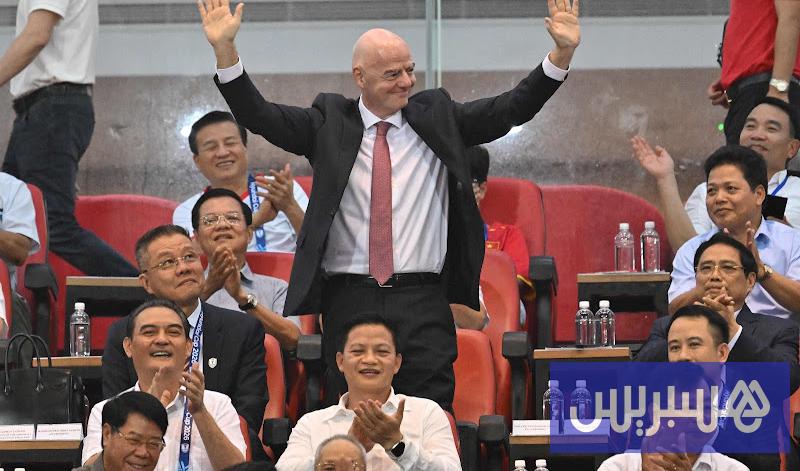
Swiss-Italian Gianni Infantino appears to be in a comfortable position to retain the presidency of FIFA, with five months to go before the election conference scheduled for March 18, 2027, in Rabat. His competitors within UEFA have struggled to find a candidate capable of challenging him and uniting a strong opposition.
Despite a deterioration in his relationships with some international football leaders in recent months, particularly following the controversy surrounding the establishment of a commercial company under FIFA that would be open to private sector investors, no serious challenger has emerged to threaten Infantino's position.
The project, dubbed "FIFA Forward Enterprise," prompted UEFA and its president Aleksander Čeferin to consider it time to attempt to end Infantino's presidency, which began in 2016.
Tensions between the two sides reached unprecedented levels when Čeferin referred to the FIFA president as "the emperor" during the European Club Association's general assembly on September 29.
However, behind-the-scenes communications and the rapprochement between UEFA, CONCACAF, and the Asian Football Confederation have yet to produce a viable candidate for the competition.
Pressure is mounting on Infantino's opponents due to the ticking clock, as he has set November 18 as the final deadline for submitting candidacy files for the elections.
Searching for a Non-European Candidate
UEFA officials understand that presenting a European candidate may face resistance from continental federations wary of expanding Europe's influence over FIFA, especially given the significant financial power of European football compared to other continents.
A source familiar with international football bodies told AFP that "any European candidate will not have a chance," which explains Čeferin's own hesitation to challenge Infantino.
This comes at a time when Čeferin's allies are pushing for his candidacy for a new term as UEFA president next year, making him less inclined to engage in a direct battle for the FIFA presidency.
Canadian Victor Montagliani, president of CONCACAF, which includes 35 national federations in North America, Central America, and the Caribbean, has been the name garnering the most attention among Infantino's opponents.
A source close to UEFA stated that Montagliani represents "the ideal candidate" because he is not from Europe and has extensive relationships within the federations, in addition to his role in developing women's football.
However, Montagliani's candidacy has begun to lose momentum as the election dates approach, as he has yet to announce his intention to run, while CONCACAF is preparing for its own election conference in 2027, during which the Canadian may seek a new term.
Estimates within football circles suggest that Montagliani's ambitions for the FIFA presidency may be more closely tied to the period after Infantino's current term ends, starting in 2031, rather than entering the fray in the upcoming elections.
Names Dropping Out of the Race
The name of Paris Saint-Germain president Nasser Al-Khelaifi emerged among those who could have attracted support from several federations, but he closed the door himself when he announced during a European clubs meeting that he is "not interested in FIFA."
Additionally, Al-Khelaifi's participation in a race against Infantino becomes difficult at a time when the Qatari Football Association has declared its support for the current FIFA president.
There has also been speculation about the possibility of supporting Bahraini Sheikh Salman bin Ibrahim Al Khalifa, president of the Asian Football Confederation, who was Infantino's main rival in the 2016 elections.
However, a source close to UEFA dismissed this option, considering that Sheikh Salman's defeat to Infantino ten years ago diminishes his chances of returning to the competition.
While Infantino continues his rounds and communications with national federations across continents to secure as many votes as possible before the election conference, his opponents have been unable to select a candidate.
A source close to international bodies indicated that the outcome may be decided even before the official campaign begins, predicting Infantino's re-election.
He added that the goal of some of Infantino's opponents is no longer necessarily to oust him at the ballot box, but rather to attempt to change the management style of FIFA and reduce the power the president wields.
For his part, Infantino has begun moves towards the 211 member federations of FIFA, proposing mid-September to conduct "consultations" to reform the federation's operations.
A week later, he promised to improve the financial resource distribution to national federations, a matter considered highly significant in the elections within FIFA, especially for smaller and medium-sized federations that rely on the international body's financial support programs to varying degrees.
UEFA Opens a Legal Front
Despite the lack of a strong candidate ahead of the Rabat elections, UEFA does not seem ready to end its conflict with Infantino, as part of the dispute has shifted to the judicial track.
This confrontation is primarily based on the "FIFA Forward Enterprise" project, which has drawn criticism regarding FIFA's management and commercial plans.
UEFA has turned to the courts in Florida, USA, seeking to compel the American branches of FIFA to hand over documents related to the project.
The European federation wants to obtain these documents in preparation for a potential lawsuit in Switzerland concerning allegations of "mismanagement" against Infantino.
UEFA insiders recall what happened to former FIFA president Joseph Blatter, who was re-elected in 2015 only to see his presidency end shortly thereafter amid crises and judicial investigations that shook the organization.
A source close to UEFA stated: "Remember what happened with Sepp Blatter; he was re-elected and then fell just days later in a judicial case."
Former UEFA president Michel Platini predicted at the end of August that any change in FIFA's leadership would not necessarily occur through sports bodies or ballot boxes, stating that ousting Infantino, if it happens, may come through the courts.
As the deadline for candidacies approaches on November 18, Infantino remains the frontrunner, while time is running out for his opponents to find a name capable of changing the course of the elections on March 18 in Rabat.
More from this section
Wydad defender Ferreira returns to Morocco
Morocco and Senegal face TAS on Thursday.
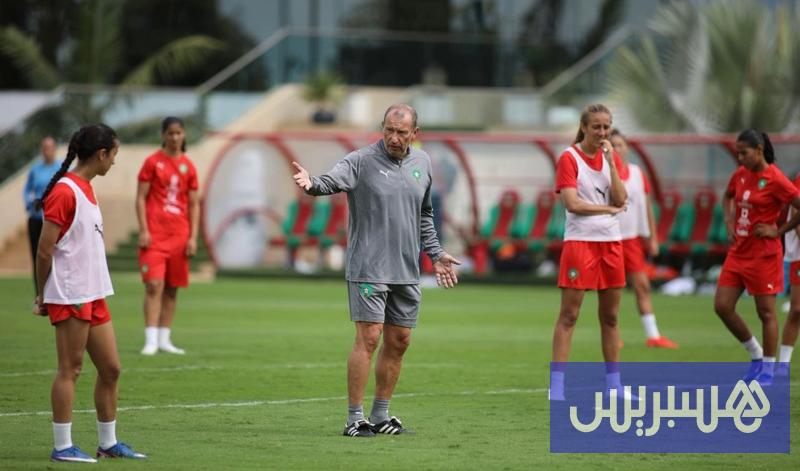
A new coach has been appointed for the women's national team.
Reports link Días to Fenerbahçe

Amrabat boosts expectations around Wydad.