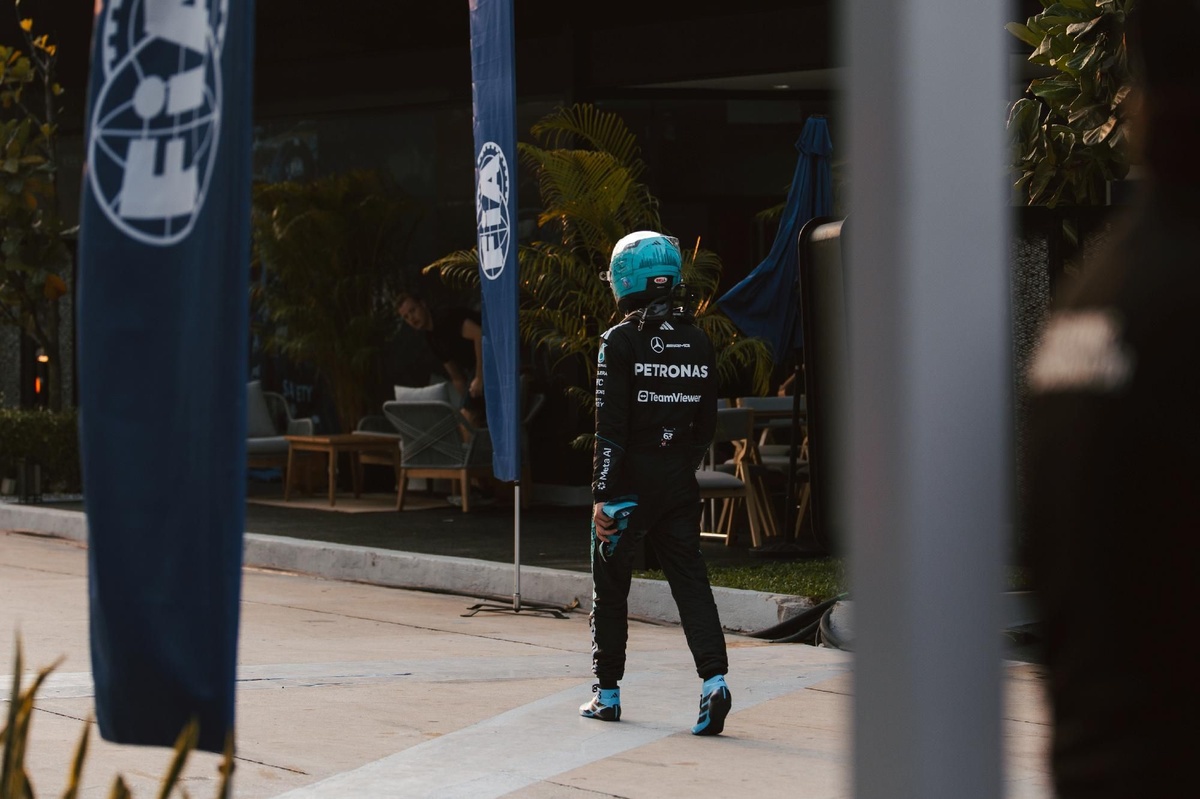
James Vowles discusses the appeal for an evaluation of the F1 budget cap.
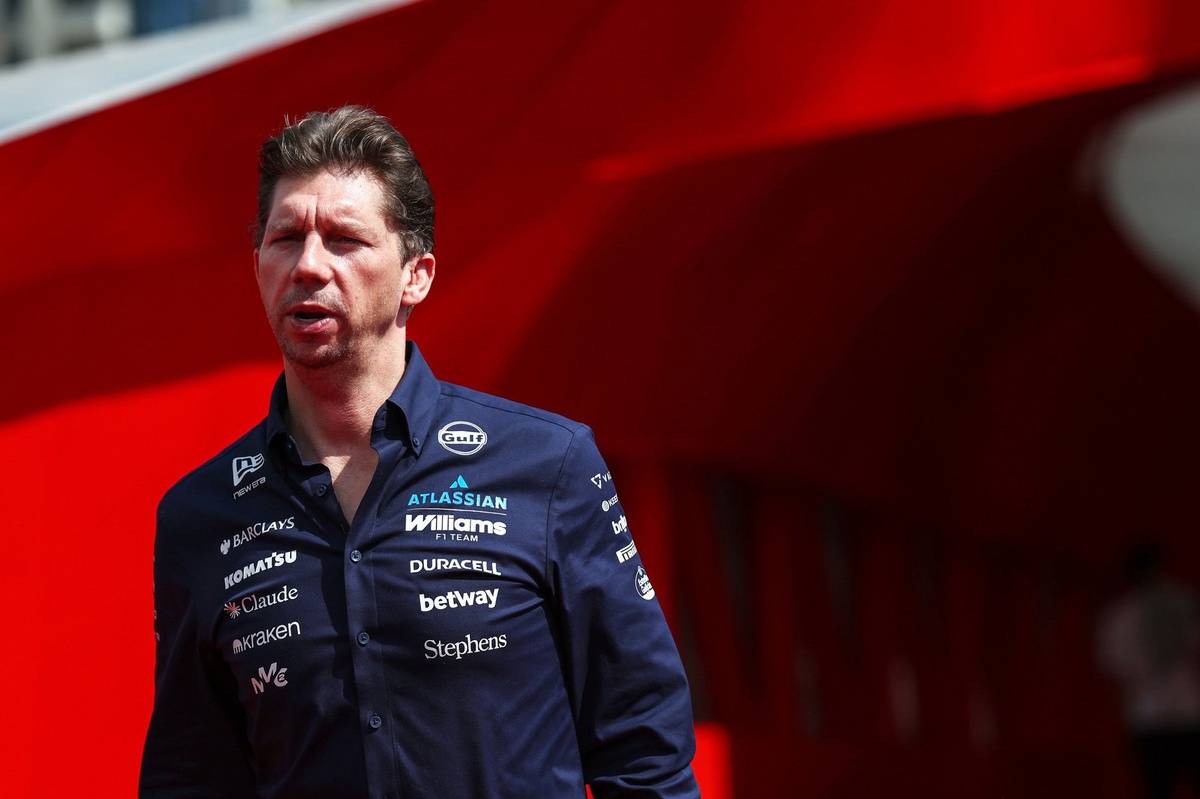
Williams team principal James Vowles has elaborated on his remarks regarding the need to reevaluate Formula 1's cost cap, indicating that the regulations surrounding capital expenditure continue to maintain a competitive edge for the leading teams.
Upon his arrival at Williams before the 2023 season, Vowles was among those advocating for extended capital expenditure allowances for the lower-tier teams in the championship according to the previous cost-cap regulations. Initially, this involved a distinct $36 million capital expenditure limit over a five-year span, which was subsequently modified to a sliding scale format based on the teams' standings in the championship. Consequently, Williams, along with AlphaTauri (RB), Alfa Romeo (Sauber), and Haas, received approximately $20 million in additional spending allowance during that timeframe.
With the capital expenditure limits now incorporated within a broader overall cost cap of $215 million per season, this theoretically permits greater CapEx spending annually. However, this is contingent upon straight-line depreciation, essentially mandating the amortization of costs over a designated period.
Vowles mentioned that he requires around $200 million to bridge the gap to the top teams in the championship. Over a decade, this would effectively reduce the team’s cap by $20 million each season, constraining its spending on both the car and personnel costs.
He pointed out that this situation ensures that teams that heavily invested before the cap have a built-in advantage that cannot be overcome under the current rules.
"Everyone I've talked to comprehends this issue because, ultimately, while I’m framing it as an unfair contest, it’s not a level playing field; it’s not a meritocracy," Vowles commented.
"In fact, we’ve created an inverse BOP championship. The investments made seven years ago are dictating how competitive you can be now, which is not the direction we should be heading."
"The backing has been consistent, regardless of individual conversations, because there’s a consensus that the sport benefits from being a true meritocracy.
"That said, it will always be challenging for a current team with these advantages to accept a reduction in their standing. What I can say is that in terms of votes, we might already be close to consensus, but it’s not solely about that. It’s fundamentally about identifying the right long-term solution for the sport that leads us to the desired outcome.
Vowles asserted that while the cost cap has contributed to financial stability, it has not succeeded in shrinking the F1 field—instead, he contended that the competitive hierarchy has broadened since the cap was implemented.
Alexander Albon, Williams
He further explained that the financial strain of outdated facilities extends beyond capital expenditure, noting that inefficiencies in processes lead to higher manufacturing costs—Vowles estimates that Williams pays about 30% more than a "Big Four" team for each component.
"In terms of competitive equity, we are not there yet. What we have established is that whatever investment was made seven years ago is now significantly impacting us. The other issue is competitive advantage; the field should be tightening, yet it isn’t. You need not rely on my statistics.
"You can verify it for yourself. The points scored by the bottom five or six teams have decreased, depending on how you define it. The top four teams are accumulating more points under the cost cap than they did previously.
"This indicates a reversal of expectations. You don’t need my input to see this. Another statistic is that there has been just one victory not achieved by a top four team in the last 130 Grands Prix [Esteban Ocon's victory at the 2021 Hungarian GP for Alpine].
"Before the cost cap, a non-top four team would finish on the podium about 10% of the time; now it’s down to 5%. Regardless of the statistic you choose, it is evident that we have worsened the situation. Why have we exacerbated the problem?
"What we’ve done is solidify the investments made in the past, and the cost cap has effectively stated that no further investments can occur. You are constrained. That’s a total of 36 million in CapEx you can allocate over that entire span, which, to be frank, you would spend more on replacing machinery than on that amount, rendering it negligible.
"Currently, the issue is that while you can invest as you wish in CapEx, you will need to account for the depreciation impact on the cost cap, which typically spans five to ten years for us. If I consider the assets I require, and this may come as a surprise, I could exhaust my entire operational expenditure budget for one year on all the facilities I need. It’s 200 million.
"That’s the gap I face now, and it implies that every year over ten years, I'll incur another 20 million hit compared to my competitors. That’s not a fair contest. I’m not seeking preferential treatment.
"What has intensified this issue is the need to navigate a regulatory change with Williams. This is a significant regulatory shift, and I had to undergo this to fully reveal how far behind we are. Because as it stands, and I’m being quite frank, we are paying more.
"I provided a figure: it’s about 25% to 30% more than the leading team for parts that arrive four weeks later. That is the reality we are facing.
And this became glaringly apparent this winter when attempting to produce 55,000 components all at once. In a year, even into next year, it will be less painful. However, one of the main reasons I’m speaking out now is because we are discussing a major regulatory transformation for 2030 or 2031 when it is set to take effect.
"And even if someone were to say today, here’s the chance to spend 150 million, it’s not feasible to procure everything in a week. It takes years to implement this. My aim is to ensure that as we approach this next regulatory change, we actually alter the operational dynamics of the sport."
More from this section
Oscar Piastri reveals the truth behind McLaren’s significant decline in performance.

Racing Bulls are "not hurrying" to make a choice among three "exceptional" drivers for F1 2027.
Leclerc admits that the 2026 F1 regulations are currently undermining his natural instincts.
Isack Hadjar shares unexpected response following his initial lap utilizing Red Bull's proprietary F1 engine.
"It ought to be prohibited" - F1 competitors remain split on cooling vests