Lewis Hamilton: Younger F1 competitors are becoming “increasingly cautious” when it comes to racing in wet conditions.
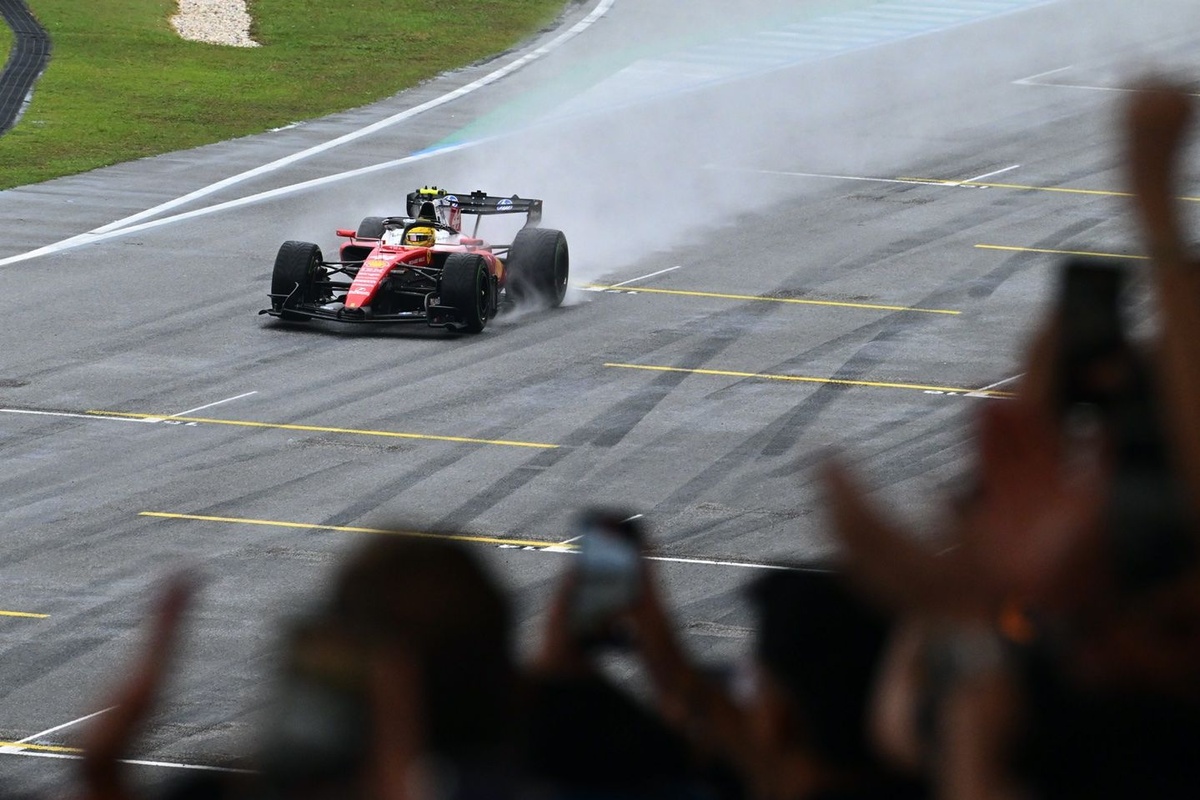
Seven-time world champion Lewis Hamilton has indicated that not all Formula 1 drivers share the same mindset when it comes to racing in wet conditions, with younger competitors becoming “increasingly cautious.”
After experiencing rain at various intervals, Sepang marked the first notable competitive outing for F1’s new machinery for the 2026 season, as a heavy downpour drenched the track just before the race was set to commence.
The race start was postponed by 40 minutes due to the unfavorable weather, after which all vehicles were equipped with intermediate tyres instead of full-wets – and several encountered a now notorious software issue.
“Races in wet conditions are definitely different from what we used to have,” remarked 41-year-old Hamilton. “I've had fantastic races, particularly in 2008 during the rain – we had more testing back then, and our rain tyres were superior, thanks to better collaboration with Bridgestone in those days.
“Personally, I enjoy racing in the rain. I believe that the officials are much more cautious these days, but the new drivers are also becoming increasingly careful. Us veterans are eager to race, while many of the younger drivers prefer to hold back. They’re receiving mixed signals, which contributes to their cautiousness.
Andrea Kimi Antonelli, Mercedes, Lewis Hamilton, Ferrari
“That’s why I’m all for getting started, even in extreme conditions. That’s when we truly test our limits. Is it riskier? Certainly.
“When I was on slick tyres [in Malaysia], it was indeed in the toughest conditions, but I thrive on that challenge. Racing is about feeling the car and pushing the limits, which is where I made my mark in the rain.”
Carlos Sainz believes that the timing of the race direction was spot on in Malaysia.
“From my perspective, the moment the FIA decided to give the green light to start racing was right considering the rain intensity,” stated the 32-year-old Spaniard. “We all felt it was too wet to race initially.
“The timing of the green light was perfect – or at least the right one. We attempted to race but faced failure not due to a lack of will to race in wet conditions, but rather due to external factors like the software malfunction. However, if it rains, I embrace it as it increases my chances of performing well this weekend.”
After running into the gravel during the formation lap, Hadjar mentioned that the new power units, which heavily rely on electrical energy, made wet driving challenging.
“There are two factors,” the 22-year-old Frenchman explained regarding his mistake. “One is the software issue, where you can’t predict when the power will kick in, and the rain complicates matters; also, the intermediate tyres struggle with standing water. The track needs to be consistently wet for optimal performance.
Isack Hadjar, Red Bull Racing
“But that’s not how I was raised – for me, you put wet tyres on a wet track and just drive; now it’s more about avoiding certain patches and being more strategic. You just need to adapt.”
The challenge with full-wet tyres is that they generally lack the competitiveness of intermediates, and the scenarios in which they would be beneficial are often considered too wet for racing.
Regarding the software issue, not everyone views it as a significant concern. “It’s much simpler than I anticipated because you can regulate the kilowatt output – how much power you receive,” said 36-year-old Sergio Perez, who drives a Ferrari-powered Cadillac, while Hadjar has a Red Bull Ford powertrain.
“Essentially, it’s like driving on the road; you control how much you want, so it’s up to the driver to determine how much power they can handle. You can adjust from 350kW to 250kW, 200kW.”
Wet-weather racing might be a hot topic once more this weekend at the Singapore Grand Prix, with a small but notable chance of rain throughout the event.
Additional reporting by Filip Cleeren, Ronald Vording and Jake Boxall-Legge
More from this section
Guenther Steiner criticizes Ferrari for their unwillingness to acknowledge errors in their Formula 1 strategy.
Isack Hadjar advocates for the prohibition of F1 cooling vests: "It should be challenging."
McLaren aims to address Lando Norris' expensive fuel system problem with adjustments to the power unit for the Singapore F1 race.
“Outstanding issues” for Max Verstappen – Has Red Bull successfully addressed its vulnerabilities in Singapore?
George Russell: "Obvious choice" to use the former car as Mercedes divides specifications for Singapore.