Assessment: What Formula 1 Enthusiasts Can Anticipate from "Schumacher '94"
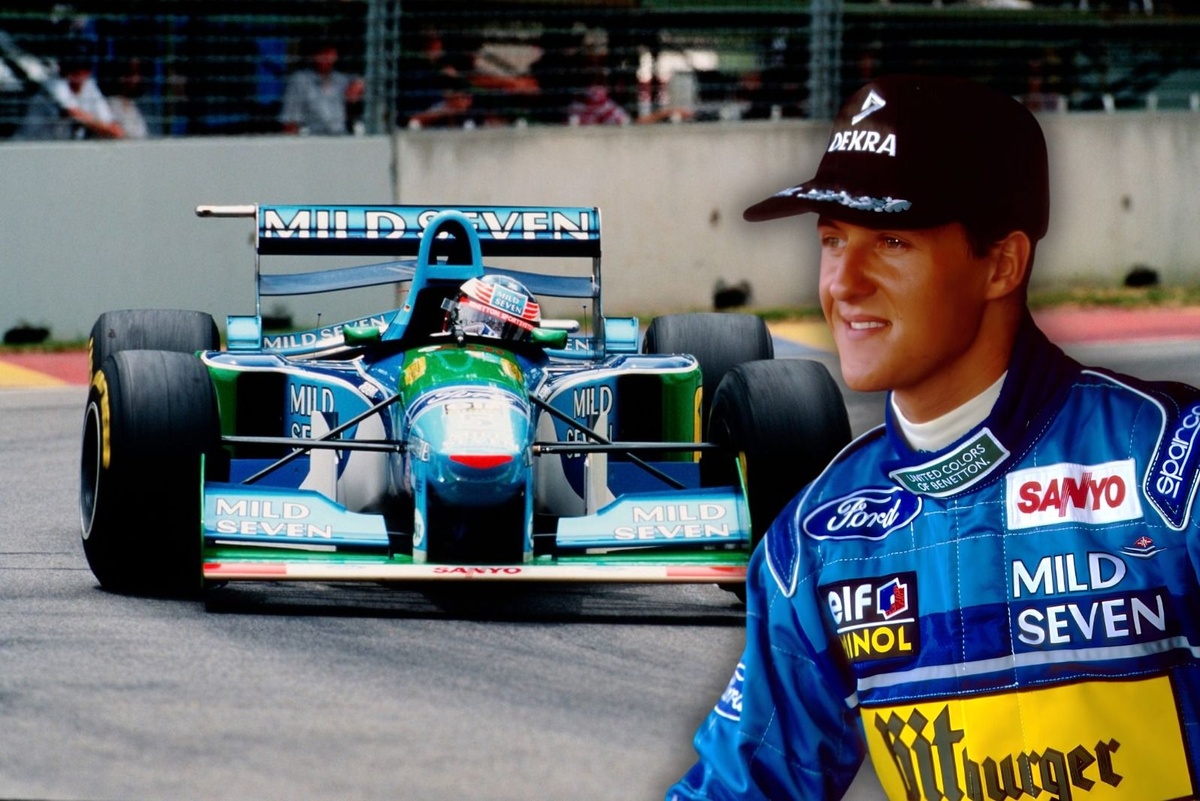
With "Schumacher '94 – The Birth of a Legend," streaming platform Netflix is set to unveil its second documentary centered on "Schumi" on October 2, 2026, following the release of "Schumacher" in 2021. We had the opportunity to preview the film prior to its global launch. Here’s what Formula 1 enthusiasts can anticipate from "Schumacher '94".
"Spoiler" alert: This article contains descriptions of specific scenes and content from the documentary. Those who prefer to experience it without prior knowledge should stop reading now – but feel free to bookmark this article for later and compare this review with your own thoughts afterwards.
"Schumacher '94": Overview
The title speaks volumes: the documentary details the 1994 Formula 1 season, a pivotal year that saw Michael Schumacher clinch his first World Championship with Benetton. It was a season rife with drama, marked by tragic incidents and numerous controversies.
"Schumacher '94" also fulfills its subtitle, "The Birth of a Legend," by extending beyond the 1994 season to delve into Schumacher’s career – albeit not as extensively as the earlier documentary "Schumacher," but featuring key moments from his pre-1994 journey. One thing that becomes evident is that 1994 was a particularly defining year for Schumacher, culminating in his inaugural World Championship title.
The film vividly portrays Schumacher’s evolution from an emerging talent to a Formula 1 icon and the "bad boy" of the paddock. It also highlights the immense mental challenges faced by Schumacher during the 1994 season and how he transformed over just a few months. This perspective is supported by testimonies from contemporaries such as Schumacher’s wife Corinna and his then-manager Willi Weber.
However, those seeking new insights into Schumacher’s health will find no information on that front: it remains unaddressed.
"Schumacher '94": Strengths of the Documentary
Michael Schumacher, Benetton B194 Ford, leads Damon Hill, Williams FW16B Renault, and Jean Alesi, Ferrari 412T1B
The visuals, audio – including the roar of those V8 and V10 engines! – and editing effectively revive the intensity of the 1994 Formula 1 season. A few recreated scenes depicting Schumacher "in action" in his helmet and race suit within the Benetton cockpit aim to enhance the narrative depth that raw footage alone may not provide. They serve as a fitting enhancement to the authentic archival material, which is beautifully showcased.
Numerous figures from Schumacher’s past share their insights: Corinna, Weber, former Benetton team principal Flavio Briatore, race engineer Pat Symonds, ex-Formula 1 chief Bernie Ecclestone, and Kai Ebel and Heiko Waßer, who are well-known to German audiences from RTL’s Formula 1 coverage. All were close witnesses to Schumacher’s ascent.
The documentary also effectively captures the phenomenon sparked by Schumacher in Germany: "Schumania." On Sundays, crowds gathered to rally behind their hero, sharing in his struggles and ultimately celebrating his championship victory.
The documentary’s greatest asset, however, is its portrayal of Schumacher himself: how he nearly considered retirement after Imola in 1994, the self-doubt he grappled with, and the continual challenges he faced. The media tagged him as "Schummel-Schumi," essentially "Cheating Schumi." The film illustrates how everything appeared to spiral out of control for him. Weber reflects, "After Imola, Michael was different." The documentary handles this transformation adeptly.
Appropriately, the film allocates significant time to Imola: around 25 minutes of its 107-minute runtime focus on what may have been the darkest weekend in Formula 1 history. It emphasizes the emotions of Schumacher and the other key figures, along with the visible and invisible scars that the events left behind.
Schumacher himself narrates his thoughts on the immediate aftermath of the Imola weekend, expressing that he became acutely aware of the dangers of driving a Formula 1 car. While driving a lap at Silverstone in a road car, he recalls thinking: "You could die here, and there too." This insight makes his internal conflict palpable.
A poignant detail appears in the closing credits, as the documentary revisits the tragic incidents at Imola in 1994. At the very end, the film dedicates itself "In memory of Ayrton Senna and Roland Ratzenberger," the two Formula 1 drivers who tragically lost their lives at Imola.
"Schumacher '94": Areas Where the Documentary Falls Short
Michael Schumacher, Benetton and Damon Hill, Williams
Arguably, the most significant drawback of the documentary "Schumacher '94" is the lack of input from Schumacher’s competitors, who are either entirely absent or appear only minimally. His championship rival Damon Hill, for instance, is scarcely featured – despite his ongoing presence as a commentator and having discussed the 1994 season finale in detail as recently as 2024. The film includes Hill, yet his contributions are limited to two brief archival clips from 1994.
The various controversies that characterized the 1994 season are presented in a similarly unbalanced fashion: allegations of concealed traction control, Schumacher’s black flag at Silverstone, the plank infringement at Spa-Francorchamps – and, of course, the notorious collision with Hill in the Adelaide finale.
All these events are covered and depicted – but solely from a subjective angle. Schumacher’s actions are recorded but not critically analyzed. The Adelaide collision – one of the most debated incidents in Formula 1 history – lacks any contextual framing.
Several pivotal moments are recounted without sufficient context. For example, the documentary does not mention that Ratzenberger’s accident at Imola followed previous damage to his front wing – a detail that could soften Ecclestone’s later comments, which seem excessively harsh without that background.
Additionally, the pit-lane fire involving Schumacher’s teammate Jos Verstappen at Hockenheim is dramatically presented, yet there’s no acknowledgment that Benetton had altered the refueling equipment and removed a filter to enhance the fuel flow rate.
The documentary consistently suggests that "the others are the villains." The newcomer Benetton is depicted as disrupting the Formula 1 status quo, with the establishment attempting to undermine the newcomer – a narrative heavily promoted by Briatore throughout the film. This reaches an odd peak when Briatore likens the outcome of the 1994 World Championship to a sort of "divine judgment": "God was watching from the sky and helped us to be World Champion as well."
Overall, the film struggles to elevate itself beyond a basic emotional level. This may be primarily due to the fact that much of what transpired during the 1994 season and Schumacher’s ascent is already well-documented, leading to a predictable and somewhat uninspiring viewing experience. Furthermore, there is unfortunately a lack of objectivity.
"Schumacher '94": Is the "Schumi" Documentary Worth Watching?
Michael Schumacher celebrates championship victory with his team
So, is the new Netflix documentary about Schumacher worth viewing? Yes and no.
Yes, because the stunning footage evokes the legacy of a sporting icon who inspired millions in Germany. It compellingly depicts an extraordinarily dramatic year in Formula 1 and its repercussions. Additionally, viewers gain at least a glimpse behind Schumacher’s public persona and see how the events of 1994 transformed "Schumi" into a "robot".
No, because the narrative is presented from a subjective viewpoint and shies away from critically addressing many controversial topics. Perhaps the film could have benefited from slightly less focus on Corinna: at times, it meanders into tangents of little significance.
Nevertheless, "Schumacher '94" accomplishes something otherwise unattainable: the documentary revives "Schumi," whom so many people long for, back into our hearts, even if just for a brief moment. All the more reason to say: Keep Fighting, Michael!
Frequently Asked Questions About the New Netflix Documentary "Schumacher '94"
When will "Schumacher '94" be available on Netflix?
"Schumacher '94 – The Birth of a Legend" will be released globally on Netflix on October 2, 2026.
What does the new Schumacher documentary cover?
The documentary primarily chronicles the 1994 Formula 1 season, during which Michael Schumacher secured his first World Championship title with Benetton. It also examines his personal growth and the aftermath of the tragic race weekend at Imola.
Does the new Schumacher documentary discuss his skiing accident?
No. Schumacher’s skiing accident in December 2013 and its consequences are not covered in "Schumacher '94". The focus remains on the 1994 season and Schumacher’s ascent to Formula 1 greatness at that time.
Is there any new information regarding Michael Schumacher’s health?
No. The documentary does not offer any new insights into Michael Schumacher’s current health status.
How long is "Schumacher '94"?
"Schumacher '94" runs for 107 minutes. Approximately 25 minutes are dedicated to the tragic Formula 1 weekend at Imola in 1994.
How does "Schumacher '94" differ from the 2021 Netflix documentary "Schumacher"?
The 2021 Netflix documentary "Schumacher" provides a broader overview of Schumacher’s life and career. In contrast, "Schumacher '94" focuses mainly on the 1994 Formula 1 season and his first World Championship title.
Is "Schumacher '94 – The Birth of a Legend" worth watching?
The documentary impresses with its powerful visuals, historical footage, and personal stories from those who accompanied Schumacher throughout his career. Its shortcomings lie in the limited critical examination of the controversies surrounding the 1994 season and the absence of perspectives from contemporary rivals like Damon Hill.
More from this section

McLaren Racing and Edward Jones collaborate in a multi-year partnership for both F1 and IndyCar.
Pierre Gasly labels social media harassment as “entirely unacceptable” following the Franco Colapinto incident during the Spanish Grand Prix.
What is causing the postponement in the cancellation of the Qatar and Abu Dhabi Grand Prix events?
What is the reason behind a Formula 1 race being 305 kilometers in length? A look at race distances from 1950 to 2027.
Sebastian Vettel shares his thoughts on the discussion surrounding F1's 2026 regulations: 'We must merge the elements we cherish.'