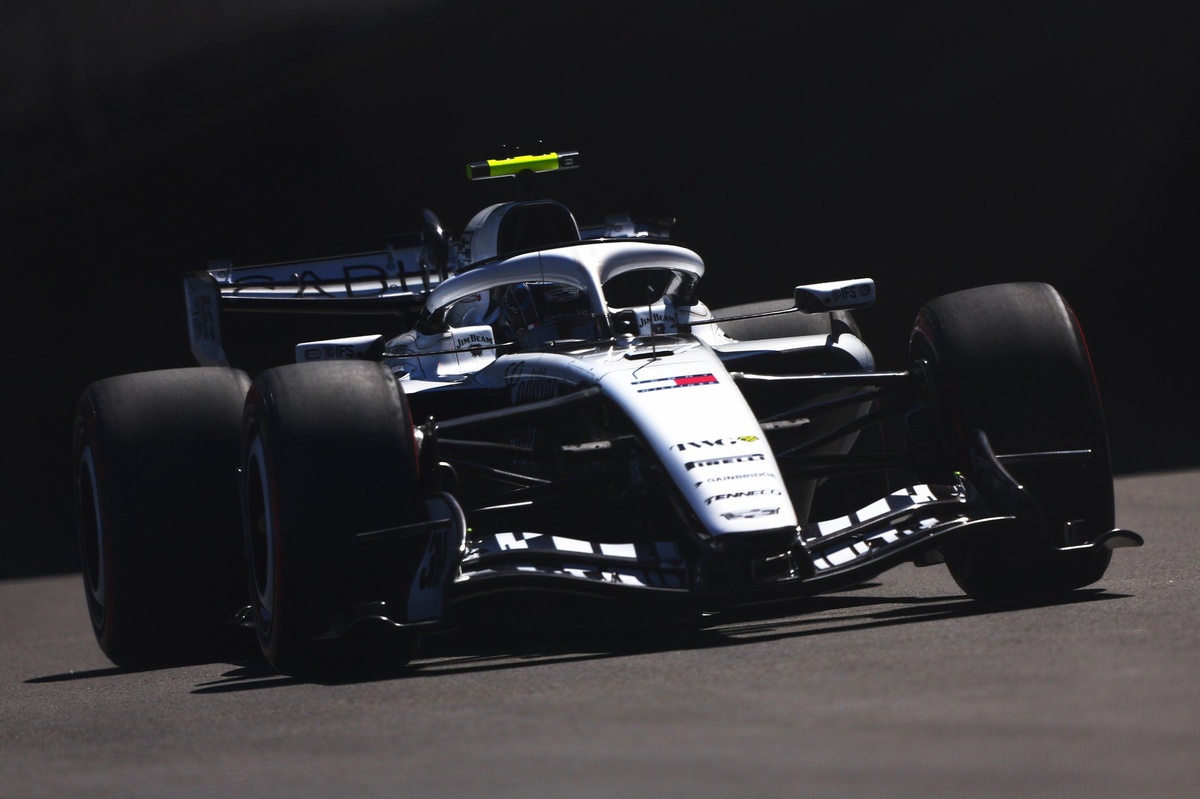
What is the reason behind a Formula 1 race being 305 kilometers in length? A look at race distances from 1950 to 2027.
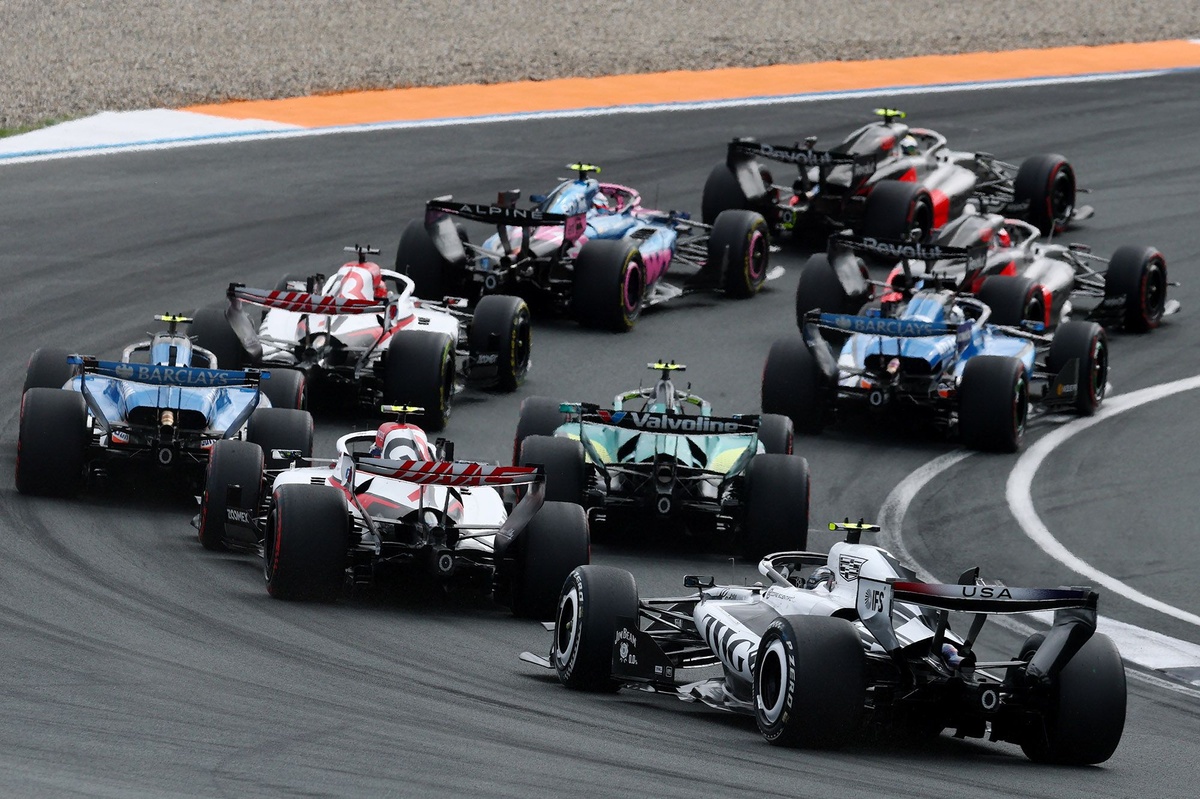
A Formula 1 Grand Prix spans over 305 kilometers. More specifically, a race comprises the minimum number of laps needed to surpass 305 kilometers, except for Monaco, where the minimum distance is 260 kilometers.
There's also a two-hour restriction on actual racing time. If a race is halted, the total duration, including any delays, cannot exceed three hours, as per current Formula 1 regulations.
However, this has not always been the case. In the early years of the World Championship, some races were nearly double the current length. Additionally, in 2027, the race distance will be further reduced. For insights on the duration of races in practice and how many laps are completed, refer to our article How long does a Formula 1 race last?
The 1950s: Races of up to 500 kilometers
When the Formula 1 World Championship kicked off in 1950, there was no set race distance. Event organizers had considerable freedom to decide the length of their races, resulting in significant discrepancies.
The inaugural World Championship race at Silverstone consisted of 70 laps, totaling 325 kilometers. Winner Nino Farina completed it in 2 hours and 13 minutes. In stark contrast, at the season finale in Monza, Farina raced for 80 laps, covering approximately 504 kilometers, spending nearly three hours behind the wheel.
Even longer was the Indianapolis 500, which was part of the World Championship from 1950 to 1960. With 200 laps and 805 kilometers, it remains the race with the highest lap count and the longest distance in World Championship history.
1958: The first major reduction
In 1958, the governing body implemented much stricter regulations. Race distances were defined to fall between 300 and 500 kilometers, with a maximum duration of two hours.
In the subsequent years, most Grands Prix ranged from 300 to 400 kilometers. The upper limit was ultimately set at 400 kilometers.
1971: A maximum of around 322 kilometers
Jacky Ickx, Ferrari 312B2
For the 1971 season, the maximum race distance was decreased from 400 to roughly 322 kilometers. Consequently, races became noticeably shorter.
An extreme instance from that same season was the German Grand Prix at the Nürburgring Nordschleife, which lasted just 12 laps. With the circuit measuring nearly 23 kilometers, it holds the record for the fewest laps in a completed World Championship race.
Throughout the 1970s and 1980s, most races averaged around 300 to 320 kilometers.
1989: The 305-kilometer standard
In 1989, the race distance was standardized at a minimum of 305 kilometers to ensure that a race could be completed within two hours.
Since then, each Grand Prix has consisted of the minimum number of laps necessary to exceed 305 kilometers. This principle remains unchanged today.
For instance, in 2026, this translates to 44 laps at Spa-Francorchamps, where the circuit exceeds seven kilometers in length. Baku has 51 laps and Sepang 56, while Monaco boasts the highest lap total at 78.
The Monaco exception: Why the race is only 260 kilometers
Monaco stands out as the sole circuit where the 305-kilometer rule does not apply. The race in the Principality encompasses 78 laps and roughly 260 kilometers.
This deviation is due to speed. The street circuit measures only 3.337 kilometers, being both narrow and winding. Consequently, average speeds are significantly lower than on other tracks.
Covering more than 305 kilometers in Monaco would likely result in an exceptionally lengthy race due to the reduced average speed. Hence, Monaco has a minimum race distance of 260 kilometers.
Canada 2011: The longest Formula 1 race to date
For many years, a two-hour limit was placed on actual racing time, with no regulations on the overall duration of a race during interruptions. This changed following the 2011 Canadian Grand Prix.
Heavy rainfall halted the race in Montreal for approximately two hours. Jenson Button eventually triumphed after a remarkable comeback. The official race duration was 4:04:39.537, marking it as the longest race in Formula 1 history.
The FIA acted swiftly. Starting in 2012, a race, including interruptions, could last no longer than four hours, with the two-hour limit on actual racing time remaining intact. For the 2021 season, the overall limit was adjusted to three hours.
Belgium 2021: The shortest race and new points rules
Formula 1 faced the opposite scenario at Spa-Francorchamps in 2021. Continuous rain meant the field only drove behind the Safety Car, with just one lap being counted in the official results.
Under the rules at that time, half points were still awarded, which led to widespread backlash.
Since 2022, a sliding scale has been adopted for points awarded in shortened races, provided that at least two laps have been completed without the Safety Car or Virtual Safety Car:
Fewer than two laps: no points.
Two laps to 25 percent of the race distance: points for the top five (6-4-3-2-1).
25 to 50 percent: points for the top nine (13-10-8-6-5-4-3-2-1).
50 to 75 percent: points for the top 10 (19-14-12-9-8-6-5-3-2-1).
More than 75 percent: full points.
From 2023 onward, full points are also granted when a suspended race resumes, even if the entire scheduled distance is not completed.
The Sprint: Around 100 kilometers
Selected race weekends also feature a Sprint alongside the Grand Prix, covering about 100 kilometers, roughly one-third of a standard race distance, and typically lasting around half an hour.
No mandatory pit stop is required. Points are distributed to the top eight finishers (8-7-6-5-4-3-2-1). Six Sprints will take place on the 2026 calendar. Detailed information on the format can be found in Formula 1 Sprint: Everything you need to know.
2027: Why races are getting shorter
Starting in 2027, the standard race distance is set to decrease from 305 to 290 kilometers, which the FIA estimates will result in about two or three fewer laps.
The Formula 1 Commission has endorsed the reduction, pending final approval from the FIA World Motor Sport Council.
Kimi Antonelli, Mercedes, Max Verstappen, Red Bull Racing, Lando Norris, McLaren
Concurrently, the existing three-hour overall limit for races impacted by interruptions is set to be eliminated. Instead, a strict cutoff will be implemented for the conclusion of racing activities, while the two-hour limit on actual racing time will stay in place.
This adjustment is motivated by the power units. Since 2026, approximately half of the power has been derived from the internal combustion engine and half from the electric motor. Many drivers have voiced their concerns regarding the performance characteristics of these new power units, which require constant energy management and harvesting, creating a yo-yo effect during races.
In 2027, the ratio will shift to 58:42 in favor of the internal combustion engine, followed by 60:40 in 2028.
A greater reliance on combustion-engine power means increased fuel consumption, but larger fuel tanks would necessitate new chassis designs. Many teams prefer to continue utilizing their 2026 vehicles.
The initial strategy was to shorten only specific races by as many as four laps, potentially turning some Grands Prix into fuel conservation challenges. Instead, all races are now expected to be shortened under the same principle.
The Monaco race distance is also anticipated to be reduced, though the exact amount is still undecided. This regulation is currently applicable only for 2027, with its future for 2028 depending on the effects of the increased fuel flow that season.
Discussions are already underway about making races even shorter in the future, with Formula 1 President and CEO Stefano Domenicali sharing some unexpected ideas in this regard.
Stefano Domenicali, Formula 1 President and CEO
More than 305 kilometers. The race is composed of the minimum number of complete laps needed to exceed that distance. In 2027, the distance is planned to decrease to 290 kilometers.
Currently, Monaco is the only exception, at 260 kilometers.
How long can a Formula 1 race last?
Actual racing time is capped at two hours. Since 2021, a race that includes interruptions may last a maximum of three hours. From 2012 to 2020, this limit was four hours.
In 2027, the three-hour limit is set to be removed and replaced with a strict cutoff for racing activity, while the two-hour limit on actual racing will persist.
What was the longest Formula 1 race?
In terms of time, the 2011 Canadian Grand Prix, lasting 4:04:39.537. For distance, the Indianapolis 500, which was part of the World Championship from 1950 to 1960, at 805 kilometers.
What was the shortest Formula 1 race?
The 2021 Belgian Grand Prix, where only one lap behind the Safety Car counted in the official results.
Which Formula 1 race has the most laps?
Currently, Monaco holds the record with 78 laps, while in World Championship history, the Indianapolis 500 boasts 200 laps.
How long is a Formula 1 Sprint?
Approximately 100 kilometers, which is about one-third of the distance of a Grand Prix.
More from this section
Assessment: What Formula 1 Enthusiasts Can Anticipate from "Schumacher '94"

McLaren Racing and Edward Jones collaborate in a multi-year partnership for both F1 and IndyCar.
Pierre Gasly labels social media harassment as “entirely unacceptable” following the Franco Colapinto incident during the Spanish Grand Prix.
What is causing the postponement in the cancellation of the Qatar and Abu Dhabi Grand Prix events?
Sebastian Vettel shares his thoughts on the discussion surrounding F1's 2026 regulations: 'We must merge the elements we cherish.'