The Ballon d'Or race enters the world of media
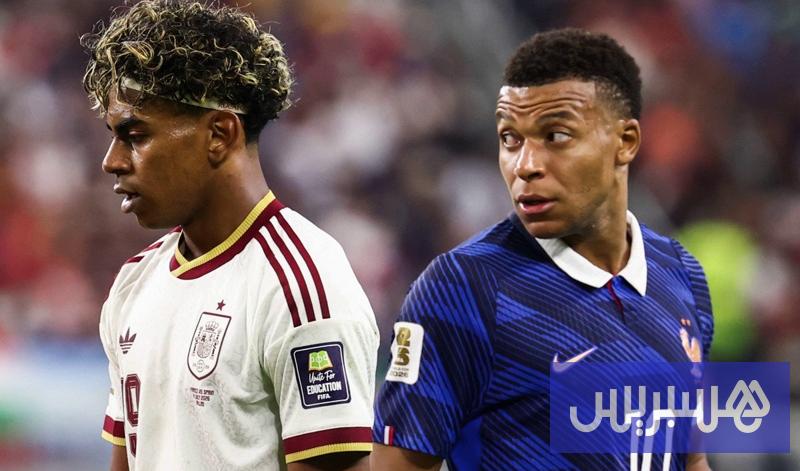
The voting process for the Ballon d'Or, awarded to the best player in the world, concluded on Monday. However, discussions supporting the top candidates may continue until October 26, the date set for the presentation of football's most prestigious award in London, following an intense media campaign.
From the back-and-forth victories between Argentine Lionel Messi and Portuguese Cristiano Ronaldo over the past decade to Real Madrid's boycott of the ceremony in 2024 in protest of compatriot Rodri winning over their international star Vinícius Júnior, the seventy-year history of the Ballon d'Or has been rife with controversy and debate.
However, the 2026 campaign is considered "unprecedented in terms of media buzz," according to Pascal Ferré, former editor of "France Football," which organizes the event and author of "The Hidden Face of the Ballon d'Or," during an interview with Agence France-Presse.
It is no longer just about clubs, coaches, and teammates supporting their favorite candidates; now, the candidates themselves are publicly declaring their right to win.
Kylian Mbappé, Real Madrid forward and captain of the French national team, stated, "There was no player better than me last season," adding that he has "always been considered the chosen one."
His compatriot Ousmane Dembélé, winger for Paris Saint-Germain and last year's winner, responded, "I was never the chosen one; but I worked very hard."
Spanish talent Lamine Yamal emphasized that the Ballon d'Or honors "a different player and is not just linked to the number of goals scored."
These various statements have created a kind of overlapping noise, contrasting sharply with the quieter campaign for the women's Ballon d'Or (which began in 2018), where Spanish player Alexia Putellas simply told Agence France-Presse, "Football speaks for itself."
Pascal Ferré noted that this "also reflects the difference in fame between men's and women's football; thus, the disparity in accompanying media noise."
"A Machine to Spark Imagination"
The former editor of "France Football" added, "If the men's Ballon d'Or receives all this attention, it's because it remains a machine to spark imagination, pressure, and excitement," considering this evidence that the award "has not lost its credibility or legitimacy."
Bruno Bianzina, director of the "Sport Market" consulting agency in sports communication, told Agence France-Presse that "the real shift is that players have entered the fray themselves. Previously, pressure campaigns were more institutional and less visible, led by clubs and those close to the players. Now, they have become more aggressive, with a desire to shape a narrative for each player."
While Mbappé made his statements to the Madrid-based newspaper "AS," known for its proximity to Real Madrid, he also conducted other interviews; notably with Radio France Internationale (RFI), organized this time by his own team, according to journalist Olivier Brun, who conducted the dialogue.
Brun explained in a video published by the radio: "His circle is conducting an organized campaign and wants to address the African continent," adding that some topics were excluded from the interview, such as French politics, the governance crisis in FIFA, and the issue of the occupied Moroccan city of Ceuta.
So why all this media investment?
Bianzina answers, "There is no clear candidate among the others in the race, and every player believes they have a chance. Therefore, each one seeks to impose their own narrative and change the evaluation criteria to serve their case."
Individual vs. Collective
The official criteria for the Ballon d'Or prioritize individual performance, including numbers and statistics, while collective achievements come second.
This favors candidates like Mbappé, who shines as a scorer with Real Madrid and the French national team, and who won the top scorer title at the 2026 World Cup, as well as Englishman Harry Kane, who had an exceptional season with Bayern Munich, scoring 61 goals in 51 matches, despite a lower media presence.
However, neither has won the World Cup, unlike Lamine Yamal and Rodri, who were crowned with the Spanish national team, or the UEFA Champions League like Ousmane Dembélé and Georgian Khvicha Kvaratskhelia, who secured the continental title for the second consecutive season with Paris Saint-Germain.
Despite these individual campaigns, Bianzina believes there is "real coordination between clubs and players," adding that "the Ballon d'Or has become part of the club's legend and identity."
Pascal Ferré confirms that the award represents "an unmatched international showcase," noting that the ceremony is broadcast globally in "180 countries."
With 10 Paris Saint-Germain players on the shortlist of 30 nominees, as was the case last year, the French club emphasizes its focus on the collective aspect of its campaign, without revealing additional details about its strategy.
Nonetheless, this has not prevented them from organizing joint interviews featuring Dembélé and Kvaratskhelia, while their international Spanish player Fabián Ruiz received special attention through several individual interviews.
But the question remains: will pressure campaigns, statistical arguments, and media battles bear fruit?
Pascal Ferré firmly answers, "The Ballon d'Or is not a competition for making the most media noise."
More from this section
Rennes clarifies the health status of Aït Boudlal
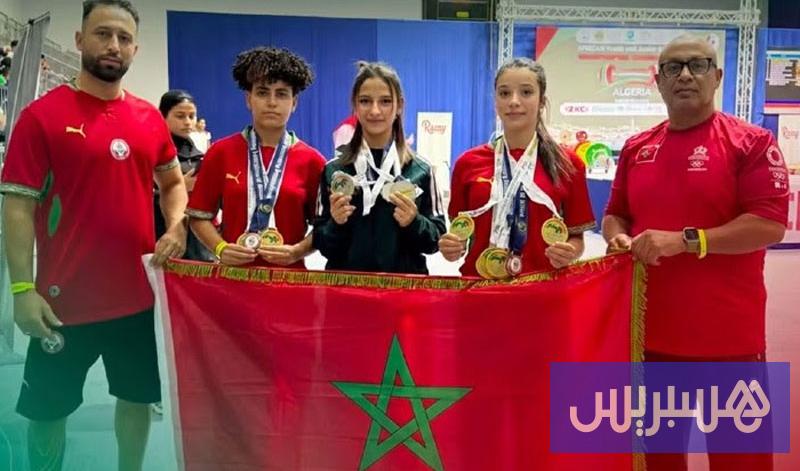
Morocco wins 78 medals in weightlifting.
Hamdaallah achieves a historic milestone in the Saudi league
Al-Jadidi succeeds in scoring four times against "Mouloudia d'Alger."
Abde Ezzalzouli scores a goal against Barcelona