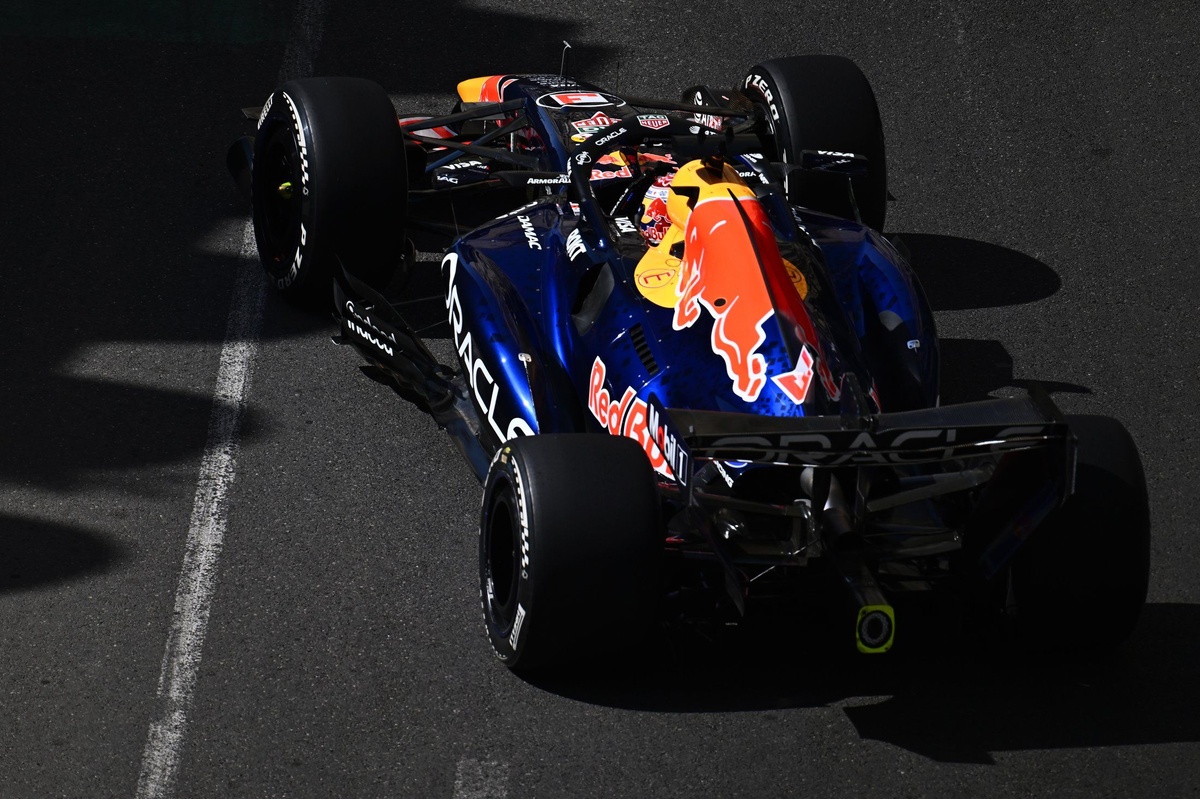
Why the "hazardous" Hamilton-Lawson episode during Azerbaijan GP practice hasn't resulted in any alterations
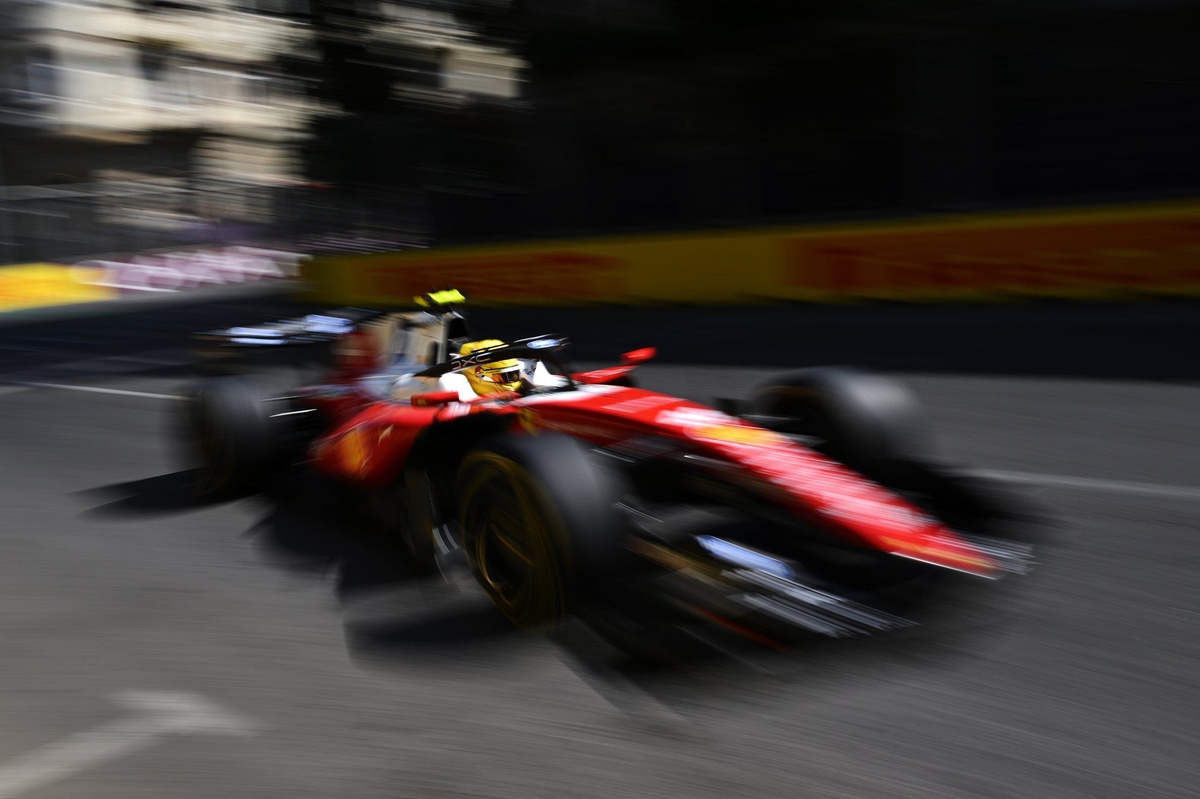
Lewis Hamilton received a reprimand for obstructing Liam Lawson during Thursday's second practice in FP2, but this was not the final chapter.
Even prior to any cars hitting the track at the Baku City Circuit, there were worries about the dangers posed by vehicles moving slowly to gather or conserve electrical energy as they approached the final corners.
In past seasons, even cars not actively attempting to set a lap time would navigate through Turns 16-19 at a reasonable pace, which includes a left turn followed by two bends that lead into the main straight. However, the necessity to conserve electrical energy for the straight has created significant speed variances between those accelerating through this section and those gearing up for a full throttle lap.
The altercation involving Hamilton and Lawson exemplified the drivers' concerns: Hamilton was on an out-lap and had been alerted that Lawson was closing in on a flying lap. Hamilton believed he had adequate space but was caught off guard because, in the current generation of cars, the level of electrical boost is managed by software.
In this scenario, the driver cannot access full power until the car reaches a specific point on the main straight; failing to do so would lead the battery to deplete and enter the 'ramp-down' phase prematurely, resulting in lost speed.
The requirement to maintain battery levels for the extended straight has rendered the preceding corners potentially perilous
"I could see him, I thought the gap was sufficient, I went to full throttle," Hamilton remarked after FP2.
"As I entered [Turn] 18, the car just lost power. It closed the gap significantly, and that can happen to anyone."
At that moment, Lawson, who had to dodge the slow-moving Ferrari, expressed his frustration over the radio: "Oh my god, that is so ****ing dangerous," he voiced.
Once the adrenaline faded, Lawson concurred with Hamilton.
"There's not much you can do when you analyze it," he stated.
"Lewis exits [Turn] 16 at full throttle, with a gap of two or three seconds to me, which is usually a comfortable distance, but the speed difference is just enormous. He's not utilizing any boost, while I'm giving it everything, resulting in a speed difference of 60, 70, or even 80 km/h, which is concerning.
"The issue arises if he moves aside before 18 and slows down; if another car is behind me, the speed difference becomes massive. It's something we need to address overnight.
"If there’s a solution, it should be implemented before 16, because once you exit that corner, you're committed."
Before the weekend, race director Rui Marques outlined specific guidelines in his regular briefing document regarding how drivers should navigate this section.
"Cars on out laps or slow laps should stay far left (i.e., not 'offline' in the middle of the track) from the exit of T16 to the entry of T18," the competition notes stated.
"We believe that teams/drivers can and should manage traffic gaps before T18 (moving as slowly as needed while staying extreme left) to ensure that they can transition between the apex of T18 and apex of T19 without hindering a car that is attempting to set a competitive lap time.
"Cars on out laps or slow laps should maintain an 'extreme' right position at the exit of T19 until they reach the necessary speed to begin the next lap."
One of the reasons Hamilton received a reprimand after the FP2 incident was his failure to adhere to the instruction to remain on the extreme left. However, he suggested that a better approach might be to allow drivers to access more power in that section.
Drivers on out-laps are instructed to remain on the "extreme left" of the track after Turn 16
"We'll discuss this in the drivers' briefing and explore possible solutions," he commented.
"What should happen is that when we're pushing for a lap, we get maximum power out of the last corner. As we come through 19 [the final kink before the straight], it resets, giving us a little more power compared to other cars.
"There should never be anyone going slowly through 18 and 19. Even if you're on a slow lap, you should still be at full throttle through 18 and 19 with full power. This would ensure that no one is crawling through that area."
Motorsport.com has learned that this topic was indeed brought up during Thursday night's drivers' briefing, but was ultimately rejected by the teams. This situation parallels the opening weekend of the Australian Grand Prix, where Turn 9 on the Albert Park circuit was labeled as "sketchy" by drivers under the new technical regulations, due to it occurring at the conclusion of one of five straight-line mode (SLM) zones where the cars' active aerodynamics are utilized.
Before FP3, the FIA announced the removal of that SLM zone, only to revert to the original setup following pushback from the teams. In this instance, as in Azerbaijan this weekend, the reasoning was understood to be technical and performance-oriented: eliminating that SLM zone would negate all the strategies teams had developed for energy management.
Consequently, the race director's original "keep left" instructions will remain in effect for FP3 and qualifying in Baku.
More from this section
Alex Brundle raises doubts about McLaren F1's upgrade following letdown at the Azerbaijan GP.
Esteban Ocon will depart from Haas following the conclusion of the F1 2026 season.
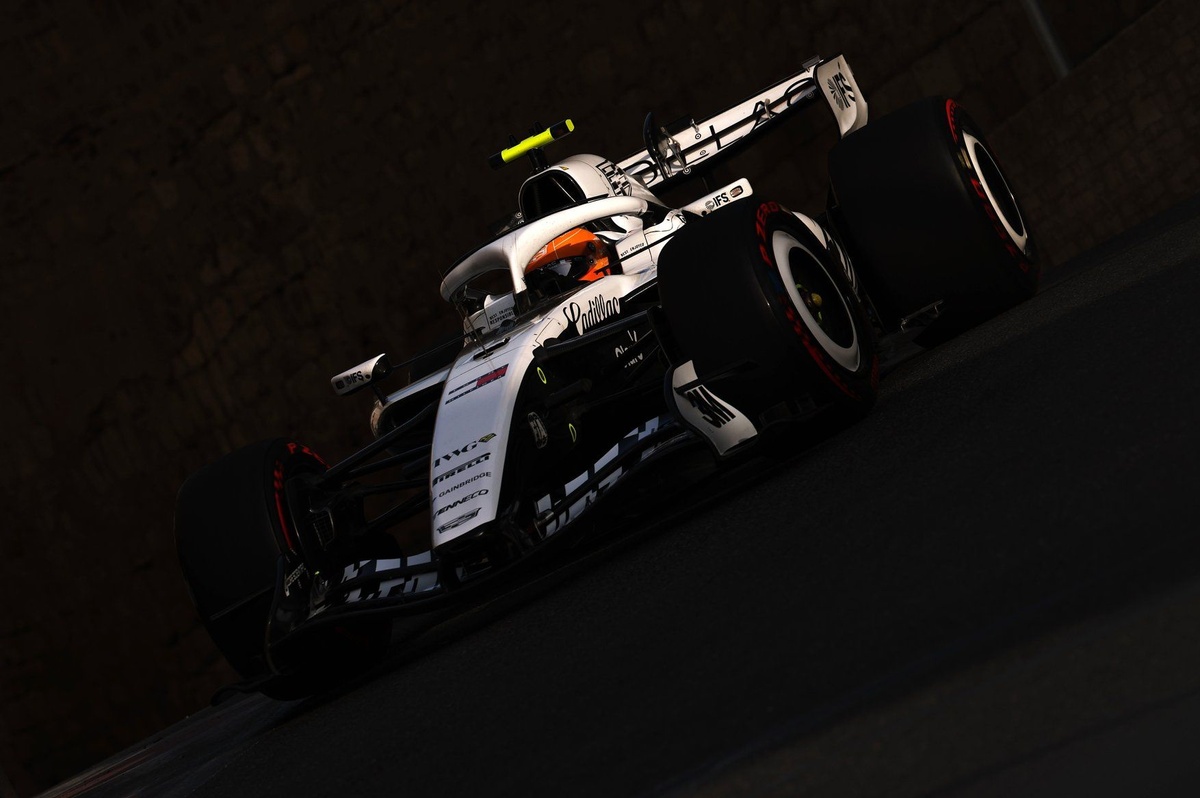
Cadillac's solution reduced F1 brake temperatures by 100C – Valtteri Bottas
How Carlos Sainz recovered from the toughest phase of his Formula 1 journey
How Isack Hadjar sustained a wrist injury during the summer break of F1 2026