Why the incredibly challenging Sepang circuit fell over four seconds short of Pirelli's Formula 1 projections.
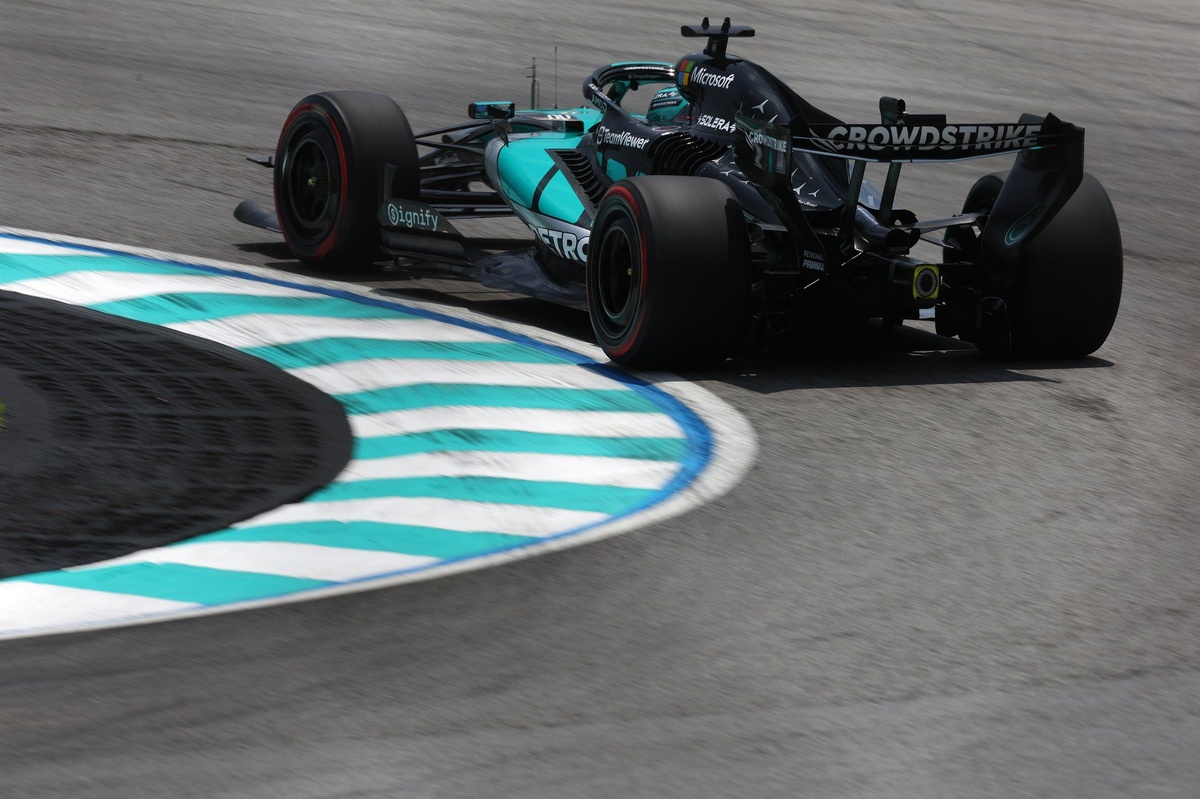
Friday's practice session for Formula 1's unique return to Malaysia, after a nine-year break, was anticipated to present a few challenges for the teams.
However, while the usual daily rainstorms in Malaysia spared the circuit, it was the Sepang track itself that turned out to be a tough obstacle. Observations from Thursday's track walks had already suggested that the "sandpaper" surface, as Oscar Piastri termed it, would result in significant tyre wear.
Yet, the conditions were even more demanding than anticipated, as the 5.35km circuit began to deteriorate during practice, prompting officials to deploy sweeper trucks post-FP2 to remove debris from the track.
Pirelli, F1's tyre supplier, disclosed that single-lap times on Friday were up to 4.5 seconds slower than their qualifying projections due to the track's roughness and diminished grip available.
"The conditions were not ideal, the tarmac was disintegrating," Pirelli's chief engineer Simone Berra noted. "We had some stones coming loose, and the FIA had to clean the track multiple times with the sweeper.
"The surface is deteriorating rather quickly, even during the session, which is currently somewhat uncontrollable.
"We were 4.5 seconds off from the simulations. We'll see how it goes tomorrow, but I don't think we'll gain 4-5 seconds overnight. So yes, it's primarily about the state of the tarmac. We haven't raced here in the last decade, so it was challenging for the teams to have a solid reference."
Oscar Piastri, McLaren
Berra emphasized that while track degradation is likely to worsen during the race, it should not pose a safety risk.
"It's not a significant safety issue regarding punctures. It simply creates a low grip situation due to the roughness," he remarked.
"Conditions could deteriorate further during the race, as all cars will be running together with elevated temperatures, so the tarmac may degrade significantly throughout the event.
"Honestly, it’s manageable, not catastrophic, but undoubtedly the grip level is less than optimal."
After concluding the day at the top of the timesheets, Ferrari's Charles Leclerc stated: "It’s been an extremely challenging day overall. The track conditions were quite tricky. The surface was pretty dirty and very slippery. I think we can expect considerable changes and developments from today."
Malaysia is substituting for Sakhir as the host of the Bahrain Grand Prix this weekend, making it a fitting match given the similar wear levels and rough tarmac.
The high degradation rate on a lap-to-lap basis implies that there may be a gap between the qualifying order and the overall race performance, potentially adding a layer of strategic complexity to a race on a circuit that is already favorable for overtaking.
Liam Lawson, Racing Bulls
"It’s all about finding the right balance, not just for the car’s performance, but also for long runs, ensuring consistency and managing temperatures to prevent sliding or over-driving the tyres during the stint," Berra explained.
"It’s possible that if you seek the optimal race balance, you might end up with a poor temperature setting for qualifying. I’ve observed a few instances where teams had trouble getting the front tyres up to temperature.
"They didn’t configure the car properly to have the front ready for Turn 1 after the long straight following Turn 15. We could witness some surprises, with certain teams struggling more in qualifying but then performing better during the race."
More from this section

Isack Hadjar discusses the experience of competing against the "best of the best," Max Verstappen.
Apple TV reveals significant enhancements to F1 coverage for the United States Grand Prix.
Max Verstappen discussing life post-Christian Horner: “It feels less stressful”
Five aspects to watch closely at the F1 Singapore Grand Prix
Mercedes stands by its choice to turn down an essential FIA driver assistance feature.