Does increased sweating mean better performance in workouts? Here’s the scientific answer.
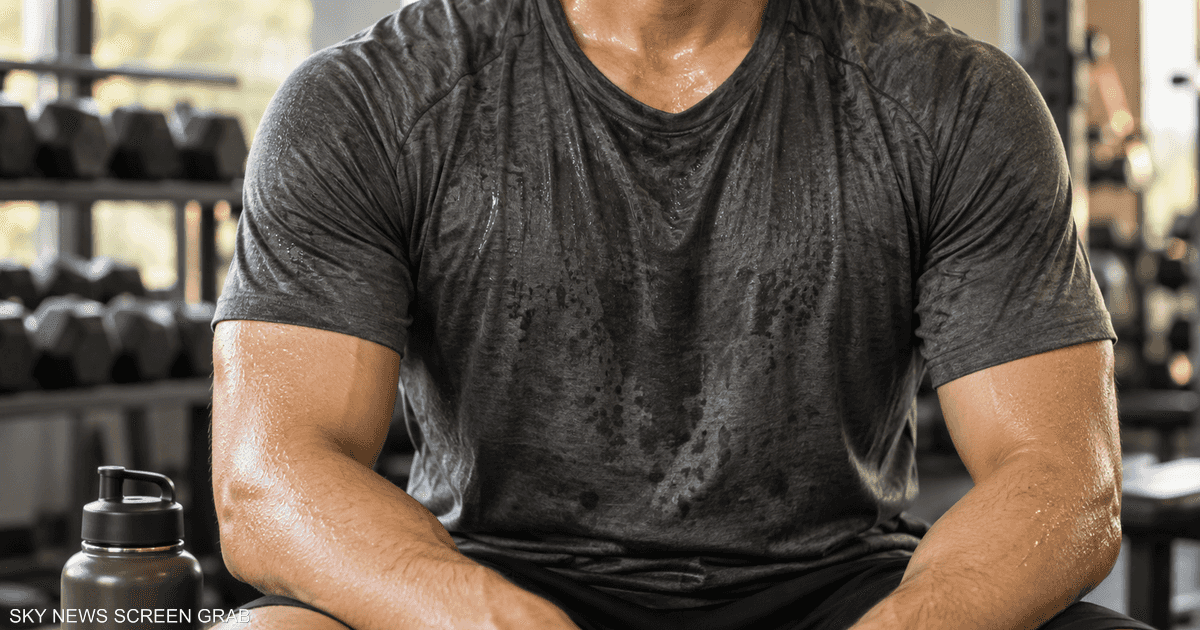
You may finish your workout drenched in sweat, leading you to believe you've exerted yourself or burned more calories. However, the amount of sweat does not accurately reflect the quality or intensity of the exercise.

What causes sweating?
When the body's temperature rises due to physical activity or hot weather, the brain sends signals to the sweat glands to release fluids onto the skin's surface.
As sweat evaporates, the body loses some heat, helping to maintain its internal temperature within safe levels.
Therefore, simply seeing the amount of sweat is not enough to judge the effort exerted; a person may sweat heavily during a light workout in hot and humid weather, while someone can perform a more intense workout in cooler conditions without showing the same level of moisture.
Additionally, sweat rates vary among individuals based on several factors, including temperature, humidity, air currents, clothing, body size, genetic factors, age, and heat acclimatization.
The fittest may sweat earlier
Excessive sweating does not indicate poor fitness; individuals who exercise regularly, especially in hot conditions, may begin to sweat earlier and more efficiently to shed heat before it reaches dangerous levels.
Conversely, the body's response to heat may change with age, and some older adults may lose their ability to dissipate heat effectively, making attention to training conditions and hydration more critical.
However, sweating quickly does not automatically mean a person is fitter; individual differences and environmental factors remain key considerations.
Does sweating mean burning more fat?
Sweating does not provide a direct measurement of calories or fat burned.
Fluid loss during exercise may lead to a temporary decrease in weight, but this weight often returns after drinking water and replenishing fluids, and does not necessarily reflect a loss of body fat.
To measure exercise intensity, more useful indicators include heart rate, breathing rate, the ability to talk during activity, personal effort perception, and progress toward training goals.
When does sweating become a problem?
The body loses water and salts through sweat, and physical and mental performance may begin to decline for some individuals when fluid loss reaches about 2 percent of body weight, but the effects of dehydration vary from person to person depending on the type of activity and temperatures.
Not every short workout requires sports drinks; water is usually sufficient for moderate activities, while long or intense workouts in hot conditions may need additional salt replenishment based on health status and sweat rate.
Exercise should stop and a cool place should be sought if dizziness, headache, nausea, severe weakness, or confusion occurs, as these may be signs of heat exhaustion.
In conclusion, wet clothes do not prove you had a better workout. Sweat indicates your body is trying to cool itself, not necessarily what you have achieved in your athletic goals.
Sweating is not a badge of honor awarded by the body after a successful performance; rather, it is a natural mechanism used to regulate temperature and protect against overheating.
According to a report published by the New York Times, understanding your sweat rate can help athletes replenish fluids and stay safe, but it does not alone indicate the effectiveness of a workout.
What causes sweating?
When the body's temperature rises due to physical activity or hot weather, the brain sends signals to the sweat glands to release fluids onto the skin's surface.
As sweat evaporates, the body loses some heat, helping to maintain its internal temperature within safe levels.
Therefore, simply seeing the amount of sweat is not enough to judge the effort exerted; a person may sweat heavily during a light workout in hot and humid weather, while someone can perform a more intense workout in cooler conditions without showing the same level of moisture.
Additionally, sweat rates vary among individuals based on several factors, including temperature, humidity, air currents, clothing, body size, genetic factors, age, and heat acclimatization.
The fittest may sweat earlier
Excessive sweating does not indicate poor fitness; individuals who exercise regularly, especially in hot conditions, may begin to sweat earlier and more efficiently to shed heat before it reaches dangerous levels.
Conversely, the body's response to heat may change with age, and some older adults may lose their ability to dissipate heat effectively, making attention to training conditions and hydration more critical.
However, sweating quickly does not automatically mean a person is fitter; individual differences and environmental factors remain key considerations.
Does sweating mean burning more fat?
Sweating does not provide a direct measurement of calories or fat burned.
Fluid loss during exercise may lead to a temporary decrease in weight, but this weight often returns after drinking water and replenishing fluids, and does not necessarily reflect a loss of body fat.
To measure exercise intensity, more useful indicators include heart rate, breathing rate, the ability to talk during activity, personal effort perception, and progress toward training goals.
When does sweating become a problem?
The body loses water and salts through sweat, and physical and mental performance may begin to decline for some individuals when fluid loss reaches about 2 percent of body weight, but the effects of dehydration vary from person to person depending on the type of activity and temperatures.
Not every short workout requires sports drinks; water is usually sufficient for moderate activities, while long or intense workouts in hot conditions may need additional salt replenishment based on health status and sweat rate.
Exercise should stop and a cool place should be sought if dizziness, headache, nausea, severe weakness, or confusion occurs, as these may be signs of heat exhaustion.
In conclusion, wet clothes do not prove you had a better workout. Sweat indicates your body is trying to cool itself, not necessarily what you have achieved in your athletic goals.
More from this section
Adamo Nagalo: bad news for the Burkinabé player, his contract with PSV will be terminated!
Kylian Mbappé: The Real Madrid forward parts ways with Nike (Official)
Mouloudia begins its title defense with a deserved victory, while El Eulma dominates Saoura.
Hamdan and Antar Yahya are in the stands at "La Pointe" Stadium to watch the match between Mouloudia and Rouissat.
Zed: We have financial rights with Al Masry Club regarding the deal for Essam Tharwat, and the Football Association has done us justice.