Fred Vasseur highlights two pivotal incidents that thwarted Ferrari's chances of securing a double podium at the US GP.
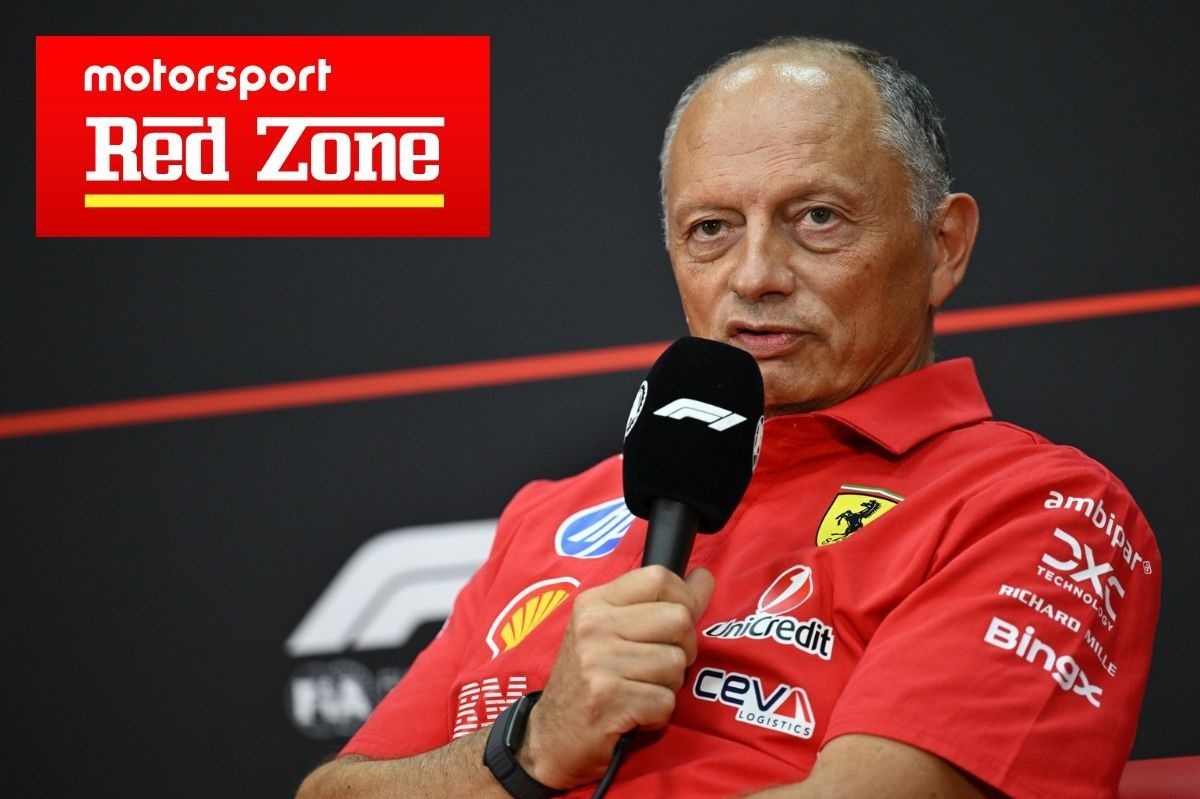
The United States Grand Prix proved to be a tremendously successful weekend for Ferrari, at least based on the timing sheets. The freshly upgraded car showcased astonishing race speed, tire wear was expertly managed, and Charles Leclerc secured an impressive second-place finish behind Mercedes’ Kimi Antonelli.
However, within the Scuderia garage, there remains a persistent sense of "what if."
If just two circumstances had shifted slightly this weekend at the Circuit of the Americas, Ferrari's team principal Fred Vasseur believes they would have achieved a significant double podium—and perhaps even clinched the race win.
Ferrari's Q3 misstep
In his post-race discussion with Sky Sports F1, reporter Ted Kravitz suggested to Vasseur that Charles Leclerc had the potential pace to claim victory under different conditions. Unsurprisingly, Vasseur fully concurred, attributing the team’s Saturday performance as the source of their troubles on Sunday.
"Probably yes, I think that today it went well, everything went well, the pace was OK, we were aggressive with the strategy, because we had to overtake," Vasseur elaborated. "Overall, if there was a shortcoming, it was the last two laps in Q3 yesterday; I believe that was the most crucial lap of the weekend, and that’s where we encountered the issue."
Frederic Vasseur, Ferrari
Given that track position is paramount in modern Formula 1, the failure to capitalize on that vital Q3 opportunity forced Ferrari to use up their tires while navigating through traffic, while Antonelli enjoyed clear air at the front.
The ultimate Cadillac irony
Despite not securing the win, Ferrari was actively pursuing Red Bull's Max Verstappen in the latter stages of the race. Lewis Hamilton was rapidly closing in on the struggling RB22, setting the stage for an exciting battle for the final podium position.
Then, the ultimate irony unfolded.
Valtteri Bottas experienced a mechanical failure and parked his Cadillac on the side of the track, prompting a late virtual safety car that effectively neutralized the race and preserved Verstappen's third-place finish.
Kravitz humorously pointed out a silver lining for Ferrari: Bottas' Cadillac is powered by a Ferrari engine, but since the car couldn’t be moved, it was clearly a hydraulic issue—which indicates it wasn’t a Ferrari component that failed.
Lewis Hamilton, Ferrari
While Vasseur was likely relieved that his customer engine didn’t fail, the timing of the VSC was a crushing blow for Hamilton.
"Without the VSC, we probably would have had a double podium," Vasseur confessed, reflecting on the missed chance. "He was closing in, and then I don’t know if it was P3 or P4; I don’t have a crystal ball, but ultimately the pace was there."
Despite falling short of a double podium, Vasseur departs Texas feeling quite optimistic about the heavily analyzed aero upgrade package the team introduced at COTA.
"Yes, everything was somewhat satisfactory, but we definitely need to improve next week," Vasseur concluded, modestly downplaying the significant pace enhancement. "We need to fine-tune everything and return to this, but let’s keep pushing."
If Ferrari can refine their Q3 performance and steer clear of any more untimely Cadillac failures, they will undoubtedly be a formidable contender at the high-altitude Mexican Grand Prix next weekend.
More from this section
Naomi Schiff cautions Red Bull regarding their F1 car, describing it as being on a "knife's edge" following difficulties experienced at the US GP.
David Coulthard dismisses excuses related to F1 regulations by drawing parallels with Ayrton Senna and Michael Schumacher.
Why McLaren issued a team directive to Oscar Piastri during the F1 US GP
Why Monza's victory from 19th position still doesn't top Kimi Antonelli's commanding 2026 F1 season.
Who had the most restless night last night: Lando Norris