Oliver Bearman clarifies the reasons behind Haas’ 2026 F1 vehicle ‘reaching its limits.’
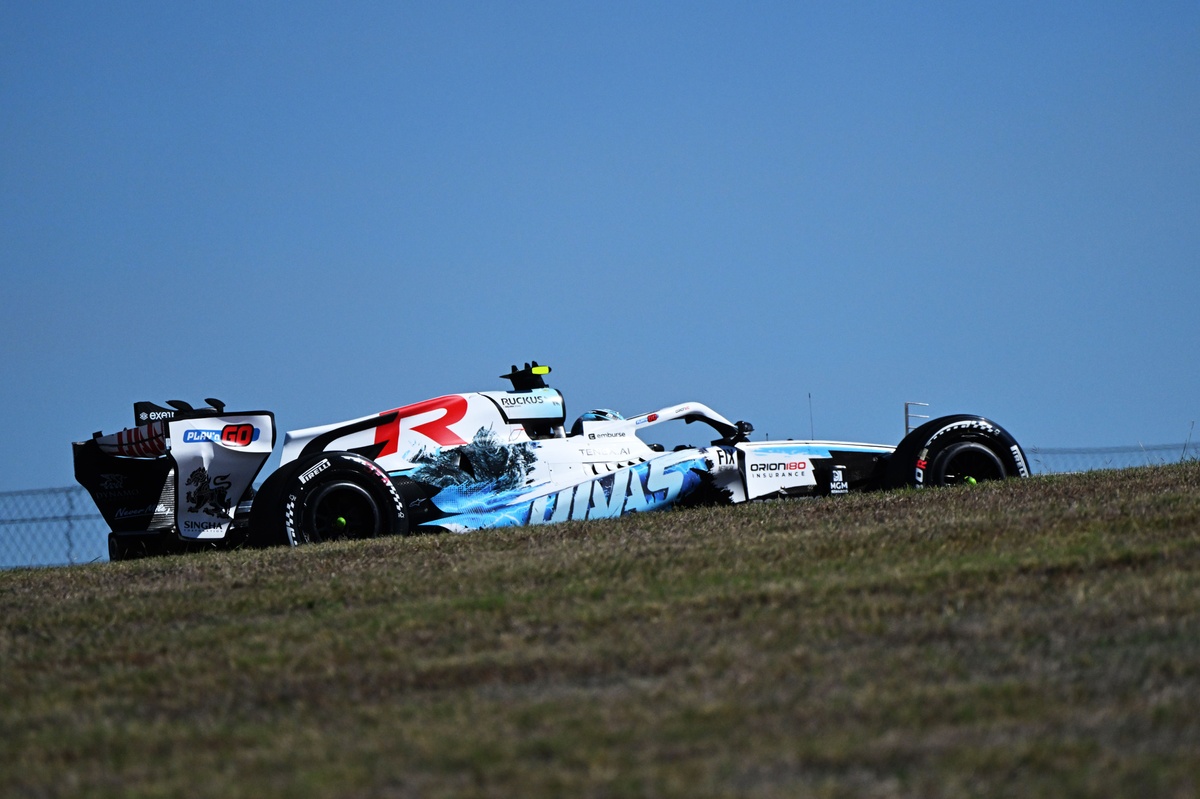
Oliver Bearman asserts that Haas is unlikely to squeeze any additional performance from its 2026 Formula 1 car after the United States Grand Prix.
Bearman showcased promising pace on Friday at the Circuit of The Americas, achieving 11th and 10th places in the first two free practice sessions, but ultimately fell down the grid to qualify in 16th position.
The British driver explained that this was due to securing a nearly optimal setup right from FP1, which resulted in his VF-26 losing ground compared to competitors as they made progress in that area.
“It indicates that we’re performing well as a team,” he remarked. “We’re maximizing our car's potential from FP1, essentially. We had a car where we hardly adjusted the ride height, just by one millimeter throughout the weekend. From my starting point to race day? It was the same car.
“Because it was effective. Because it was impressive. From the moment I first used the soft tires in FP1, during my debrief, I thought, ‘I don’t know what else I need from the car’. It's very, very good. I mean, the balance is solid, it feels great. We just lack sufficient downforce. So it feels good, but we’re simply not as quick as the others.”
Oliver Bearman, Haas F1 Team
Haas is hindered by its significant upgrade package introduced during the Italian Grand Prix nearly two months ago. Since then, no new components have been added apart from a rear impact structure tailored for Sepang.
“I’m not surprised that we maintained the same gap relative to the leaders, while everyone else managed to improve and surpass us,” Bearman continued. “It indicates that we have a relatively predictable, benign car. The characteristics are quite good, but we just don’t have enough downforce, and it’s evident: as the lap progresses, even in qualifying, our competitiveness diminishes because we overheat the tires and can’t sustain them.
“It’s disappointing, but at the same time, what can we really expect? Our competitors brought upgrades again this weekend. I mean, they introduced three or four times more upgrades than we did. So I’m not shocked that they are outperforming us; their cars are quicker than ours.
“That’s why I don’t regret the decision to challenge Pierre. Because I know that without that, I'd just be trailing behind him and likely get overtaken by the Audis, and that’s not my goal. I need to earn points, and that’s what we need as a team. Yes, we require a faster car in the end.”
So is there nothing more to be gained from the VF-26? “Sadly not,” Bearman responded. “No, it’s reached its limit.
“If I were just driving around alone, I would think, ‘Ah, the car feels very pleasant’. If I compare it to how it performed maybe three or four races ago, the characteristics have improved significantly. However, downforce is downforce, and we are short on it.”
Esteban Ocon, Haas F1 Team
However, teammate Esteban Ocon might contest the VF-26’s supposed agreeable behavior, as the French driver expressed concerns about braking inconsistencies after the Austin race.
“It becomes apparent in qualifying when you push the car to its limits,” Ocon elaborated. “And when the tire takes off, I need to anticipate braking 10-15 meters earlier, and I still experience a lot of locking and understeer. It’s not a pleasant sensation; it’s quite unpredictable. It’s been an issue all weekend, so we've minimized it, which I view as a positive; with the engineers, we managed to bring it a bit more under control, but the core problem remains.”
The veteran finished 14th in the US GP, 34 seconds adrift of the points positions.
Additional reporting by Ronald Vording
More from this section
Mark Webber's departure from Red Bull labeled as "disrespectful" while Daniel Ricciardo receives acclaim.
Daniel Ricciardo expresses significant regret regarding his exit from Red Bull in 2018.
Daniel Ricciardo hints at a possible return to racing alongside Max Verstappen at Le Mans.
Max Verstappen will not participate for Red Bull in the first practice session of the Mexico Grand Prix.
Another DNF for Cadillac’s Valtteri Bottas: ‘At times, we struggle to comprehend it’