Red Bull highlights two "primary focus" areas following Max Verstappen's encouraging performance in Austin.
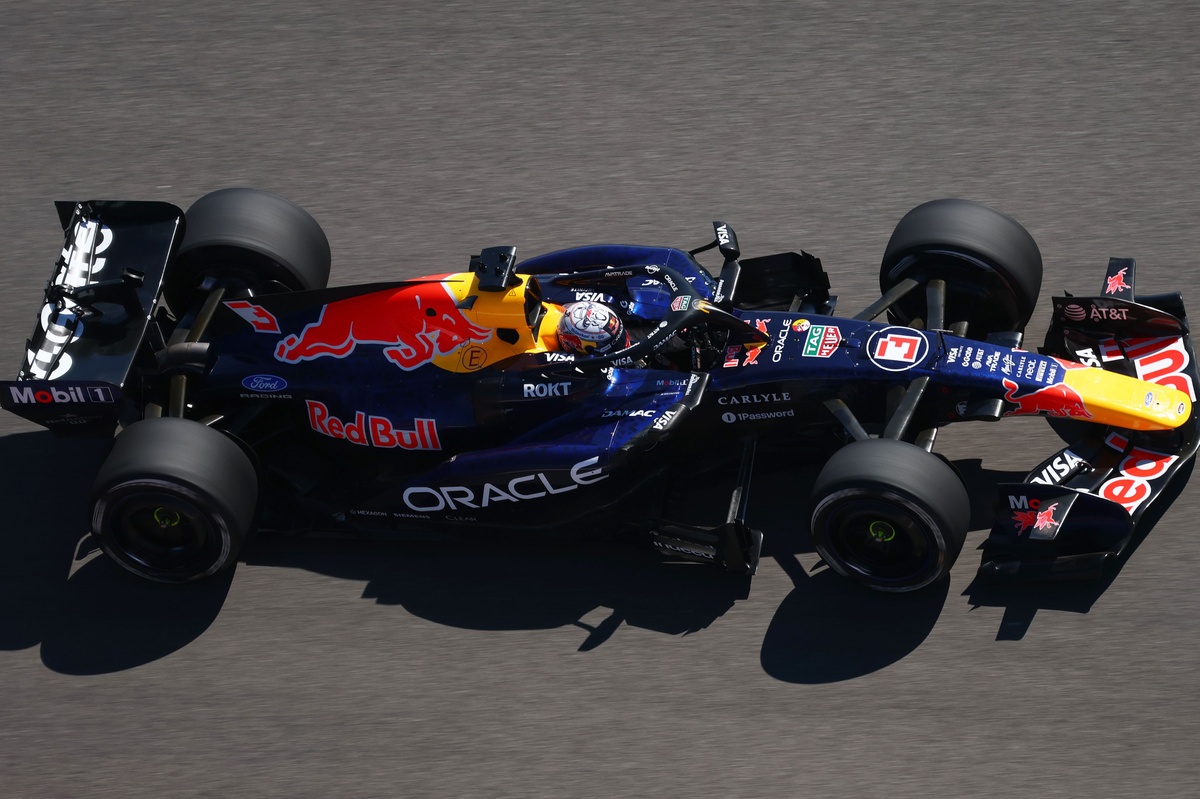
Max Verstappen concluded Friday's practice sessions for the Formula 1 United States Grand Prix by finishing in second and third positions. In both sessions, the four-time world champion trailed Charles Leclerc by less than two tenths of a second, who set the pace on both occasions.
Red Bull isn't showcasing the same dominance over the field as it did in Malaysia, for instance, but Verstappen is still generally pleased with the initial feedback from the RB22 in Texas.
"It's been a constructive start to the weekend. This track is always challenging when it comes to achieving the right balance between low and high-speed corners," the Dutch driver remarked after FP2.
"The bumps add another layer of difficulty, so you’re aiming to establish a good equilibrium in the car and find a rhythm. That’s what we focused on between FP1 and FP2. There’s still some work ahead to fine-tune that balance, but overall, it was a pretty good day."
Practically speaking, this means teams must seek a compromise in two distinct areas this weekend. Given the diverse layout of the Circuit of the Americas, the first pertains to the balance between high-speed and low-speed corners. Analyzing the GPS data indicates that Red Bull is competitive in the high-speed sections, prompting technical director Pierre Wache to emphasize the need for improvement.
"Our current focus is clearly on low-speed performance. Low speed is crucial for us."
This is evident in the data. When comparing the fastest laps of Leclerc, Antonelli, and Verstappen, the slower corners of the circuit predominantly show red – indicating Ferrari's stronghold. Leclerc excels both on the brakes and during the exit of Turn 1, demonstrating a similar pattern at Turn 11, the slow left-hander preceding the long straight.
At the end of that long straight — just before reaching the braking zone — Verstappen is nearly a tenth quicker than Leclerc's time, while Antonelli exceeds him by more than two tenths. However, Verstappen loses significant time through Turns 12 to 16, another slower section of the track.
Max Verstappen, Red Bull Racing
This highlights Wache's observations, although the challenge in Austin extends beyond merely achieving the right balance between different corner types. Equally significant is the trade-off between sheer performance and a car that can handle the bumps reasonably well, which Verstappen labeled as "unacceptable" and "out of control" during Thursday’s media day.
"The car responds to those bumps as expected; it's bouncing quite a lot," Wache remarked when queried about how the RB22 is managing the track conditions.
"The track is extremely bumpy, particularly at Turn 1 under braking. You need to exercise a lot of caution. However, that’s the issue with the type of set-up we are using. It isn’t as rigid as last year’s, but it's not too far from it either. The car doesn’t handle the bumps here very well."
By mentioning the term set-up, Wache isn’t solely referencing Red Bull's choices, but rather the current generation of F1 cars. Ideally, these should offer slightly more comfort over the bumps compared to the ground-effect cars of previous years, yet Verstappen explained on Thursday that the reality is quite the opposite.
Thanks to active aerodynamics and straight mode, the cars slightly rise on the straights. This reduces wear on the skid blocks and grants teams greater latitude to push the limits regarding ride height. Consequently, the ride height is low during braking and through corners, precisely where the Circuit of the Americas is notably bumpy.
According to Wache, enhancing the car's performance over those bumps and improving its low-speed capabilities are Red Bull's two primary objectives as they approach qualifying.
Max Verstappen, Red Bull Racing
More from this section
The unforeseen issue Honda faced even after its second F1 power unit enhancement
"Completely unmanageable" – Isack Hadjar seeking solutions following "significant" difficulties during practice in Austin.
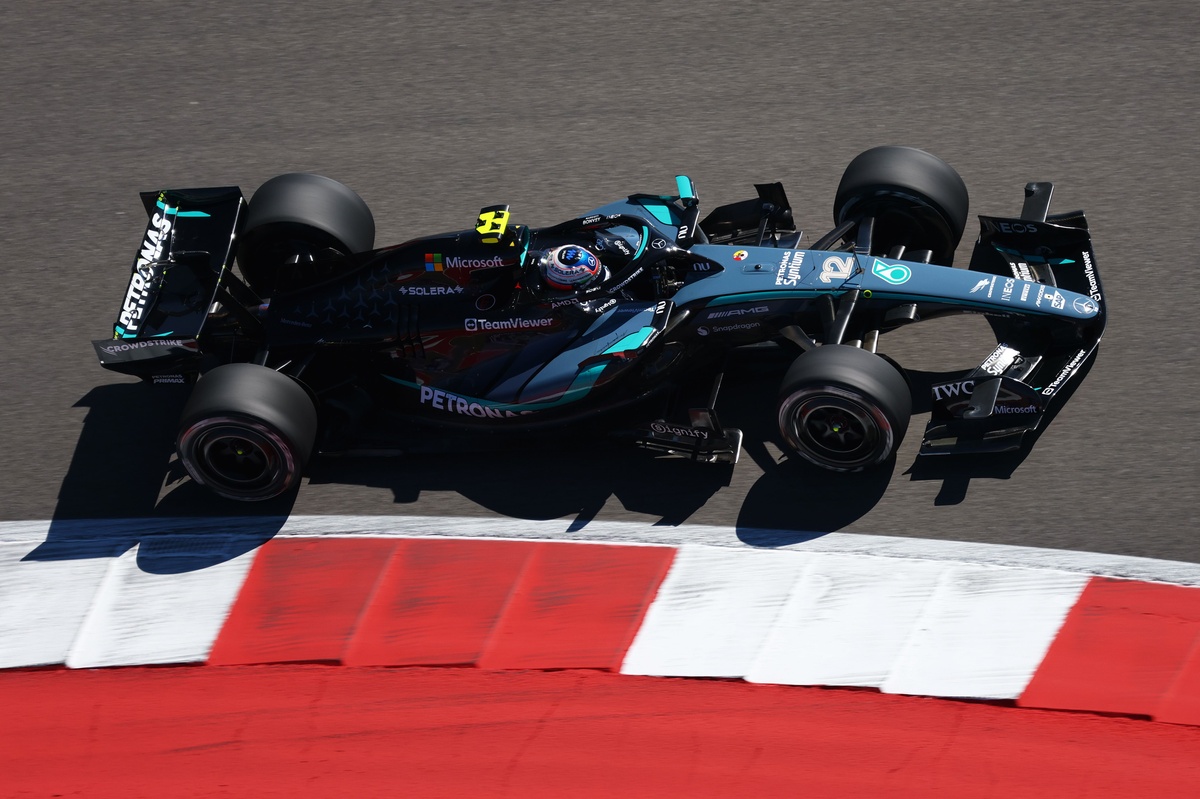
Kimi Antonelli praises "progress" at the United States GP as Mercedes continues to make strides with upgrades.
Lewis Hamilton acknowledges that Red Bull has accomplished what he believed was unfeasible.
Kimi Antonelli's rookie card is sold for an astonishing $878,400 as he approaches a chance for the F1 championship.