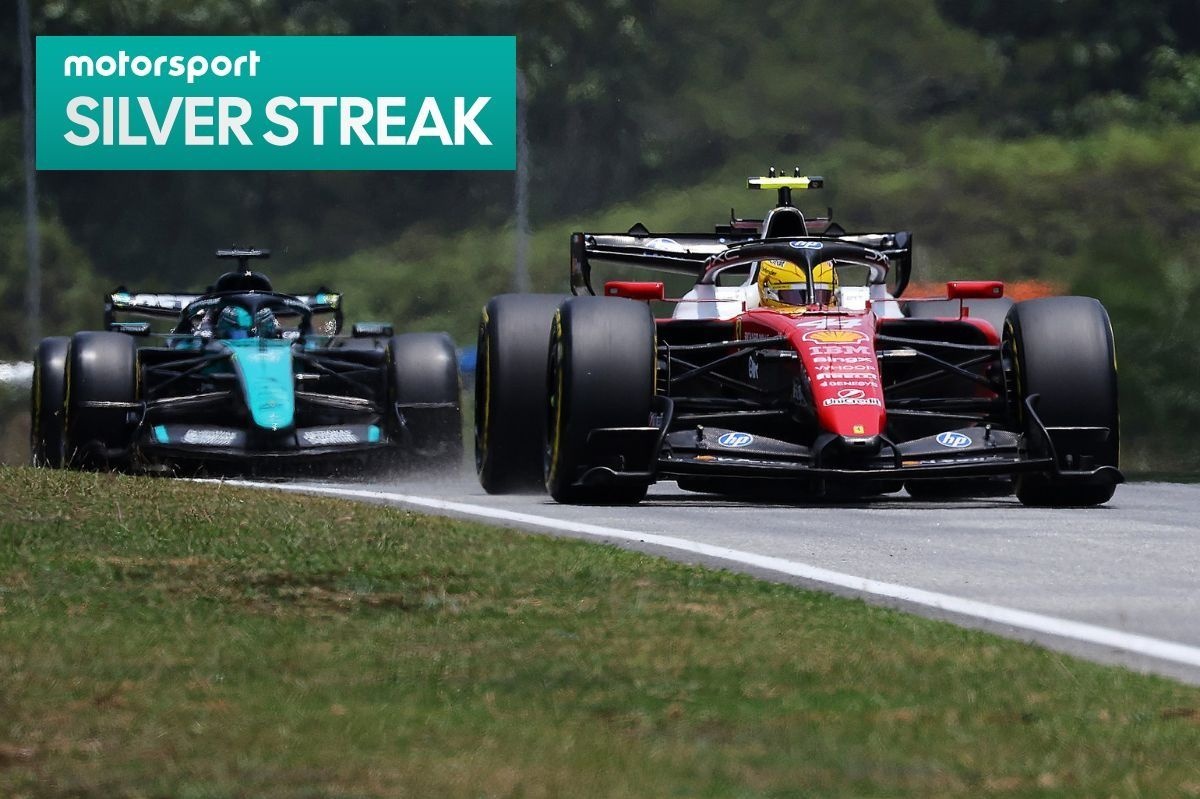
Why F1's updated regulations elevate the Mexican GP to an even greater test
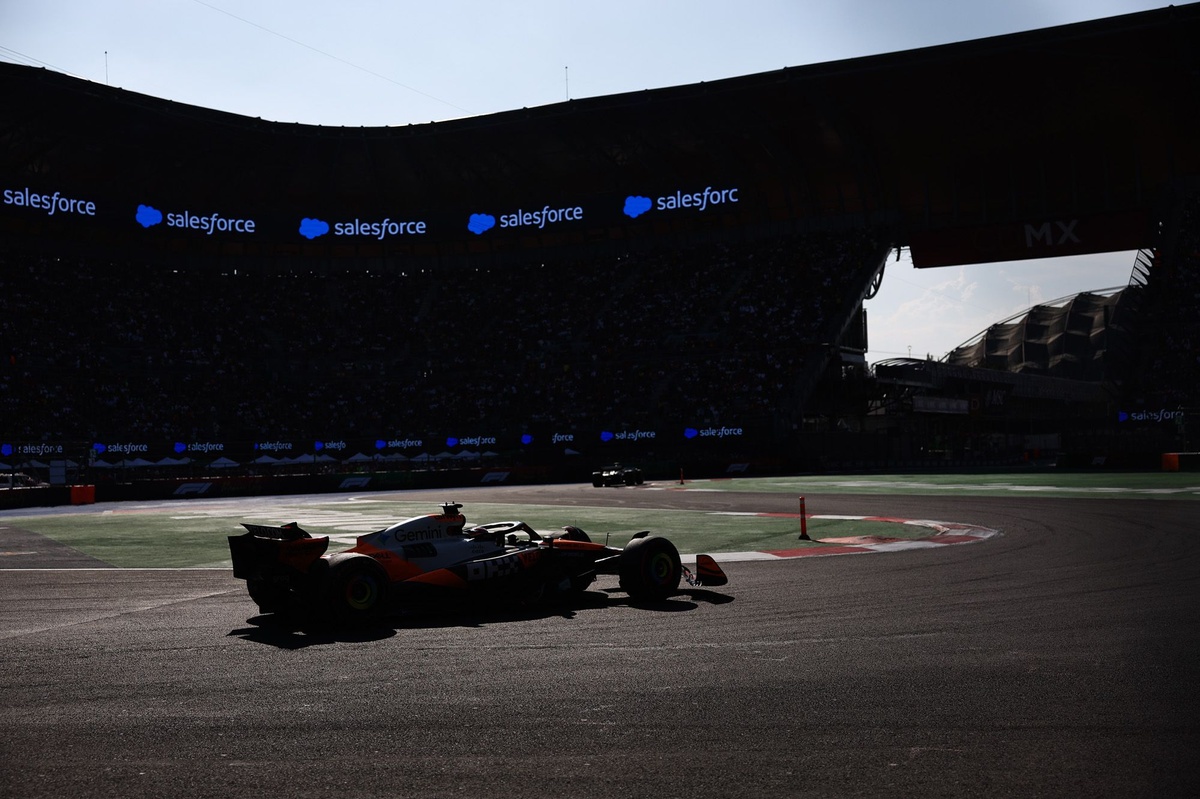
Standing at 2,286 metres above sea level, the Autodromo Hermanos Rodriguez is the highest venue on the Formula 1 calendar. This elevation leads to thinner air, creating distinct challenges for teams and manufacturers at the Mexican Grand Prix in two key areas.
Firstly, the reduced air density puts significant pressure on the power unit, particularly the turbo, in Mexico. At higher altitudes, there are fewer oxygen molecules per cubic metre, necessitating the turbo to exert more effort to deliver the same amount of oxygen to the engine as it would at sea level.
The turbo must rotate at much higher speeds to generate the necessary boost pressure and airflow, which raises concerns not only for performance but also for reliability, as the turbo operates at considerably elevated temperatures compared to standard conditions.
This challenge is a consistent theme in Mexico and explains why George Russell pointedly identified Ferrari as the frontrunners during Thursday's press conference. The Scuderia is recognized in the paddock for having a smaller turbo than many competitors. A smaller turbine wheel has less mass and inertia, enabling the turbo to spool up more swiftly once the driver accelerates.
This characteristic minimizes turbo lag, which is expected to be a critical factor this weekend. The challenge has intensified in 2026 due to the removal of the MGU-H, which can no longer assist in mitigating turbo lag.
“Last year, we had the MGU-H, which provided some support, but this year we don't have that, making it quite challenging,” remarked Honda’s chief engineer Shintaro Orihara when discussing the difficulties with Motorsport.com.
Lance Stroll, Aston Martin Racing
“For instance, even during idle conditions, we relied on MGU-H support to generate adequate boost pressure, but this year we lack that support even at idle. This represents a notable difference from last year, making turbo lag the most significant and compelling issue at this circuit. I believe this is true not only for Honda, but for all manufacturers. They will all face challenges with turbo lag at this venue,” he added.
In addition to turbo lag, another crucial factor is how the engine’s power output is influenced. If manufacturers cannot reach the desired turbo boost levels, Honda indicated that this could also impact the internal combustion engine's operation — potentially leading to lower power output in a worst-case scenario.
The term “engine operation condition” naturally pertains to how much of the internal combustion engine's maximum capacity can be utilized or whether it must be limited at altitude.
“Every turbocharger has specific limitations regarding its operational speed. If we reach that [maximum] operational speed and still cannot deliver enough boost pressure, then the engine's operation point will be constrained. Presently, we have no concerns, but we need to verify this during free practice as well,” Orihara continued.
It will be particularly intriguing to observe Honda's performance at altitude, especially considering the Japanese manufacturer previously encountered significant turbo lag issues in Singapore. Even after using its second ADUO token of the season in Madrid to discreetly introduce a new turbocharger aimed at enhancing driveability, the problem persisted in Singapore.
Fernando Alonso, Aston Martin Racing
On a positive note, Honda has since implemented 'countermeasures' that proved effective in Austin. However, Mexico will serve as the ultimate test, as Orihara is well aware.
“In Austin, we introduced some countermeasures for turbo lag, and we confirmed their effectiveness in reducing lag. That was quite encouraging for us prior to arriving here,” he said.
“Additionally, at our facility in Sakura, Japan, efforts continue to optimize turbo lag. We have numerous strategies for improvement. One option involves our energy recovery strategy with the MGU-K, and the team in Sakura is diligently working to enhance the turbo lag situation.
“However, even after observing positive outcomes in Austin, the altitude presents a completely different scenario for us. Therefore, assessing our car's performance during free practice is crucial.”
“Slippery as hell” – How active aerodynamics will complicate drivers' experiences
As noted, the absence of the MGU-H amplifies this challenge for all manufacturers, but it's not the sole aspect of the new regulations that will influence the race weekend in Mexico. Another element concerns active aerodynamics and how it affects the wing configurations teams would typically select in Mexico.
Teams usually adopt Monaco-level wing settings in Mexico, a relatively straightforward approach at altitude due to reduced air resistance and consequently lower drag penalties. However, even those extreme wing selections only provide drivers with downforce levels comparable to, for example, Monza-spec wings at altitude — representing a significant contrast.
Max Verstappen, Red Bull Racing
This year, however, much of that variability has diminished due to active aerodynamics, as both Red Bull drivers highlighted during media day.
“There is significantly less grip here. At altitude, we normally adjust the wings to compensate for that, but now we effectively run just one wing,” Max Verstappen remarked.
While active aerodynamics led to drivers facing increased challenges with bumps in Austin — as the cars lifted on the straights, providing teams with a safety margin regarding skid block wear and allowing them to run even lower through corners — in Mexico, this results in even less downforce.
It is also important to note that the 2026 cars inherently possess considerably less downforce than their predecessors from the ground-effect era. Isack Hadjar has already predicted that this weekend will be “slippery as hell” for the drivers.
The new asphalt, which theoretically should offer more grip, could partially offset this, yet it remains another variable that teams have not fully accounted for in their simulations, as Aston Martin's chief trackside officer Mike Krack acknowledged.
“Typically, when resurfacing occurs, the track is smoother and grip levels are higher, which should be beneficial,” Krack stated.
A general view of the circuit
“Clearly, we lose 20-25% of density, which corresponds to a similar reduction in load. Any improvement in tyre-road interaction will be advantageous. I believe there will be a step in the right direction with increased grip.
“However, it's often quite dirty here during the first session, so the track is expected to improve significantly. We are eager to observe how it evolves and whether we can achieve better grip from the outset.”
Overall, this indicates that Mexico's altitude presents even more obstacles this year than usual, affecting both the power unit and chassis dynamics, leading teams into the race weekend facing an unusually high number of uncertainties.
More from this section

Audi honors F1 veteran Beat Zehnder as he prepares to depart.
"Progressing gradually" – Oscar Piastri discusses the path to overcoming McLaren's car challenges.

Recalling Sir Patrick Stewart's iconic experience on the F1 podium alongside Daniel Ricciardo
Max Verstappen talks about the impact of the F1 schedule following the illness of two drivers.

Lewis Hamilton: “I’m made differently” as he looks towards an F1 career extending into the 2030s.